TRAVEL UPDATE: Visit Haiti from Home

Jacmel

Hotel Cyvadier Plage

hotel pool with palm trees and sea view
Pool area at Hotel Cyvadier Plage
Photo: Hotel Cyvadier Plage

Hotel Cyvadier Plage

A few minutes outside the city of Jacmel, Cyvadier Hotel is the perfect seaside escape for the nature lover in all of us.

First Impressions

Among all the cities of Haiti, the city of Jacmel is recognized for its hospitality and as being a haven of peace. For a good stay, the Cyvadier Hotel offers modern comfort in a prime location. The hotel’s seafront access is ideal if you are looking for a picture-perfecr tropical vacation without the typical busyness of the Arcadins’ coast.

Rooms

The Cyvadier Hotel is a charming small hotel which has 28 tastefully furnished rooms that embellish a rustic, Caribbean style with modern accents; some have a terrace which offers a beautiful view where you can bask in watching the sunset facing the sea. The whole establishment has access to WiFi.

What’s for breakfast?

Breakfast is served every day at the Cyvadier Hotel, and includes all of the standard stops of a Haitian breakfast. From fresh, seasonal fruit, to eggs, baked goods, and freshly brewed coffee and steeped tea, it can all be enjoyed by the sea, or in your room, on request – it’s entirely up to you.

How about lunch and dinner?

The restaurant at the Cyvadier Hotel benefits from being a seaside one: fresh seafood is served there every day! From lobster to grilled fish, the menu is an ode to the bevy of creatures that grace the sea. Standard Haitian cuisine is also hard-and-fast on this menu; you’ll find staples like conch and roasted chicken, as well as the delicacy that is Haitian pain patate – a sweet potato dessert.

Is there a bar?

Lounge around by the pool and take in the view as you sip away from the hotel’s restaurant drinks’ menu which also covers wines, champagnes, liquors, local beers, and cocktails made to order.

Activities and amenities

You’ll want to make a stop at the Cyvadier massage parlor, where for an hour or two, you can experience hot rock massages, deep tissue massages, and even a detox cleanse during your stay. If an adventure is what excites you, take advantage of Cyvadier Hotel’s boat excursions and paddle boarding.

Within a short walk you can find…

To hit the beach, the choices are nearly endless; you can either choose the private beach of the Cyvadier Hotel or the beach at Raymond-les-Bains (for a small visitors’ fee), where you will find charming seafood merchants. At Timouyaj Beach, big waves invite you to surf and the sand invites you to relax.

Need to know (before you go)

For those who are more attracted by the walks and the visits, Jacmel is very close, the mountains are accessible, and the sea is nearby. The city invites you to discover craftsmen and charming streets where art is always present and in an extraordinary profusion.

Getting there

For directions and bookings visit Cyvadier Hotel on Hotels.com


Hotel Cyvadier Plage

4.5 on TripAdvisor
3 Star Hotel
+509 38 44 8264
Private beach, Pool, Free WiFi, Breakfast included, Ocean View

Read story

Gingerbread Houses

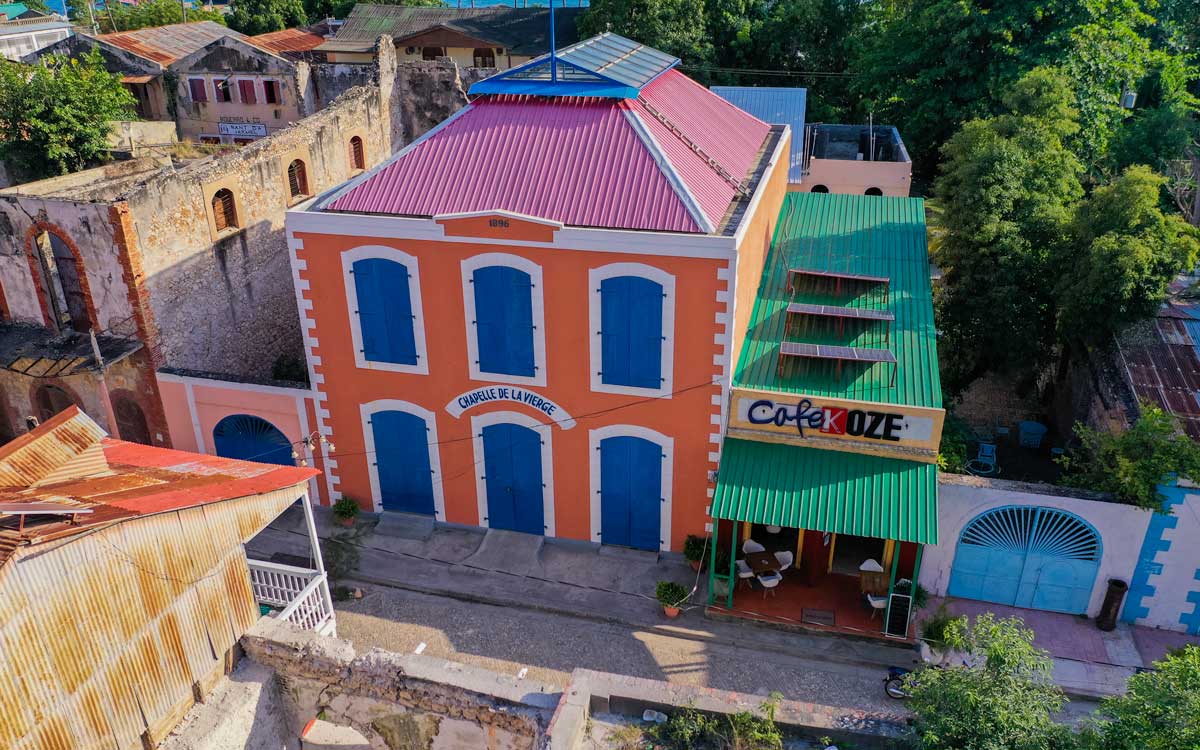
old colonial houses in coastal city
The Boucard House in Jacmel
Photo: Anton Lau

Gingerbread Houses

Copy LinkEmailFacebookShare

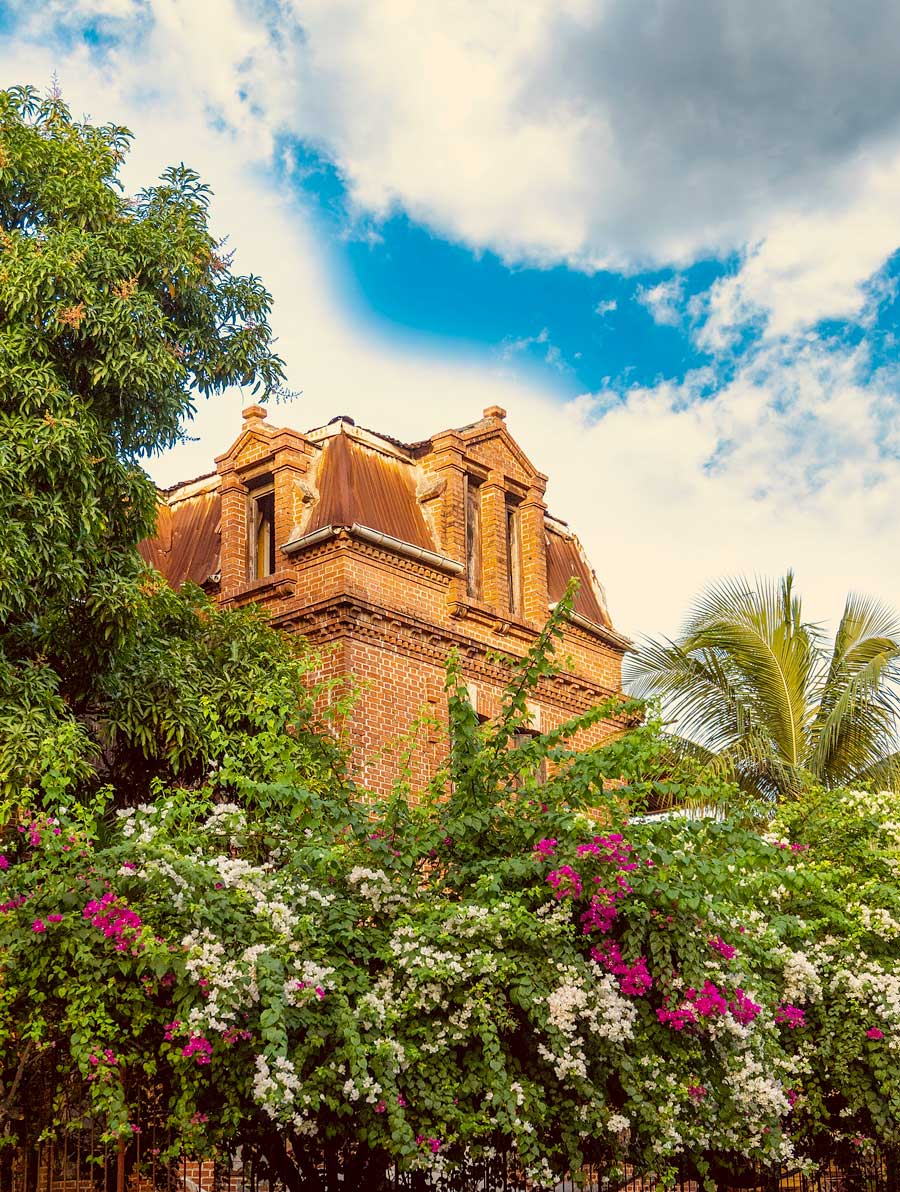
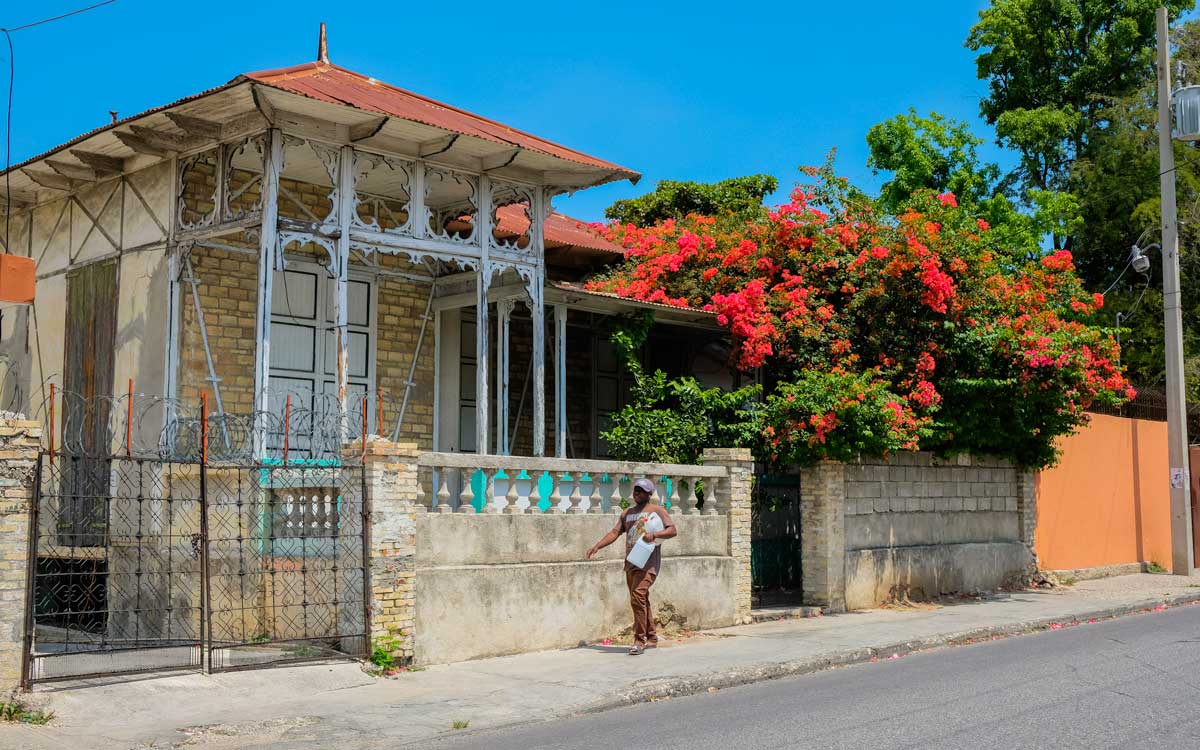
Gingerbread Houses are ornate turn-of-the-century buildings unique to Haiti. Like their edible namesake, Gingerbread Houses are famous for steep roofs and ornate details highlighted in vibrant, contrasting colours. They are architecturally fascinating for a number of reasons – not least because they’ve proven to be surprisingly resistant to earthquakes.

An iconic feature of urban communities around Haiti, these ageing architectural masterpieces have survived a century of turmoil and natural disaster, and are a compelling conservation opportunity. And they’ve just been formally recognised as one of the most important at-risk heritage sites in the world.

old colonial haitian house in tropical garden
Old gingerbread house on Rue 16 F, Cap-Haïtien
Photo: Mozart Louis

Where can you see Gingerbread Houses?

These stately relics are scattered throughout Port-au-Prince, but are concentrated in the neighborhoods of Pacot, Turgeau, Bois Verna, and Bas Peu de Choses. You’ll also find Gingerbread Houses in other cities around Haiti, including JérémieJacmel, and Cap-Haïtien.

Who were they built for? What are they used for now?

Originally, Gingerbread Houses were built as the residences of powerful Haitian families, and many surviving examples have housed Haitian presidents. During the 1900s, some of these Gingerbread residences were acquired or built by Catholic institutions, which is why many of the Catholic schools and buildings you can see today are examples of the Gingerbread style.

During Haiti’s boom time as a fashionable travel destination in the 1950s and 60s (when the moniker “Gingerbread” was first introduced by American tourists), Gingerbread Houses were symbols of prestige, used as the seasonal residences of stars like Truman Capote, Noël Coward, Graham Greene and Katherine Dunham, who stayed at the Hotel Oloffson or bought Gingerbread Houses of their own.

Today, most of the investment in Gingerbread Houses comes from the arts. Organizations like Kolektif 509FOKAL, Fondation Viviane Gauthier and Le Centre d’Art are restoring iconic Gingerbread Houses and opening them up to the public as spaces to preserve, practice and promote Haitian art forms.

colonial house decorative fretworkand latticework details
Gingerbread house in Turgeau
Photo: Franck Fontain

Architectural style

In 1895, three young Haitians travelled to Paris to study architecture, and adapted Parisian architecture to the Caribbean climate and living conditions. Together, these young architects refined the architectural style now known as “Gingerbread”, designing civic buildings and residences that combined French-inspired, Victorian Gothic grandeur with flamboyant colors and vivid decorative patterns – including vèvè symbols from Haitian Vodou.

Designed for Haiti’s tropical hot and humid weather, Gingerbread Houses feature tall ceilings, doors and windows as well as wrap-around verandahs, all decorated in a vibrant, distinctive style with elaborate details unique to Haiti. Most Gingerbread Houses were constructed using natural, flexible timber frames that have the innate ability to weather some of the Caribbean’s toughest storms (and as it turns out, even earthquakes).

Inside, they’re a mastery of climate-control, with high ceilings and tall turret roofs designed to draw hot air upwards and out of living rooms. Louvred shutter windows allow cool breezes in and keep moisture out. In the leafy suburbs of Pacot, Pétion-Ville and Turgeau, these majestic windows open out onto picturesque views of the city. Luxurious, extended front porches plunge onto stately grounds with manicured tropical gardens.

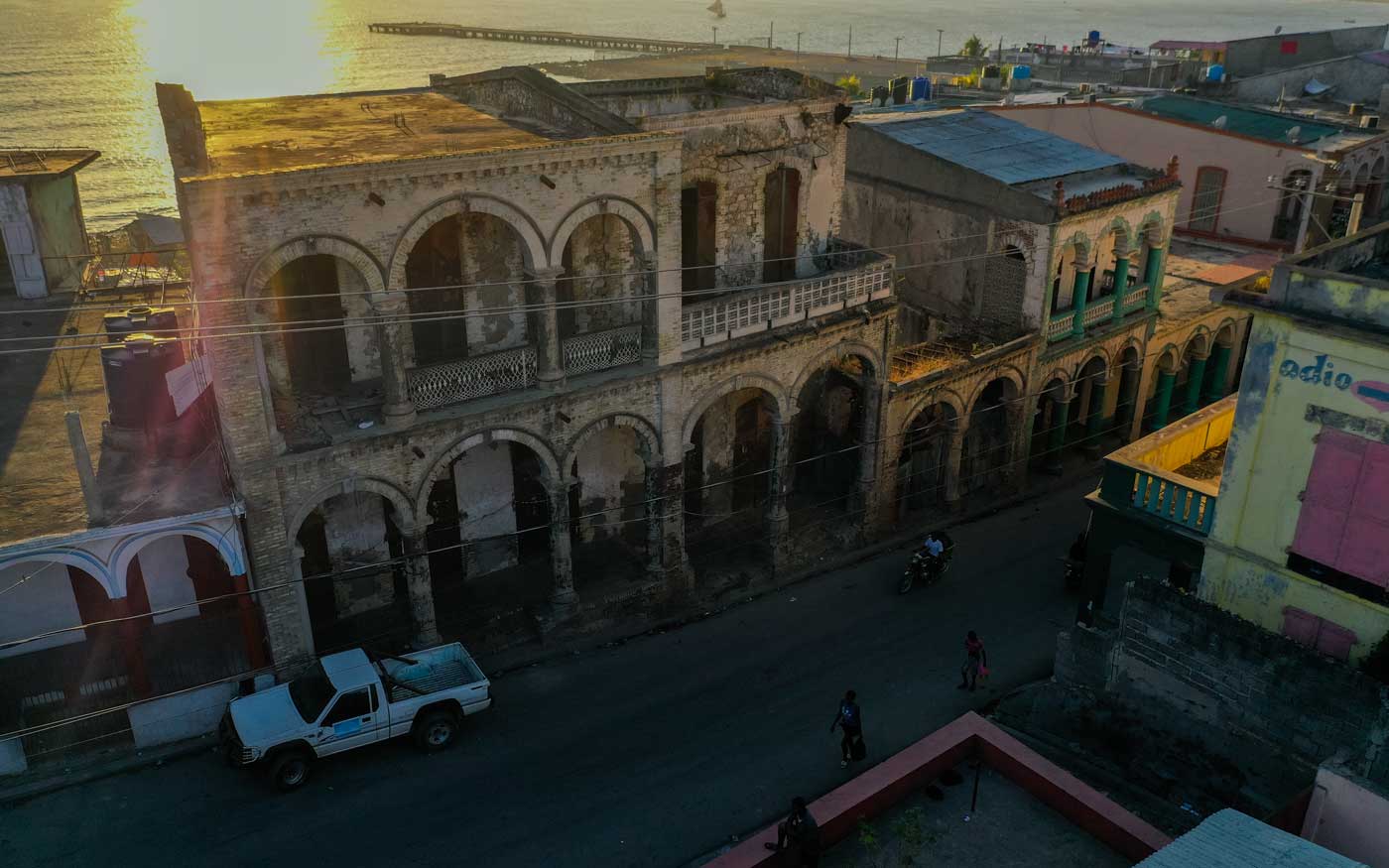
old colonial houses on city street in jacmel
Gingerbread houses on Rue Du Commerce, Jacmel
Photo: Anton Lau

Conservation

By the 21st century, many of these once-elegant, century-old structures had fallen into disrepair. Although the communities of people living in and caring for Gingerbread Houses had made substantive efforts to preserve them, political and economic conditions meant that only some of these iconic buildings could be adequately preserved.

As a whole, the historic Gingerbread House district of Port-au-Prince wasn’t getting the support it needed as an at-risk cultural heritage site. In 2009, the Haitian Leadership and Education Program (HELP) successfully brought Gingerbread Houses to the attention of the World Monuments Fund (WMF), in the hopes of generating support for the restoration of these irreplaceable treasures. In late 2009, Haiti’s Gingerbread Houses were chosen as one of  the WMF’s 2010 World Monuments Watch list.

2010 earthquake

Less than three months later, the devastating earthquake of January 12, 2010 struck. The Haitian government made Gingerbread Houses a conservation priority. Now internationally recognised for their architectural and social significance, local and global cultural heritage organizations mobilized quickly to assess the damage. By early February, teams were touring Gingerbread House sites to inspect and evaluate. Though many suffered serious damage, their traditional construction proved surprisingly earthquake-resistant, and very few of them collapsed.

In fact, less than five percent of Gingerbread Houses collapsed completely, compared with forty percent of modern, conventionally-constructed buildings. Architects are now trying to analyse what makes the fragile-looking, intricate Gingerbread Houses so seismically resistant, in the hopes of designing future homes in Haiti to be more resilient.

2020 World Monuments Watch

In November 2019, the Gingerbread district of Port-au-Prince was chosen as one of 25 globally-important sites on the WMF 2020 World Monuments Watch, a list of exceptional sites that “marry great historical significance with contemporary social impact.”

The Gingerbread district was selected from more than 250 applications, after a series of in-depth reviews by an independent panel of international experts in heritage preservation.

“The chosen locations are determined not only by their architectural value, but also by their impact on communities around the world,” said Bénédicte de Montlaur, CEO of WMF. “These remarkable sites demand sustainable, community-driven solutions that bring people together and combine conservation and social change”

Being on the 2020 Watch list means that local stakeholders working to preserve Port-au-Prince’s Gingerbread district will now receive crucial funding from the WMF and its international financial partners. Hopefully, the hard work of local conservation teams will now have an even bigger impact.

A compelling conservation opportunity

Port-au-Prince’s historic Gingerbread Houses embody Haiti’s cultural heritage in a nutshell: rich and incredibly valuable as a cultural and economic resource for contemporary Haitians and future generations to thrive – but also endangered, under-documented and underfunded.

Make a difference by visiting Port-au-Prince’s Historic District today. If you’re lucky, you might get to meet the communities of artists and conservationists working to revitalize these extraordinary treasures.

old colonial houses lined on street with ocean in background
Old gingerbread houses on Rue Stenio Vincent in Jérémie
Photo: Anton Lau

Go on a self-guided tour of Gingerbread houses


Open to the public in Port-au-Prince

Villa Kalewès – 99 Rue Gregoire, Petion-Ville. Easily recognizable by the rich gingerbread color of its fairy-tale wooden walls and icing-like white lace edging. One of the most important Gingerbread structures in Petionville, Villa Kalewès remains both in-use and, lucky for us, open to the public. Villa Kalewès isn’t open every day, so make sure to visit during an advertised event or call head to check.

Maison Dufort – 9 2eme Rue du Travail, Turgeau, Port-au-Prince. Open to the public 9am – 4pm. Maison Dufort was extensively restored by nonprofit FOKAL (Foundation Connaissance et Liberté) between 2012 and 2018. To find out more, ring 2813-1694 or email [email protected]. Voyages Lumière run guided tours in French and English.

Gingerbread restaurant – 22 Rue 3, Port-au-Prince. Open 11am to 10pm Monday thru Saturday. Closed Sundays.

Hotel Oloffson – Ave Christophe, 60, Port-au-Prince. A working hotel, Hotel Oloffson also has a restaurant where non-guests are welcome for lunch (US $12-15) and dinner (US $15-25), as well as a famously good live Vodou rock show every Thursday night. Originally built as the residence of an influence family, Hotel Oloffson has been a presidential residence, a US military hospital (during the 20-year US occupation of Haiti from 1915 to 1935) and a hotel since 1936. Glorified in Graham Greene’s 1966 novel The Comedians.

Le Centre d’Art / Larsen Family House – 22 rue Casseus, Pacot, Port-au-Prince. In late 2019, this house was purchased from the Larsen family and will become the new home of Le Centre d’Art. The old premises of Le Centre d’Art, at 58 rue Roy, were damaged beyond repair during the 2010 earthquake.

Maison Gauthier – In the heart of the historic Gingerbread district, Maison Gauthier “represents both the life of the celebrated doyenne of Haitian folkloric dance, Viviane Gauthier, and one of the finest examples of gingerbread architecture in Haiti.” In 2015 the Fondation Viviane Gauthier was established to restore the villa and maintain it as a place to teach and promote Haitian folkloric dance.

Open to the public outside Port-au-Prince

In Jacmel it’s possible to see inside a Gingerbread House at Hotel FloritaHotel Manoir Adriana, Sant d’A Jakmel and Alliance Francaise.
In Cap-Haitien it’s possible to go inside Hotel Roi Christophe and Alliance Francaise.
Not open to the public

The Peabody House – hidden from view by dense tropical gardens, the Peabody House is near the corner of Rue Pacot and Rue Malval in Pacot, Port-au-Prince.

The Cordasco House (also known as Villa Marimar / Le Petit Trianon) – a 19th century gothic Gingerbread mansion in Pacot, Port-au-Prince.
Villa Castel Fleuri – Avenue H. Christophe, Port-au-Prince. Briefly home to the President of Haiti, Villa Castel Fleuri suffered extensive damage during the 2010 earthquake.

Le Manoir – Avenue John Brown, Port-au-Prince. Has remarkable roofs and turrets constructed with decorative pressed metal roof shingles.

The Patrice Pamphile House – 4 Rue Casseus, Turgeau, Port-au-Prince. Extensively damaged by the 2010 earthquake.

Maison Chenet, also restored by nonprofit FOKAL between 2012 and 2018.

The Bazin House on Rue du Travail Deuxième, Port-au-Prince.

The house of Jean-Richard Montas – 79 Avenue H. Christophe, Port-au-Prince.

Gingerbread House built by Tancrede Auguste – 32 Lamartiniere, Port-au-Prince.

Wood-frame house – 24 Avenue Lamartiniere, Port-au-Prince.

A charming example of a smaller and simpler Gingerbread House – 26 Rue 7

A large and elaborate Gingerbread House, still surrounded by its original
spacious property, at 9 Rue Bellvue, Port-au-Prince.

Gingerbread House – 51 Avenue Christophe, Port-au-Prince.

Gingerbread House at 59 Lavaud 3, Port-au-Prince.

Gingerbread House at 14 Rue Marcelin, Port-au-Prince.

Gingerbread House at 32 Lamartiniere, Port-au-Prince.

Gingerbread House at the Episcopal University, 14 Rue Légitime, Port-au-Prince.

Gingerbread House at 22 Rue Pacot, Port-au-Prince.

College de Jeunes Filles, at 10 Lavaud, Port-au-Prince.

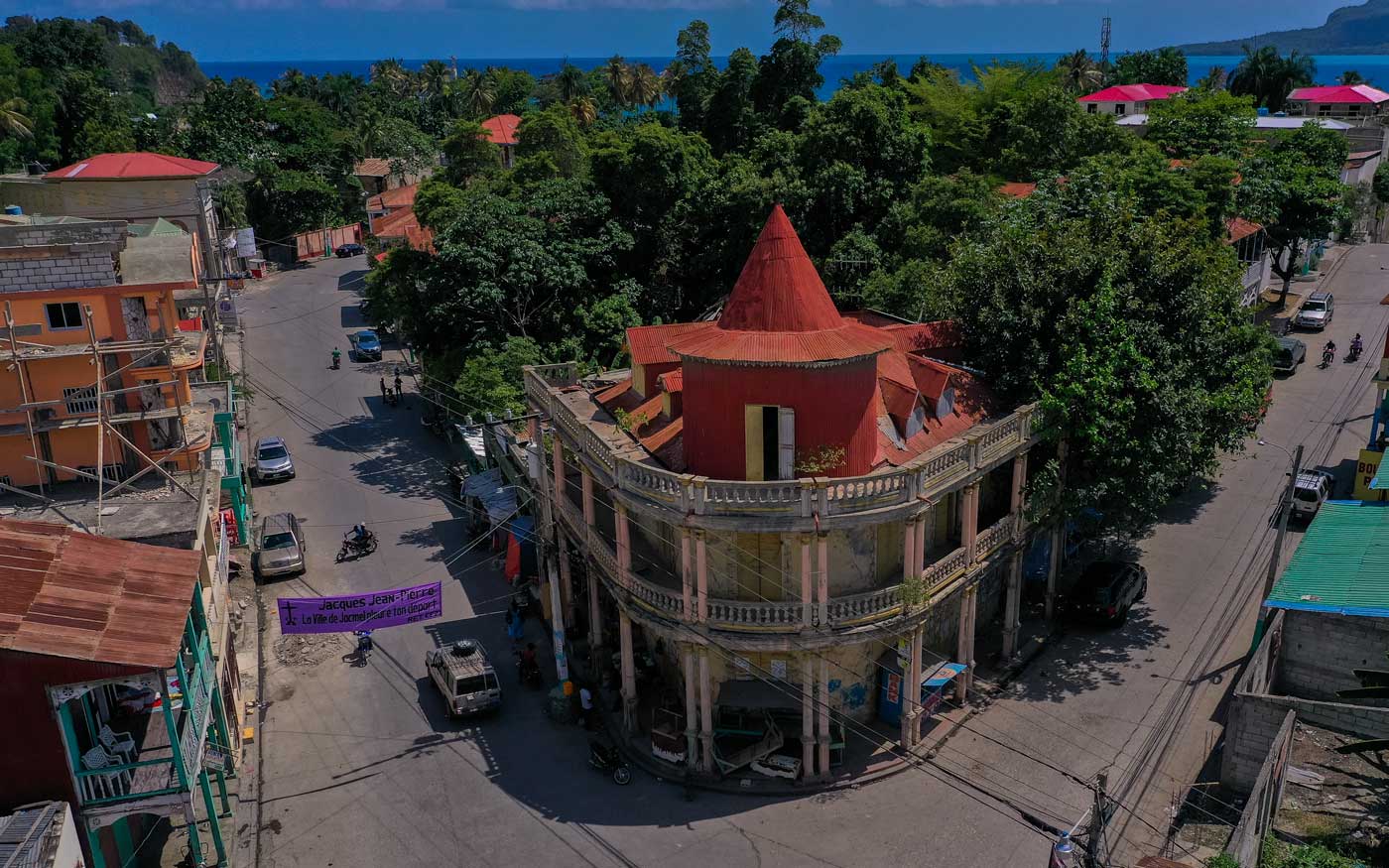
old colonial house on city street with traffic
Gingerbread house in Jacmel
Photo: Anton Lau

Written by Kira Paulemon.

Published May 2020


Read story
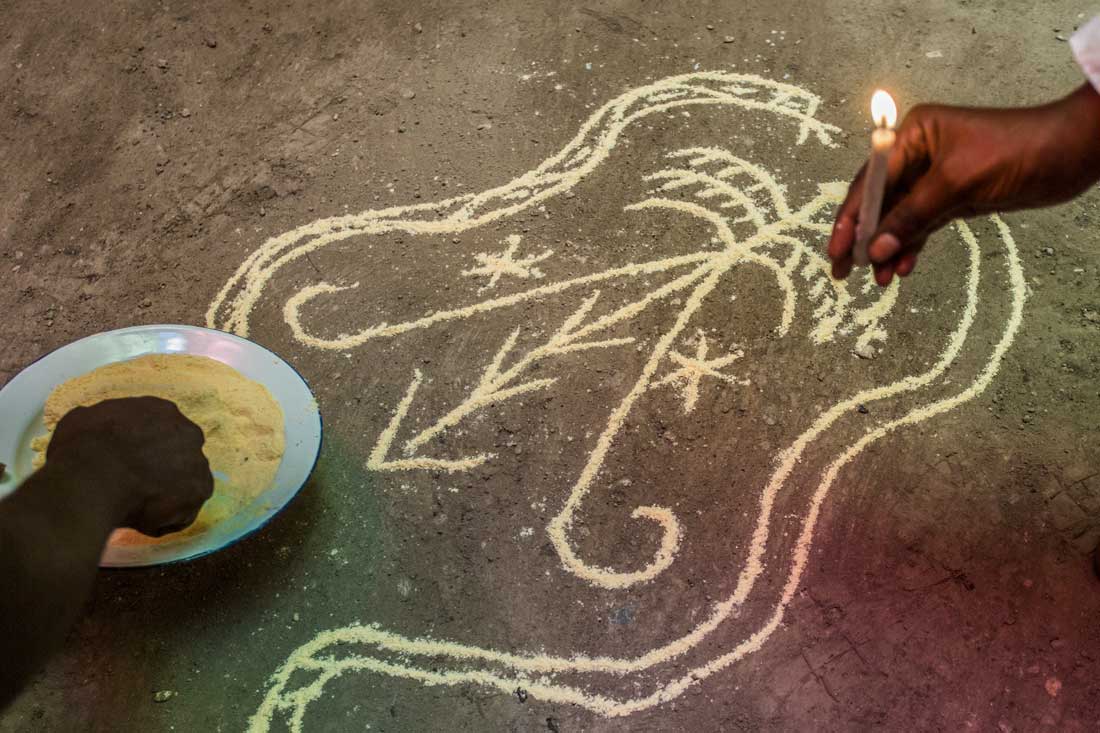
cosmogram being traces on floor with hand holding a candle

Photo Journal: Marigot

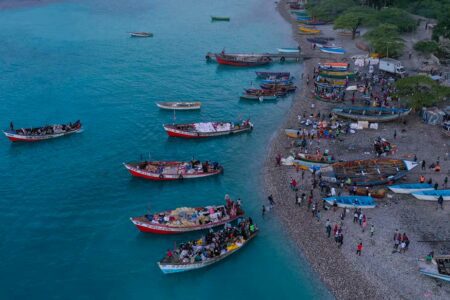
aerial view of port with boats and people
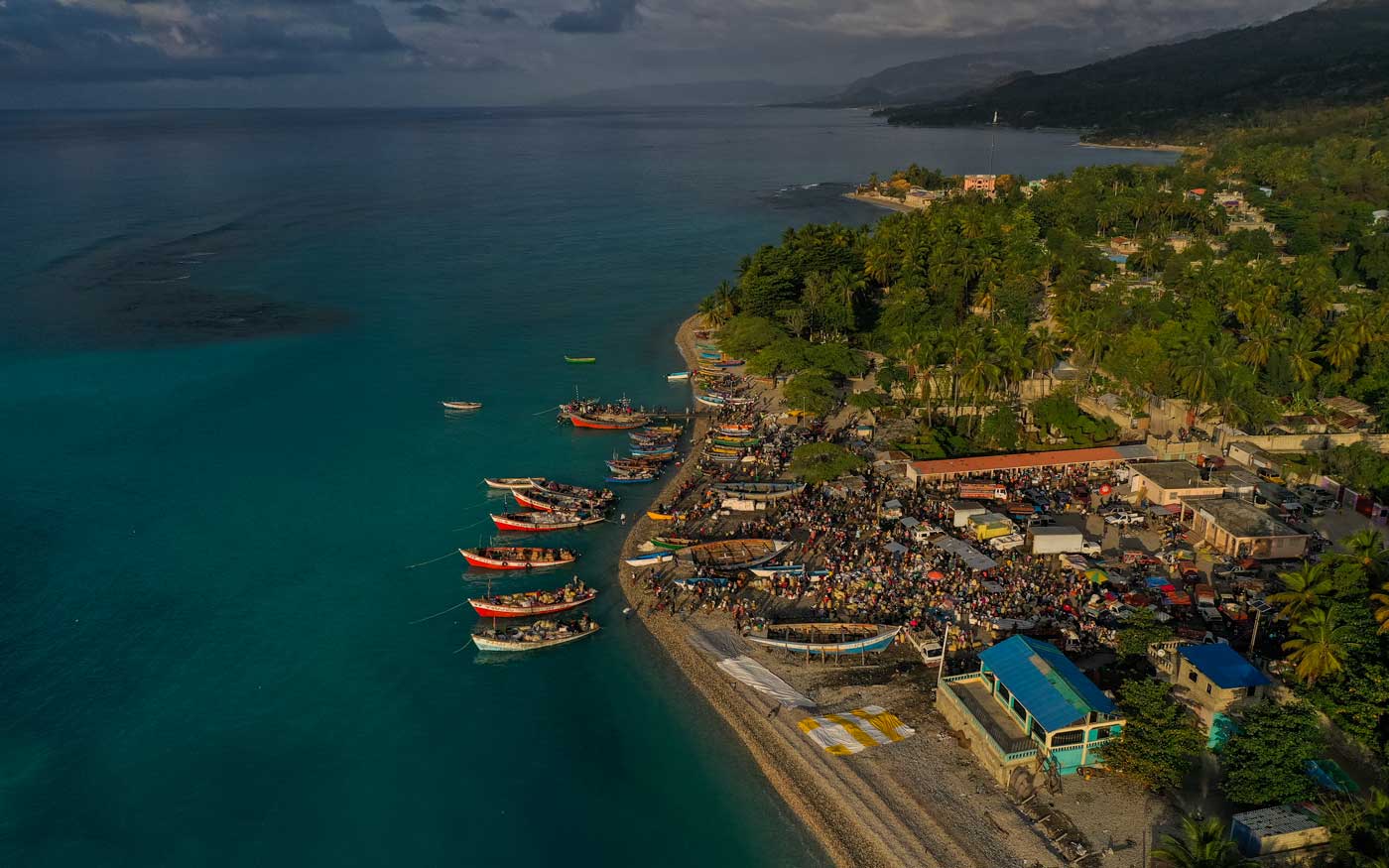
Port of Marigot, Haiti
Photo: Franck Fontain

Photo Journal: Marigot

Copy LinkEmailFacebookShare

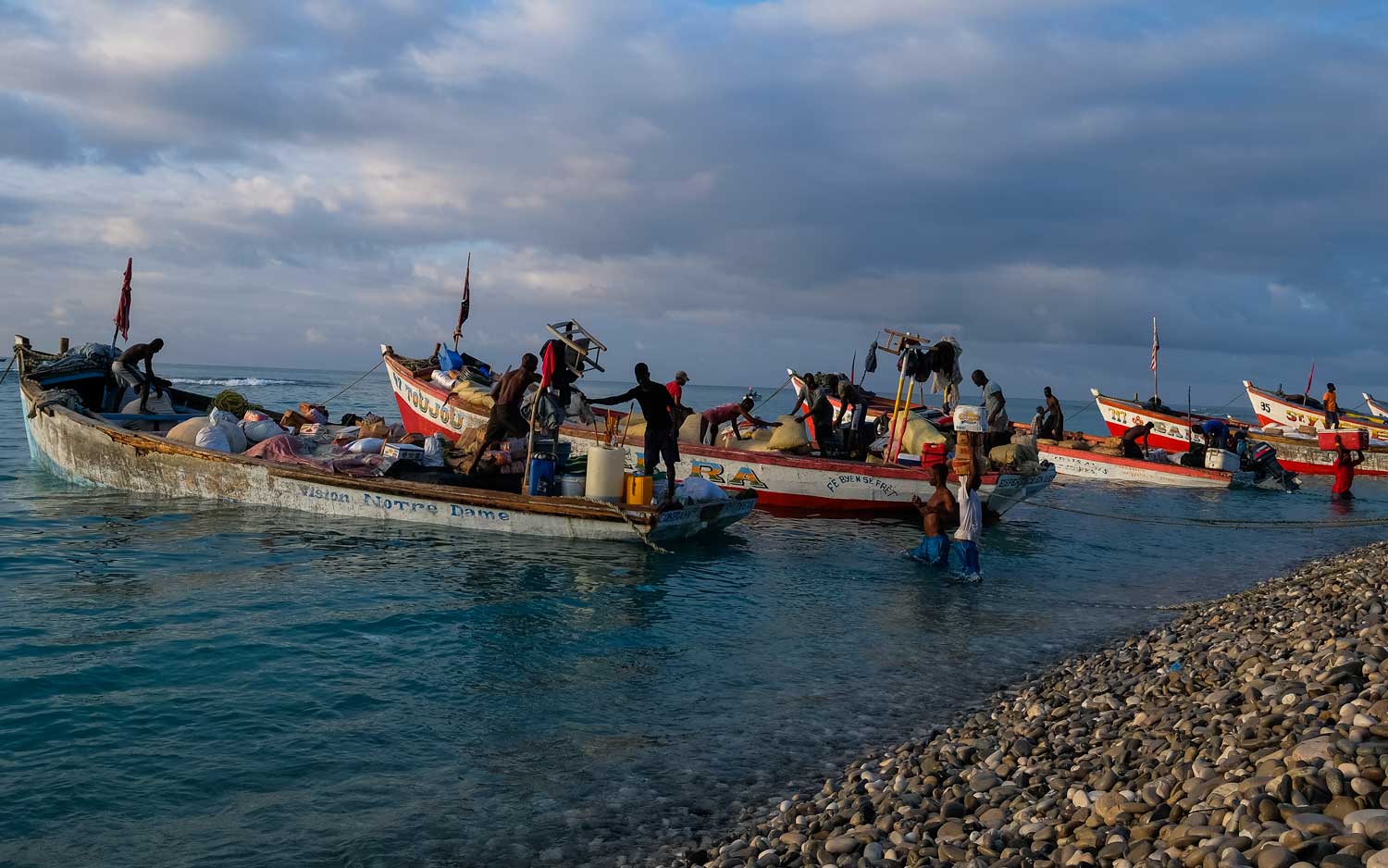
Marigot’s farmers’ market is a salient feature of the village. An important pulse point, the market only operates on Saturdays. Boats arriving from Anse-à-Pitre dock at the port hours before the sun rises over the village.

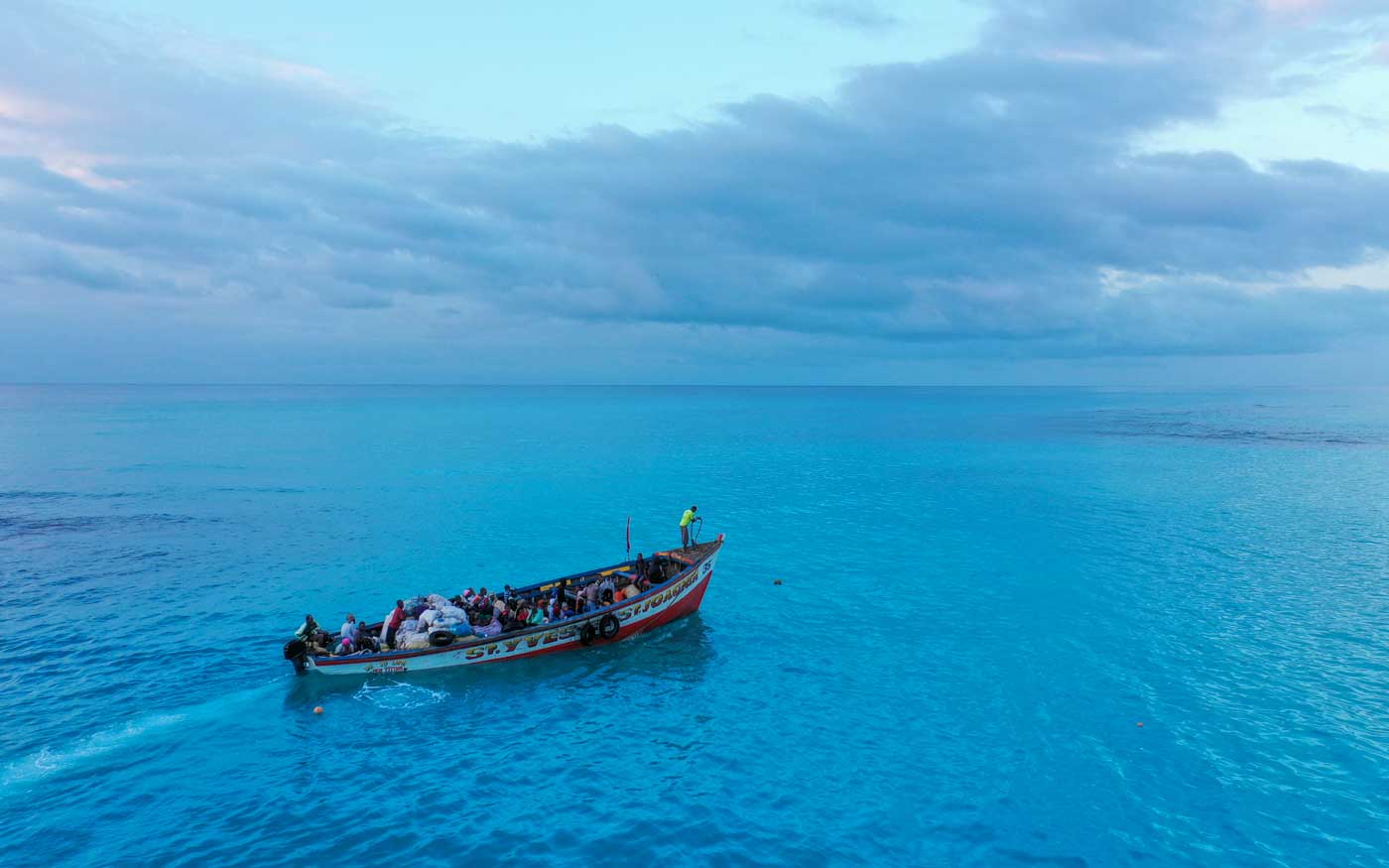
large wooden boat with haitians on the open ocean
Boat arriving from Anse-à-Pitres to Marigot
Photo: Franck Fontain

The boats are a great way to kill two birds with one stone. On the one hand, they carry goods to Marigot, and on the other, because road conditions are awful, they facilitate the transportation of passengers.

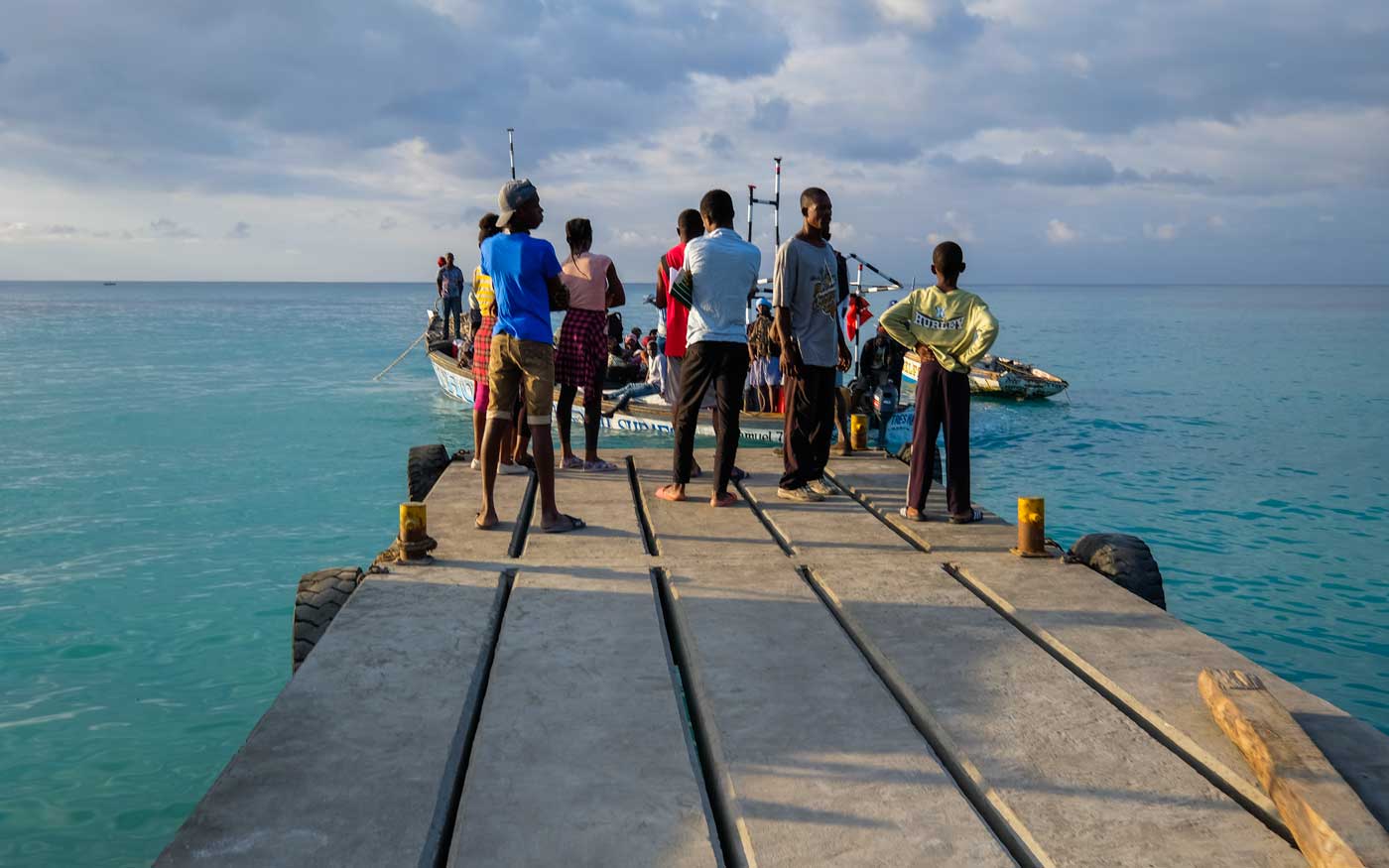
group of haitians stading on wharf with boats
People waiting on the wharf in Marigot
Photo: Franck Fontain

These boats carry people heading to or from places like Savane Zonbi, Thiotte, Anse-à-Pitres, or the Dominican Republic.

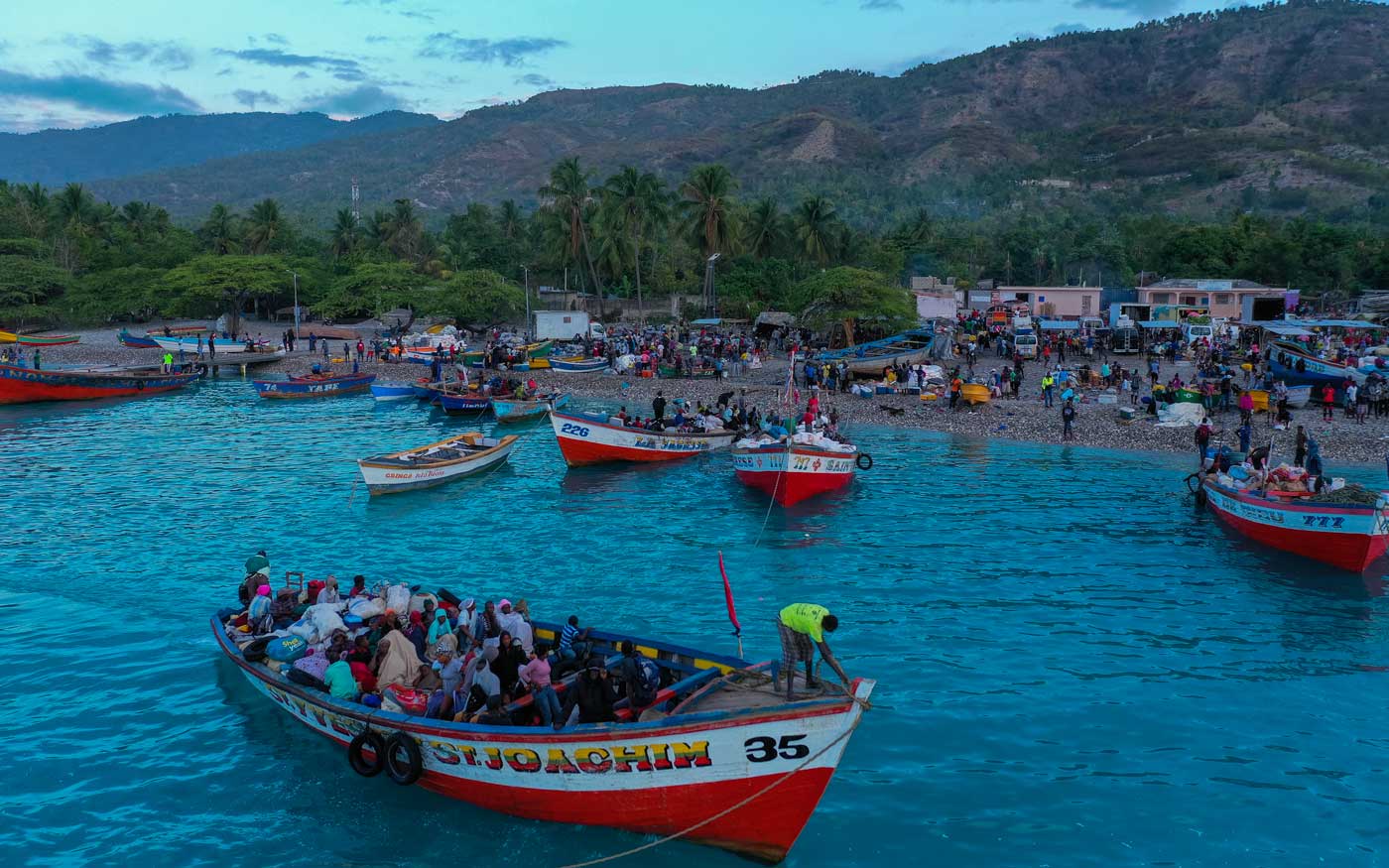
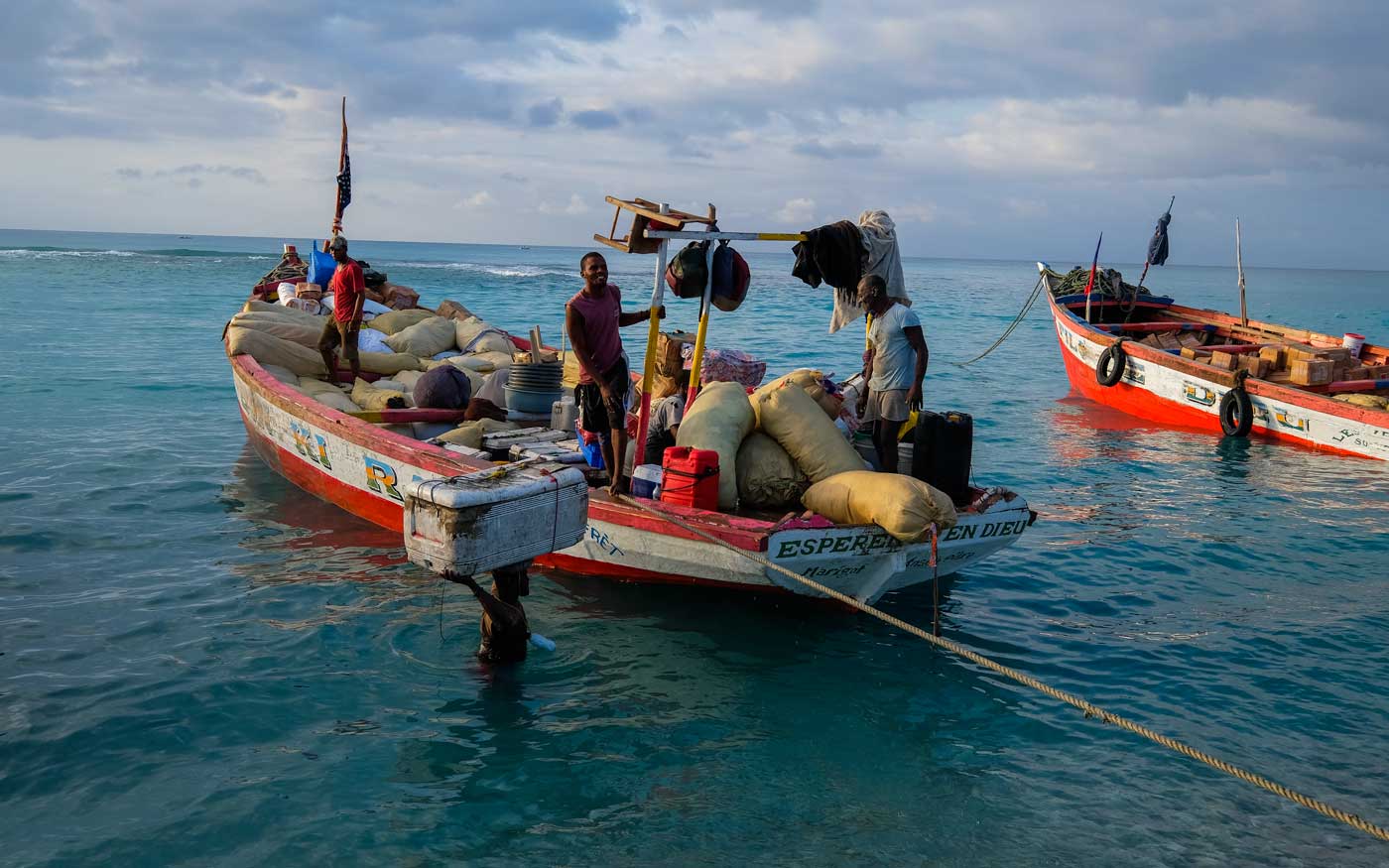
large wooden boats with haitians docking on beach
Boat from Anse-à-Pitres docking in Marigot
Photo: Franck Fontain

The scene at the port is both very Haitian and extremely picturesque. Nimble and hardworking men move packages off the boats and onto the docks.

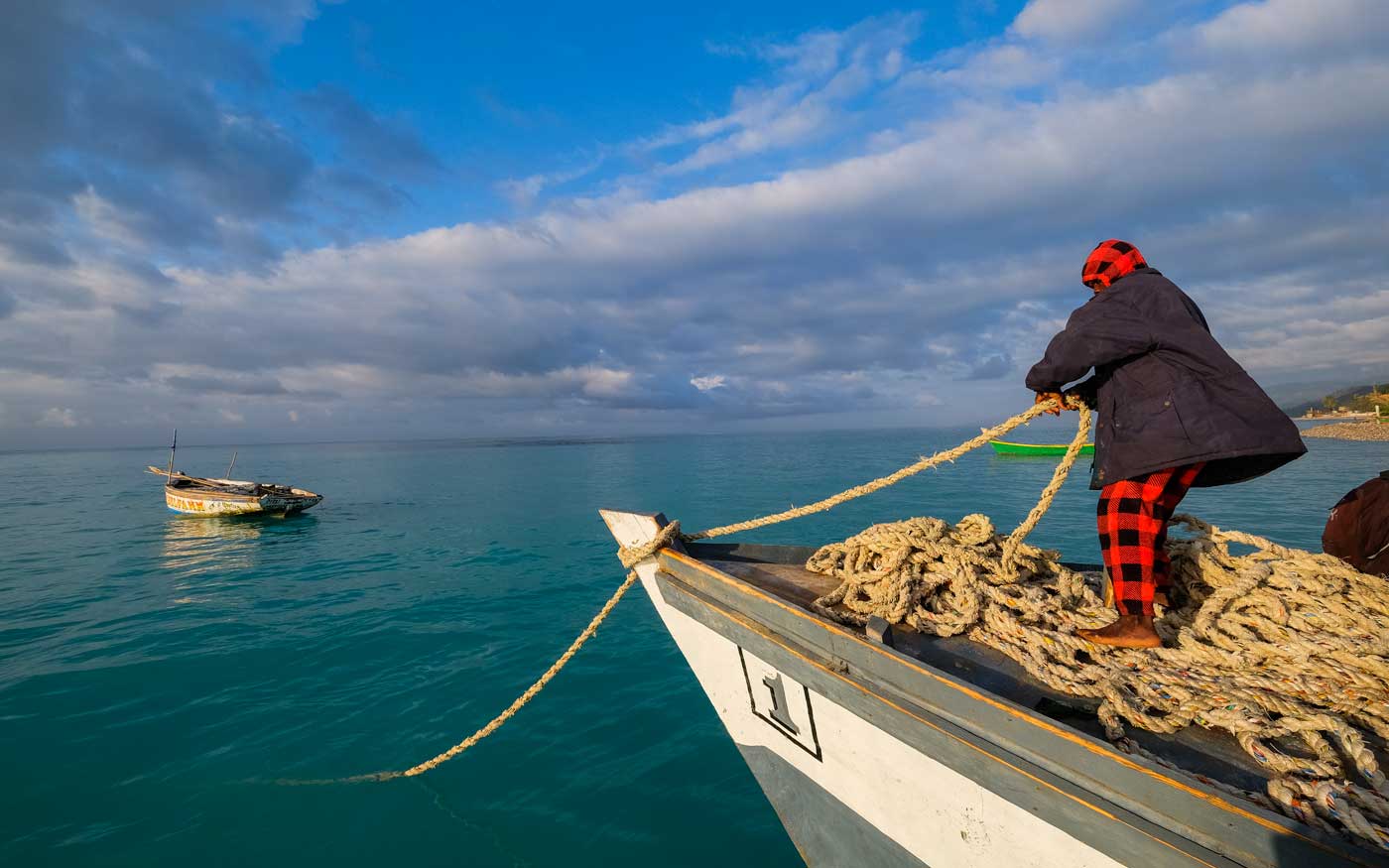
man standing on boat pulling a large rope
A man mooring a boat in Marigot
Photo: Franck Fontain

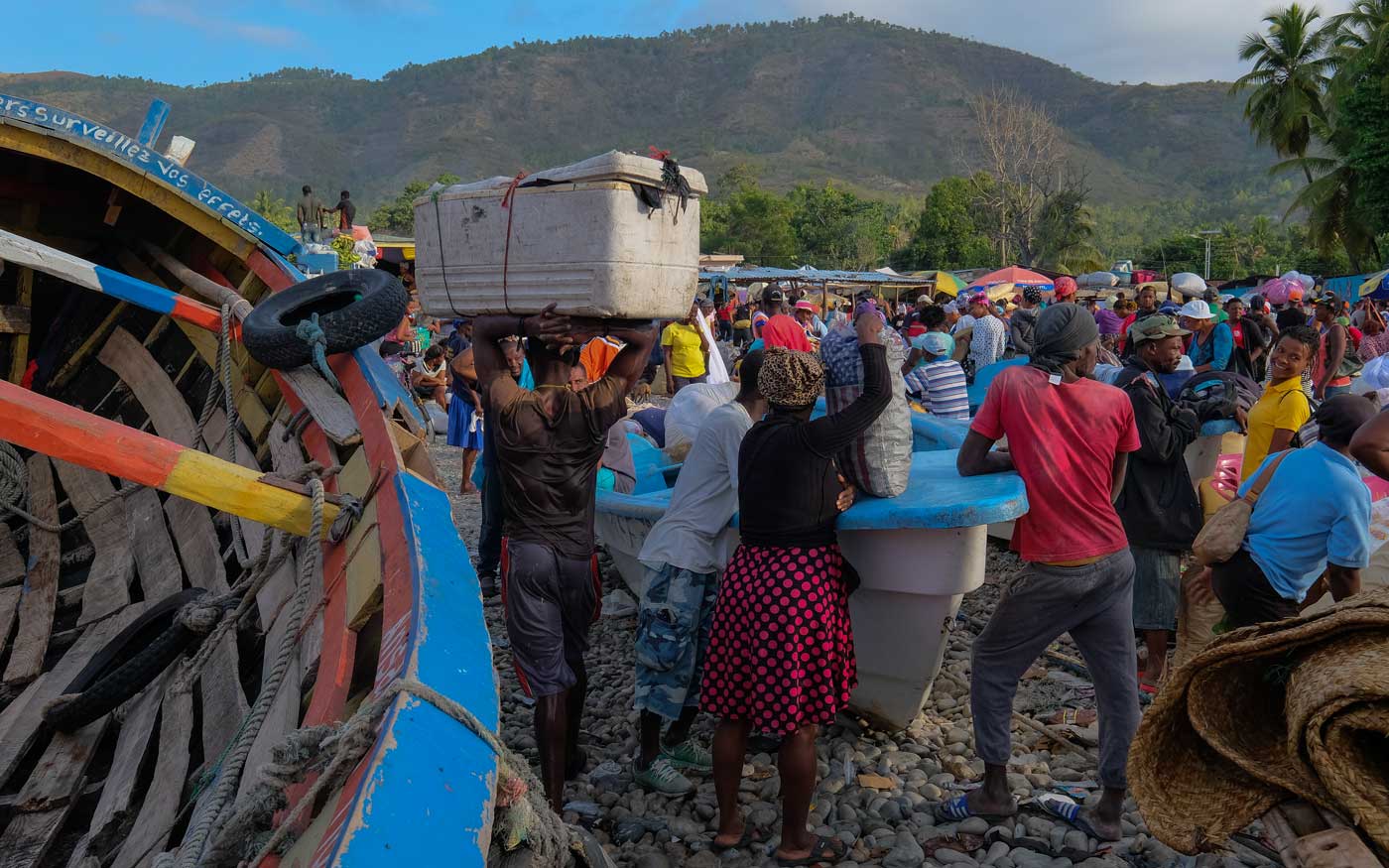
Wading through water up to their chests, they balance very large sacks of coal, heavy coolers stuffed with fish, and even stacks of packed cardboard boxes on their heads.

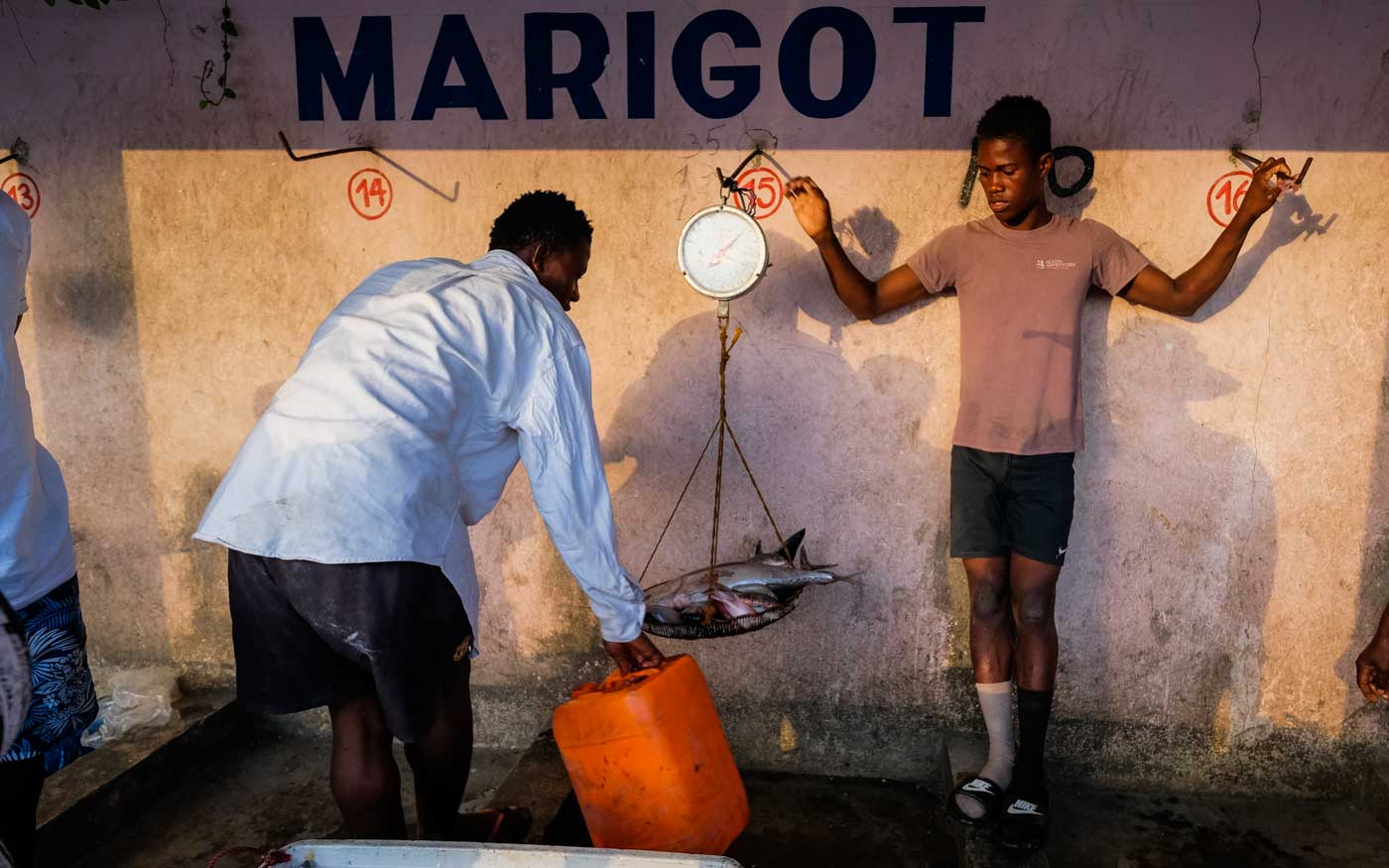
two haitians weighing fish at market
People working at the fish market in Marigot
Photo: Franck Fontain

From the docks, all these packages are loaded onto trucks headed to other cities, but– careful! These workers move fast, and need you to be out of their way. There’s no time to waste!

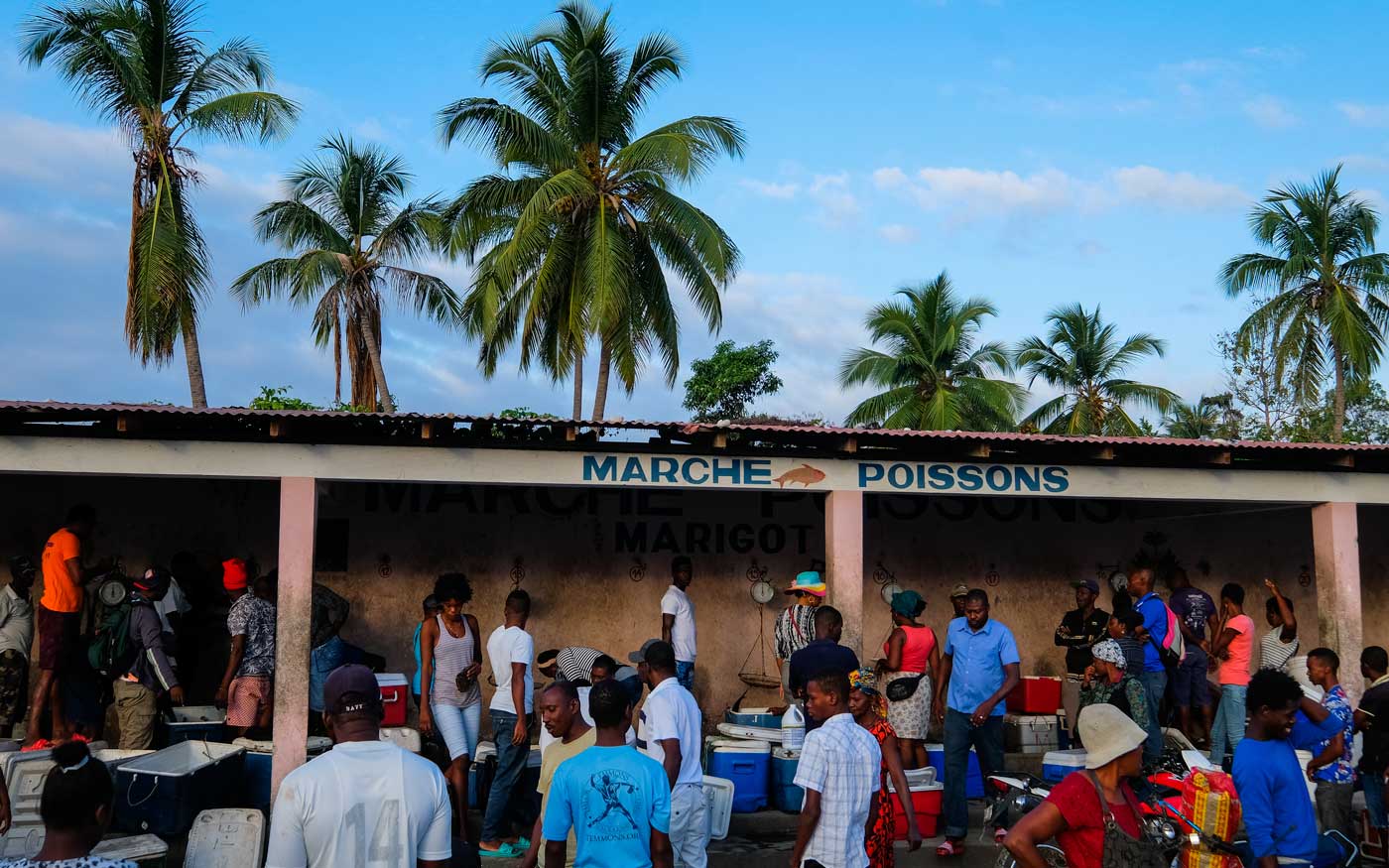
a fish market in haiti with many people
The fish market in Marigot
Photo: Franck Fontain

The coolers of fish are taken to the nearby fish market; an open building located just a short walk from the wharf. This is where fish is weighed and priced.

As any farmers’ market in Haiti, haggling is a must, and commotion is everywhere; from fish vendors to other merchants crisscrossing the building.

to haitian men sitting on a stony beach with boats
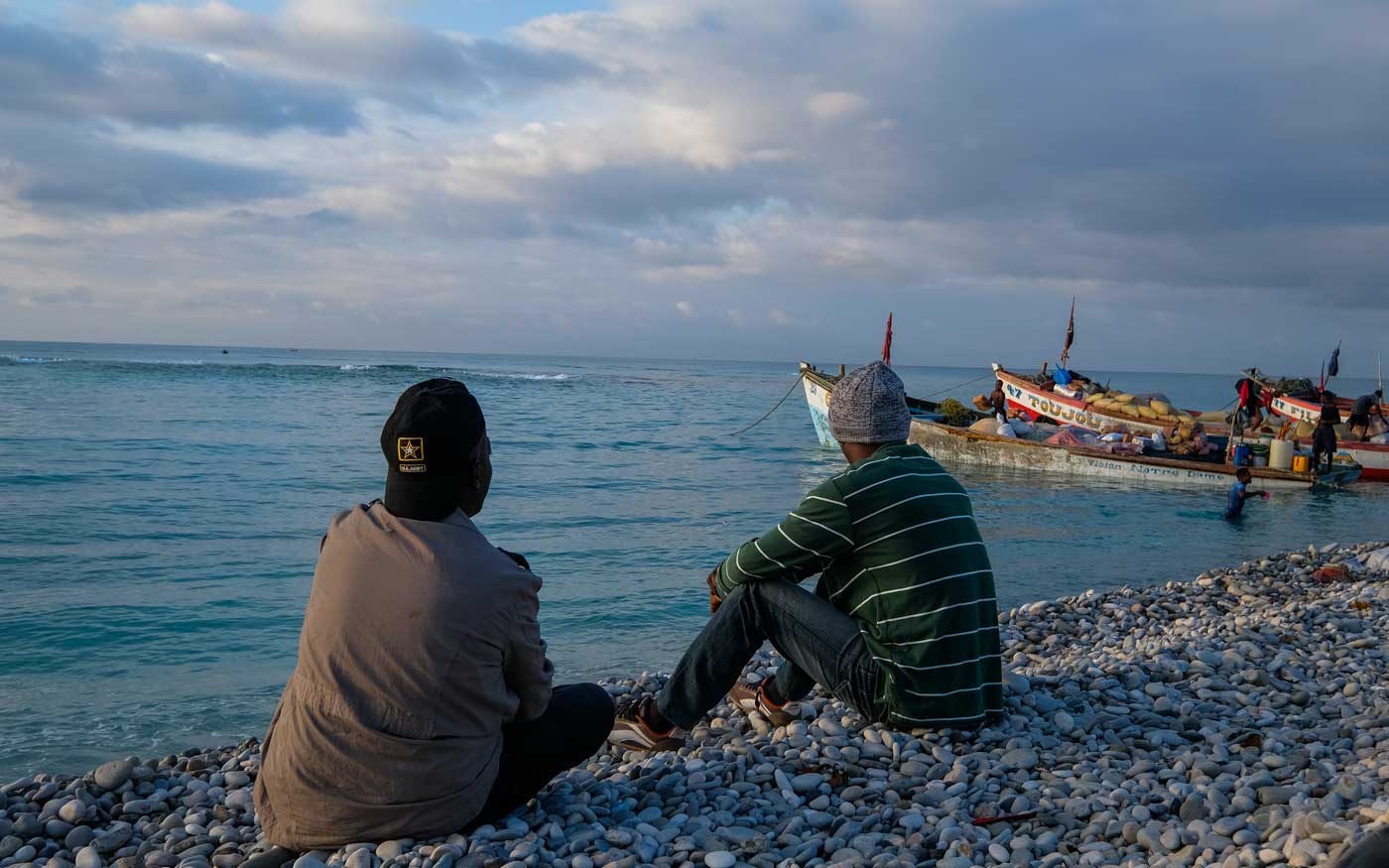
Two men watching the boats being unloaded
Photo: Franck Fontain

Large amounts of fish and seafood in Marigot regularly make their way to plates in Port-au-Prince, as middlemen come to stock up for the capital’s restaurants every week.

aerial view of coastal village with market area and boats
Sun rising over the port of Marigot
Photo: Franck Fontain
Read story

Kaskad Pichon

large haitian waterfall splashing into natural pool with people swimming
Kaskad Pichon waterfalls, Belle-Anse
Photo: Franck Fontain

Kaskad Pichon

Copy LinkEmailFacebookShare

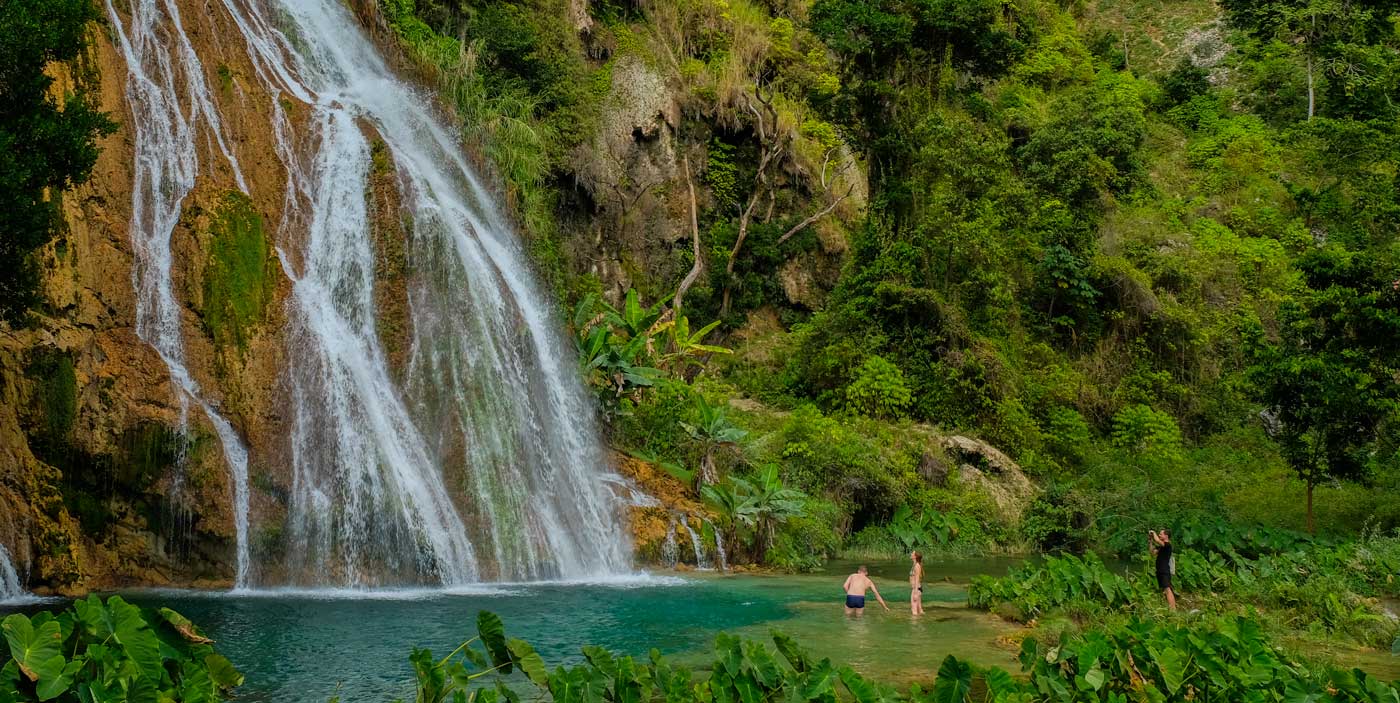
Kaskad Pichon is a stunning waterfall located in the commune of Belle-Anse, in the South-East Department of Haiti. The waterfall is notoriously hard to get to, but worth the adventure.

Belle-Anse commune is home to soft, sandy beaches, and Kaskad Pichon (French: Cascade Pichon) is the crowning jewel of its inland treasures. A cluster of three separate basins, each crowned by glorious waterfalls, Kaskad Pichon is sustained not by rainfall, but an underground lake.

The waterfall runs through three separate basins: Bassin Chouket, where wild mint grows and perfumes the banks of the pool, Bassin Dieula and Bassin Marassa.

The Haitian Kreyol proverb “dèyè mòn gen mòn” reflects the Haitian landscape – “behind mountains, there are more mountains”. Once in a while, though, in between these mountains, you’ll stumble upon a hidden gem (and travellers who’ve been here before know that Haiti is full of them). One such hidden gem is Kaskad Pichon, a waterfall that is as stunningly beautiful as it is notoriously hard to get to.

Visiting Kaskad Pichon might have you snapping pictures the entire time, or putting your phone down in awe — up to you, really! However you decided to take it in, a visit to Kaskad Pichon is an intimate wilderness experience that you’ll remember for years to come.

Three travellers wading in the Kaskad Pichon waterfalls, Haiti
Travellers exploring the Kaskad Pichon waterfalls, Haiti
Photo: Franck Fontain

Getting to Kaskad Pichon

Kaskad Pichon is remote, and to get there, adventurers need to be prepared to drive (or hire a chauffeur), ride a motorcycle, and hike.

The drive to Belle-Anse, the main town of the area, is quite a trip in and of itself, on a gravel road that passes through floodplains, riverbeds, and up steep hillsides. If you drive from Marigot the trip to Belle-Anse should take about two or three hours. The town of Belle-Anse is interesting enough to spend a morning exploring, or at least stopping for lunch to re-energize before the most rugged part of the adventure.

From Belle-Anse, you’ll need to drive to Pichon, and from there it’s another hour’s drive to Kaskad Pichon. A motorcycle ride from Pichon to the waterfall should cost you about 1,000 HTG per person (roughly US $11).

The ride up to the waterfall is part of the experience – clinging for dear life on the back of a bike, you’ll be driving through some of the most pristine wilderness Haiti has to offer, with mile upon mile of sandy white beach unwinding below the path up the mountainside. If you can plan for it with your motorcycle drivers, we highly recommend you make a quick swim stop en route to take in the beauty offered by Haiti’s south. It’s also a great opportunity to uncover some extremely instagrammable spots – you might want to plan in a little extra time for that.

After an hour-long motorcycle ride, you’ll have to hike, following a guide, for roughly 40 minutes, before reaching the waterfalls.


Written by Kira Paulemon.

Published January 2020


Read story

Meet the Locals: Travel Guide Ann-sophie Hamilton

portrait photo of young stylish haitian girl with long dreadlocks and red head scarf

Sustainable travel guide Ann-Sophie

Copy LinkEmailFacebookShare

Ann-Sophie Hamilton is one of the brightest Haitian voices on Instagram. Using visual storytelling, she takes her followers on adventures around Haiti, inviting us to fall in love with every facet of the island.

Based in Port-au-Prince, Ann-Sophie has established herself as a blogger, travel planner, business owner, and life coach. In 2015, she moved back to Haiti from Canada and launched her own sustainable tourism company, Mennen’m La Tours.

We asked Ann-Sophie to tell us all about her favourite places to visit in Haiti.

portrait photo of young stylish haitian girl with long dreadlocks and red head scarf
Ann-Sophie
Photo: Ted Olivier Mompérousse
What’s the first thing we should try, do or see once we arrive in Haiti?

The first thing to do, of course, is to try the food. Good, authentic, Haitian food is a must!

The second thing, if you want to see a beautiful Haitian beach – which you most likely will, is to head to Bananier, without a doubt.

What is your favorite upscale place to eat? How about your favorite ordinary place to eat?

I have a few. I really like to eat at Le Florville. The food there is really good, and the view of the mountains is really nice. I like Portofino; it’s not really casual but not extremely fancy — somewhere in between. Quartier Latin is also a great place to grab a bite; I really love the décor. I really like eating at Haiku, as well.

Bacchus opens only late at night. It has the best goat and pork, and their fried plantains and spicy sauce are really nice. It’s a little place that you only know about if someone tells you about it. It’s clean and quite spacious.

Which city outside of Port-au-Prince is a must-see, and why?

Jacmel would be my must-see, because there’s so much to do. Each city is known for something. Petit-Goave is known for beaches. Nippes is the destination for waterfalls. Jacmel is a combination of many things: good food, good art, and they also have Bassin Bleu – which is a must visit.

Their beaches are really good for surfing, if you’re into that. In the outskirts of Jacmel, there are also a lot of plantations — awesome places to see.

What’s one place nature-lovers should absolutely see?

If you’re into nature and adventure, the hike to Seguin is a once in a lifetime experience – because some people only have the strength do it only once, but it’s so worth it! It’s a seven-hour hike from Furcy to Seguin, but when you get there, there’s a waterfall and a guest house with good food.

It’s a very challenging experience, but with a good group and healthy snacks, it’s definitely possible and an awesome attraction! Mennen’m La Tours can organize tours for people who already have a group and who would like to make it to Seguin!

Where should we go to get the best souvenirs and artworks?

In Port-au-Prince, I recommend Place St. Pierre in Pétion-Ville for paintings and other artworks, and Village de Noailles for iron artwork.

In Jacmel, there are plenty of little shops all over the city where you can get a variety of different artworks and souvenirs.

portrait photo of young stylish haitian girl with long dreadlocks and red head scarf
Ann-Sophie
Photo: Ted Olivier Mompérousse

Interview by Kelly Paulemon.

Published January 2020


Read story

Fort Ogé

fort oge fortress on mountain top with ocean view
Fort Ogè, Jacmel
Photo: Anton Lau

Explore Fort Ogé

Copy LinkEmailFacebookShare

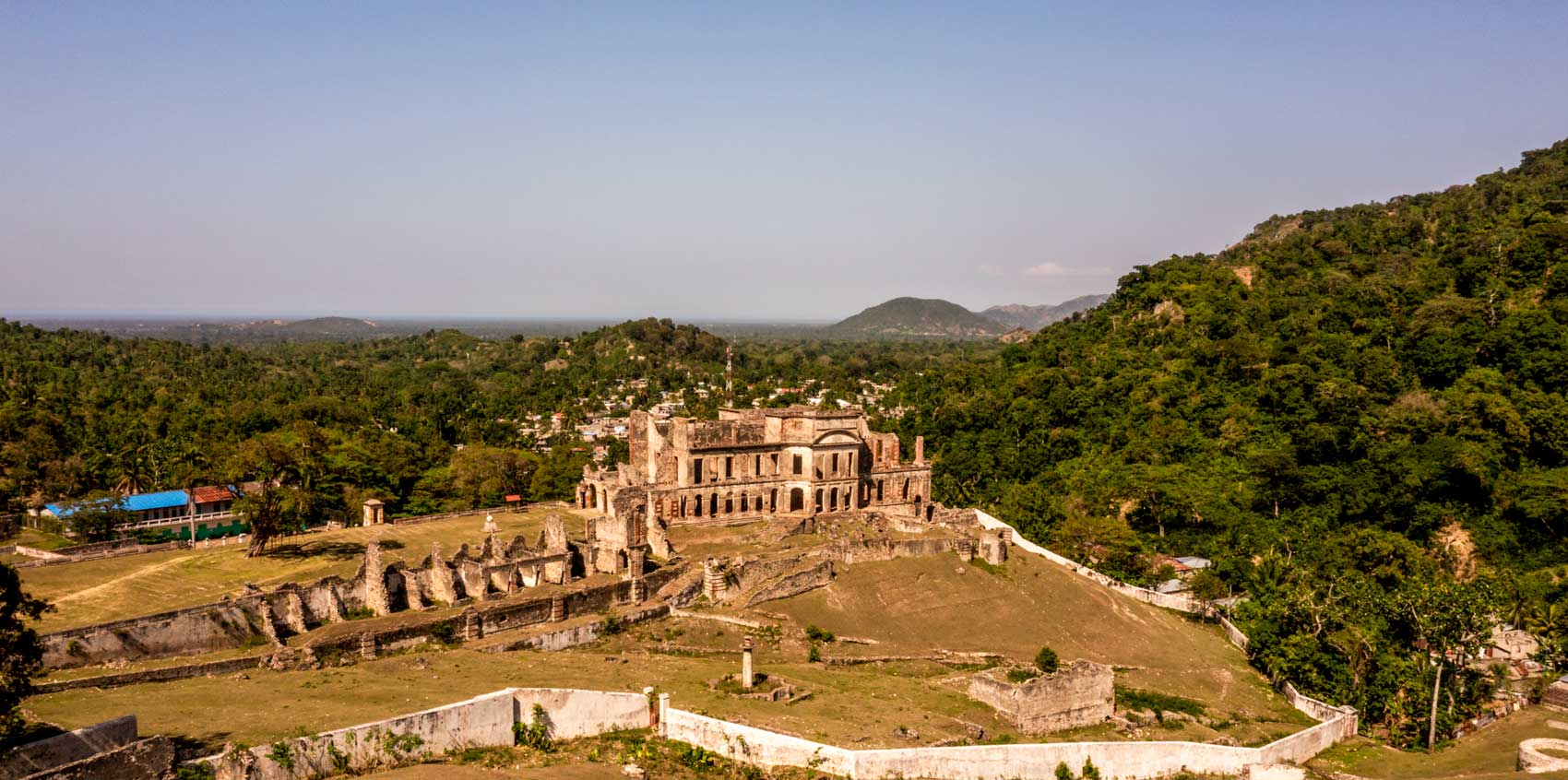
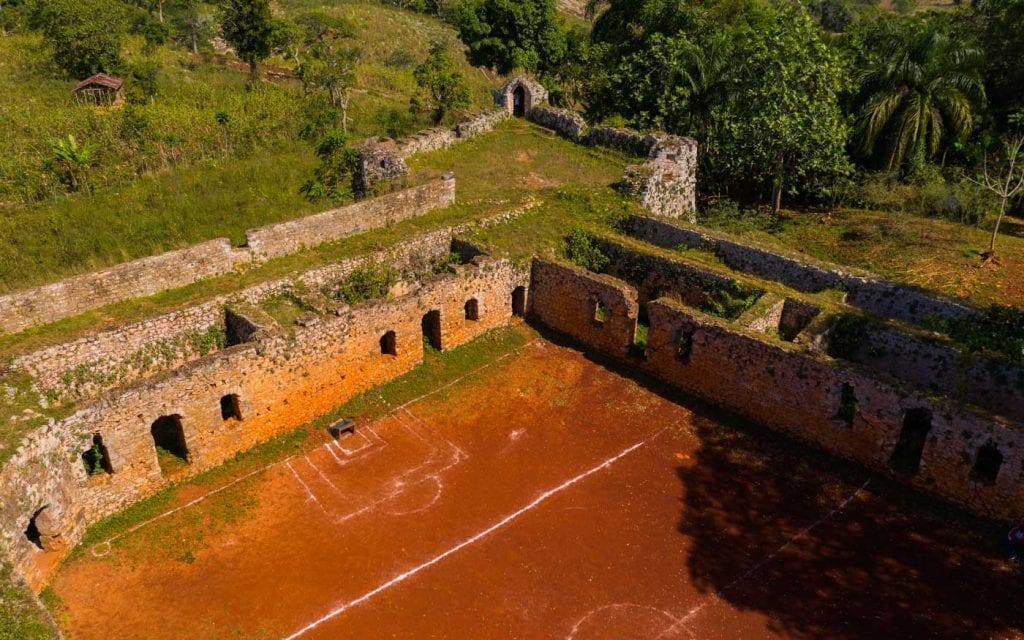
While most of us know the city of Jacmel as the picturesque home of Haitian art, culture, and popular beachfronts, it is also where you’ll find Fort Ogé.

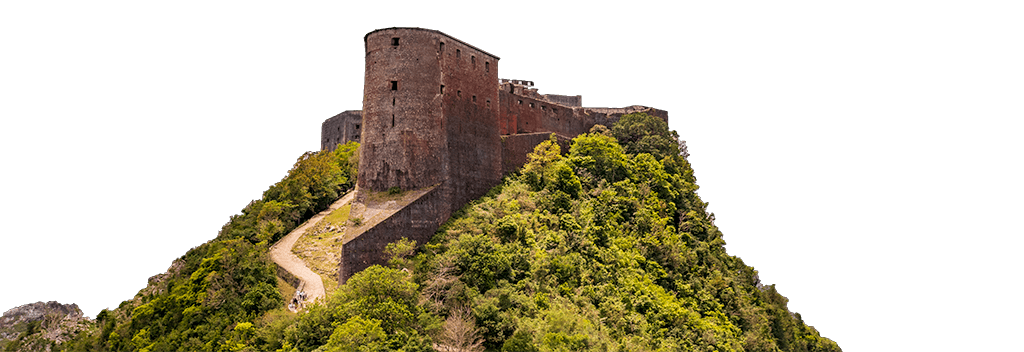
Tiny compared to the towering Citadelle Laferrière, Fort Ogé often gets overlooked when it comes to adventurers’ itineraries, but comparisons aside, this fort is impressive and well worth exploring in its own right.

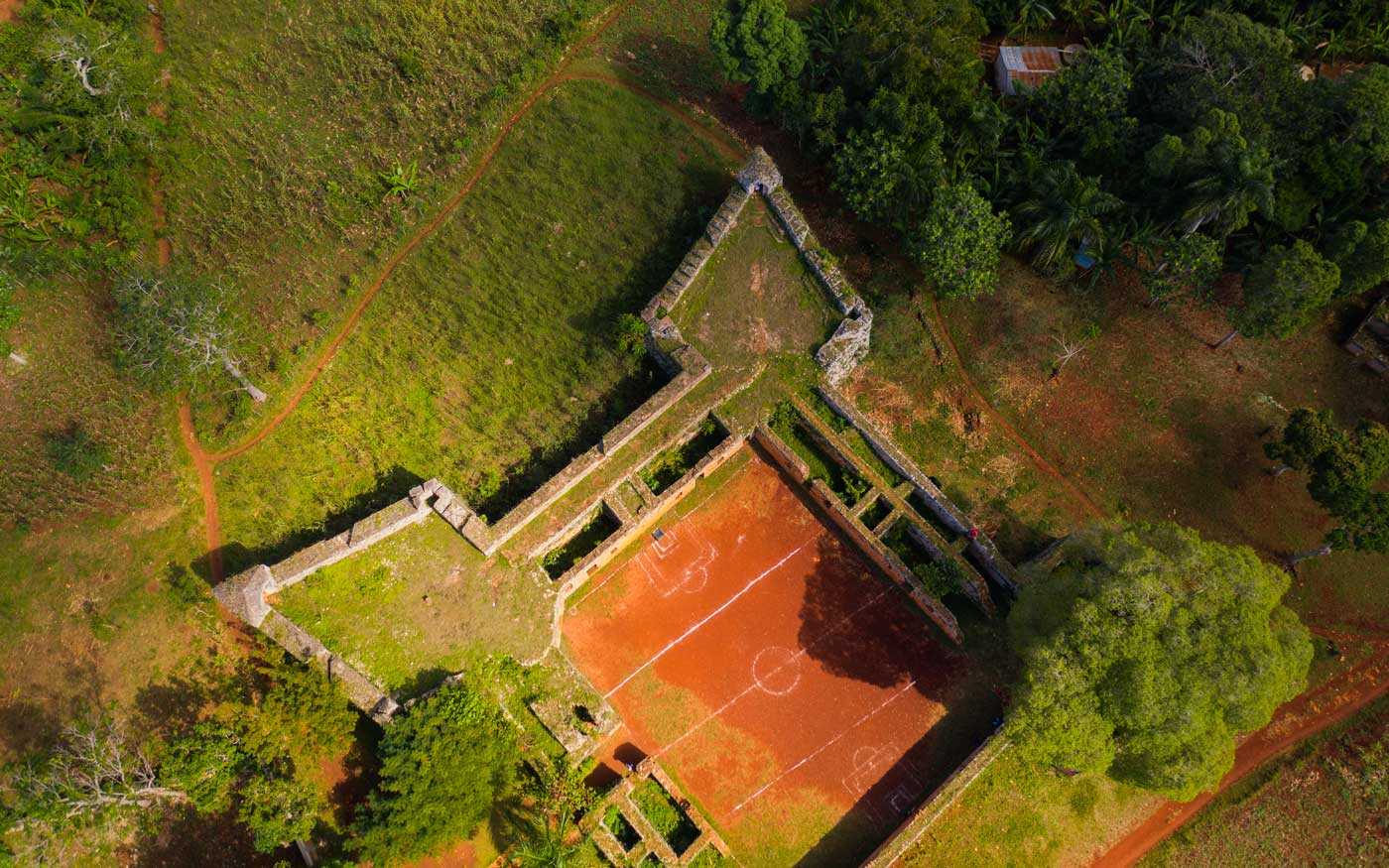
aerial view fort oge fortress in jacmel with football field inside
Fort Ogè, Jacmel
Photo: Anton Lau

Explore Fort Ogé

Right around the time Haiti was seizing its independence from the slave-owning colonial upper class, resistance leaders like Jean-Jacques Dessalines ordered the construction of forts all over liberated territories, built to provide safe refuge for the newly freed people and to deter counteroffensives, in case the French returned and tried to retake the island. This era became known as the fortification of Haiti, and Fort Ogé, built in 1804, is one of about 20 military sites fortified during this period. Fort Ogé was named after Vincent Ogé, one of the most popular Haitian revolutionaries.

Fort Ogé was undamaged by the 2010 earthquake and stands strong to this day. Built over two centuries ago, the still-imposing fortress will have you asking “how?” – how did independence leaders know to build a fortress in such a strategic place, and how was it done with the limited tools available at the time? How did they carry multiple heavy canons up the slope to the fortress?

Compared to Citadelle Laferriere, the largest fortress in Haiti (and one of the largest fortresses in all of the Americas), Fort Ogé is not as swamped by tourists, making it a great destination if you came to Haiti looking for an adventure away from the crowds but accidentally found yourself here during peak season.

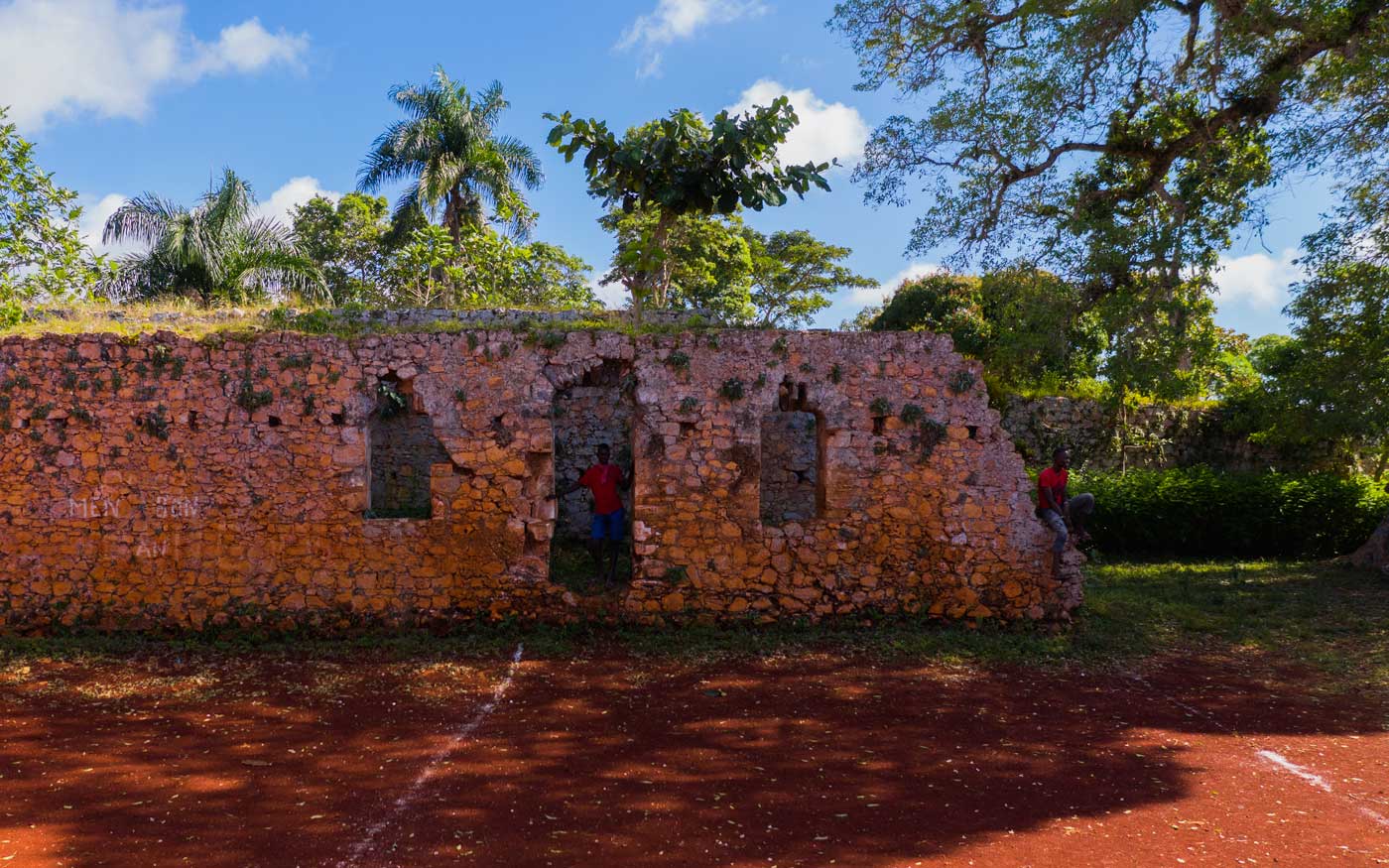
ruins of haitian fort oge fortress in jacmel
Fort Ogè
Photo: Anton Lau

Guided tours

The real gem waiting to be discovered when you explore Fort Ogé is the history behind how it was built – hidden to most, but in plain sight for those who know how to look. This is why a personal guided tour is the best way to see the site – local guides can narrate the history of the fort as you explore, right down to the specific uses of the different dungeons.

As is the case at almost every landmark or sightseeing location in Haiti, children run around the site playing, and some members of local committees will most likely come up to greet you and show you around. The site is cared for and used by the residents of the area, as are many other national treasures, to help bridge the gap left behind by the Ministry of Culture. Locals are always ready to give a taste of true Haitian hospitality – which of course includes suggestions for where to get fed, what else you should see during your trip, and where to find the best entertainment.

You’ll find that at times where visitors are few and far between, the fort is an integral part of the townsfolk life; children play soccer there, and old folks wander around. By paying a small entry fee and/or hiring a personal guide, you’ll be contributing to the development of the area through community projects.

ruins of haitian fort oge fortress in jacmel with football field inside
Fort Ogè
Photo: Anton Lau

Getting there

Located about an hour east of Jacmel, Fort Ogé is close to other historical landmarks including Cap Rouge, as well as other top Haitian destinations like Bassin BleuRaymond le Bains beach and the charming fishing village of Marigot.

The easiest starting point to get to Fort Ogé is the city of Jacmel. If you are driving in your own car, start out towards Cayes-Jacmel. Once reach the Jacmel Airport (it will be on your left), make a left onto Avenue Gerald M. Mathurin. From there, it’s very simple; just follow the signs up to Fort Ogé! The road up to the fort is quite rough, though, and so your drive will be much more successful in a four-wheel drive vehicle.

If you do not have a car, don’t worry— you can still make it to the fort by moto! At the corner of the Jacmel Airport, you will find a throng of moto drivers, ready to go. The fee to get to the fort should be 500 HTG, and this should include your driver waiting for you at the fort— and therefore receiving payment from you when you are back in the city. Make sure to pick out a moto that can handle the rocky road and sharp inclines!


Written by Kira Paulemon.

Published December 2019


Read story
old colonial houses on city street in jacmel