TRAVEL UPDATE: Visit Haiti from Home

Jacmel

Festikap Kite Festival

three haitian boys flying a kite
Festikap Festival, La Vallée de Jacmel
Photo: Franck Fontain

Festikap Kite Festival

Copy LinkEmailFacebookShare

Picture this: After a week of adventuring across Haiti, from hikes to road-trips to the beach and hidden waterfalls, it’s time to celebrate the new year. You decide to go to Jacmel and watch the fireworks by the beach. The next day, you throw a picnic blanket in the car, drive up to La Vallée, and admire a sky full of kites while you kick back with food and drinks. You can even try your hand at flying a kite yourself, with the help of other participants or the festival organisers. It will take a little less than 300 gourdes (about US $3) to buy a nice kite and participate.

Because you can buy a kite on arrival, the bar for getting involved is pretty low, so Festikap makes a great spontaneous adventure! The festival happens every January 2nd, making it the perfect activity for anyone planning to spend New Year’s Eve in Jacmel (or – even Port-au-Prince).

Festikap vibes are comparable to Champ-de-Mars in February during carnival. Kites in a stunning display of colors and creativity fill the sky for hours on end: it’s a flying art exhibition. With children running around, elders watching and younger folks flying their kites, the atmosphere in La Vallée is like one big camping trip.

Behind the magic

The famous kite-flying festival of La Vallée de Jacmel — or “La Vallée” as locals call it — will be celebrating its 10th anniversary in the coming year. Festikap is a festival put together by the Organization of Young Valley University Students for Progress (Organisation Universitaire de Jeune Valléens pour Le Progrès) with the goal of preserving a tradition deeply rooted in Haitian culture but threatened by forgetfulness and abandonment. This yearly event serves as an entry point to the beautiful community of La Vallée de Jacmel. The celebrations conveniently happen on January 2nd which is a holiday in Haiti (Ancestor’s day).

Kite flying is a vital part of Haitian culture. Starting in the month of April, on the roofs of houses all across the country, children, their parents, and sometimes even their grandparents can be seen tugging on thin, nearly invisible pieces of thread tied up to makeshift kites. Most of them are made of plastic; the kind used to sell papita or roasted peanuts in — some clear, some blue, some pink. Others are more elaborate, made of brown paper with red and green accents, tails, and flourishes. All together, they dot the bright blue skies of early summer in colorful spiraling swarms.

In preparation for Festikap, organizers put together workshops to create a certain number of kites to be exhibited on that day. This festival is not just recreational, though – the preparation process encourages creativity and community engagement from different crowds. The festival hopes to revive interest in the endangered tradition of making and flying kites, and the efforts that go into planning Festikap can be considered as a kind of movement meant to transfer a skill and salvage a tenuous cultural heritage.

haitian boy in blue jeans with kite
Boy with kite at Festikap Festival, La Vallée de Jacmel
Photo: Franck Fontain

Getting there

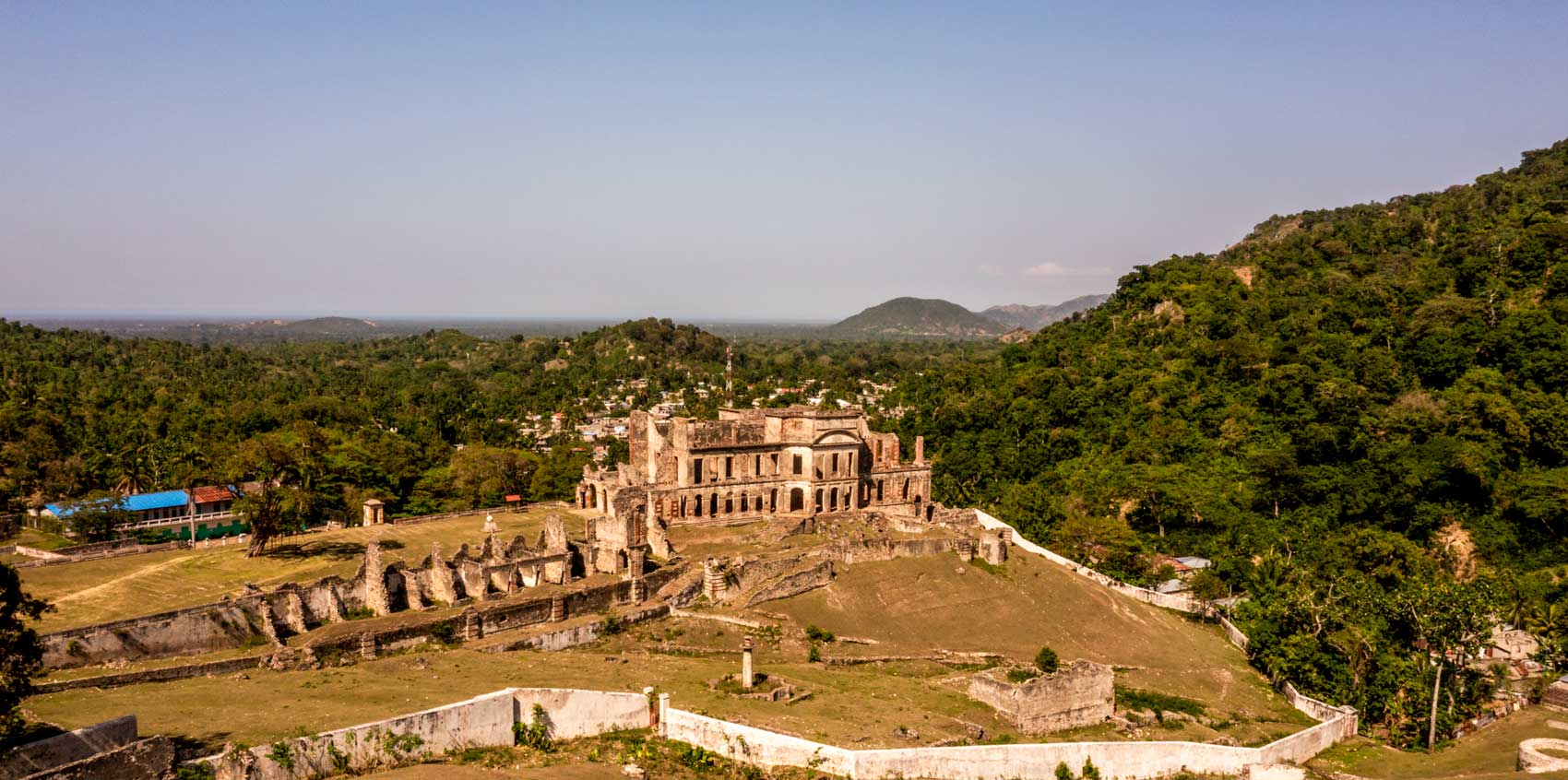
La Vallée is located an hour’s drive northwest of Jacmel and about three hours’ drive southwest of Port-au-Prince. Although the name La Vallée suggests a low valley hidden in shadows, the town actually stands a half mile (around 800 meters) above sea level, and offers a panoramic view of the south of Haiti. A trip up to La Vallée unlocks the perfect experience for anyone hungry for a little bit more than simply spending a weekend at the beach.

Festikap is a great way to experience Haiti differently and genuinely. If colors, music, and community are your thing, it’s a must-visit event to add to your itinerary!


Written by Kira Paulemon.

Published October 2019


Read story

Top destinations for December and January in Haiti

Woman throwing a towel down to relax on the beach on Amiga Island, Ile-a-rat
Amiga Island, (Ile-a-Rat) close to Cap Haitien
Photo: Anton Lau

Winter in Haiti: Top destinations for December and January in Haiti

Copy LinkEmailFacebookShare

…Haiti is warm all year round. December and January are in the middle of Haiti’s dry season, and with as few as three rainy days each month, gorgeous weather is almost guaranteed.

With lower humidity and little rain, these months offer the best conditions for surfing, snorkeling, diving and trekking. This is when the seas are at their calmest (and most photogenic).

December and January are far and away the most popular time to visit Haiti, making it a little bit tricky, and sometimes expensive to secure a flight to get here. But everything’s relative; Haiti is still only just starting to show up on the international tourist map, and even in the busier months of the year you’ll be able to find a secluded getaway on a remote bit of island or peninsula, and maybe even a beach all to yourself.

Ready to treat yourself to some tropical Christmas cheer? Or ring in the new year Caribbean style? Here are the very best places to see and be in Haiti during your holiday vacation.

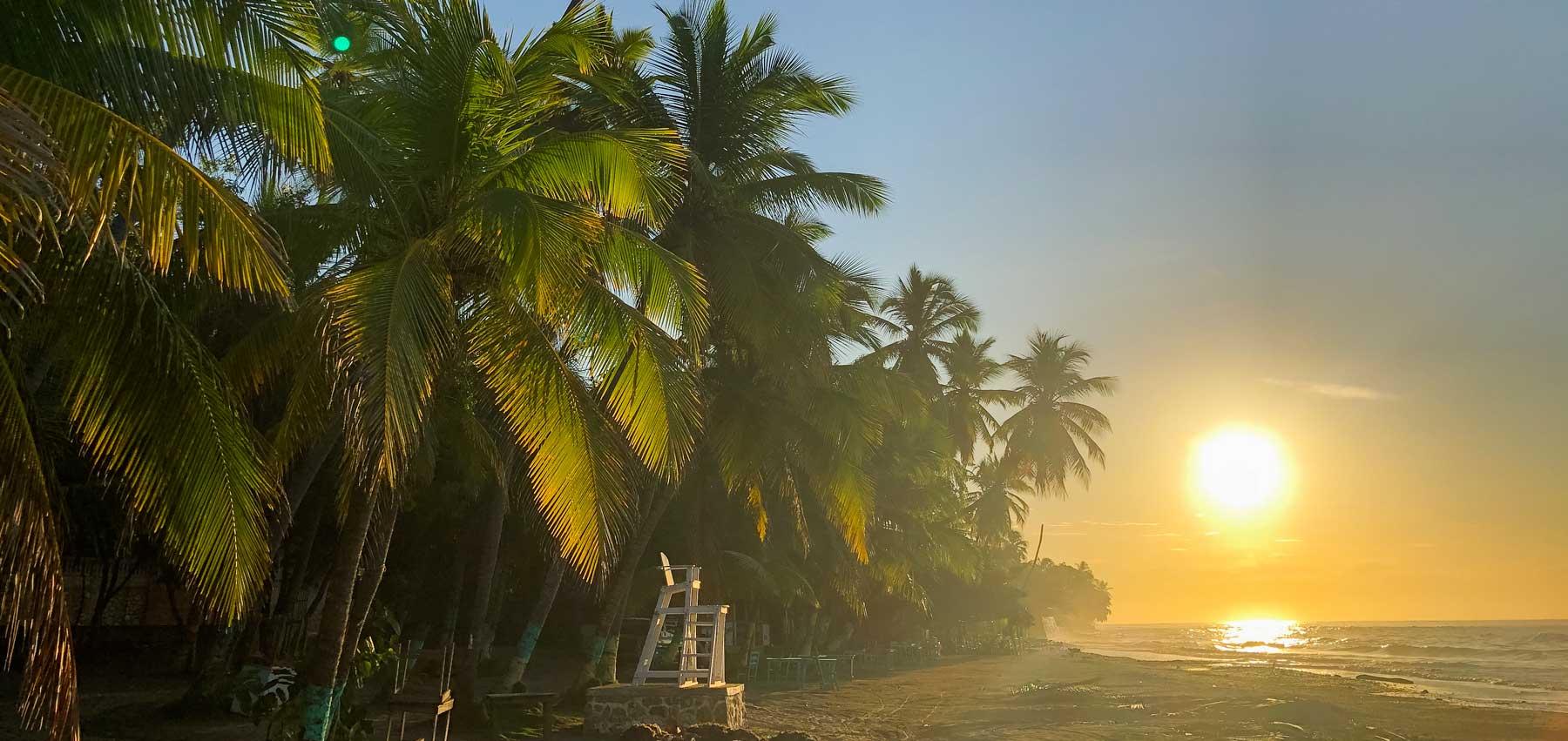
sun rising over beach with palm trees and lifeguard chair
Sunrise over Ti Mouillage beach, Jacmel
Photo: Anton Lau

01. Ti Mouillage, Jacmel

The coastal city of Jacmel has no shortage of beaches, but some outshine others. Ti Mouillage has the finest sand the city has to offer, and the softest slope down into crystal clear blue waters. Fresh seafood is available here as well.

About ten minutes from Raymond les Bains and  twenty minutes away from the city of Jacmel itself, Ti Mouillage is a great place to swim, paddle or even surf!

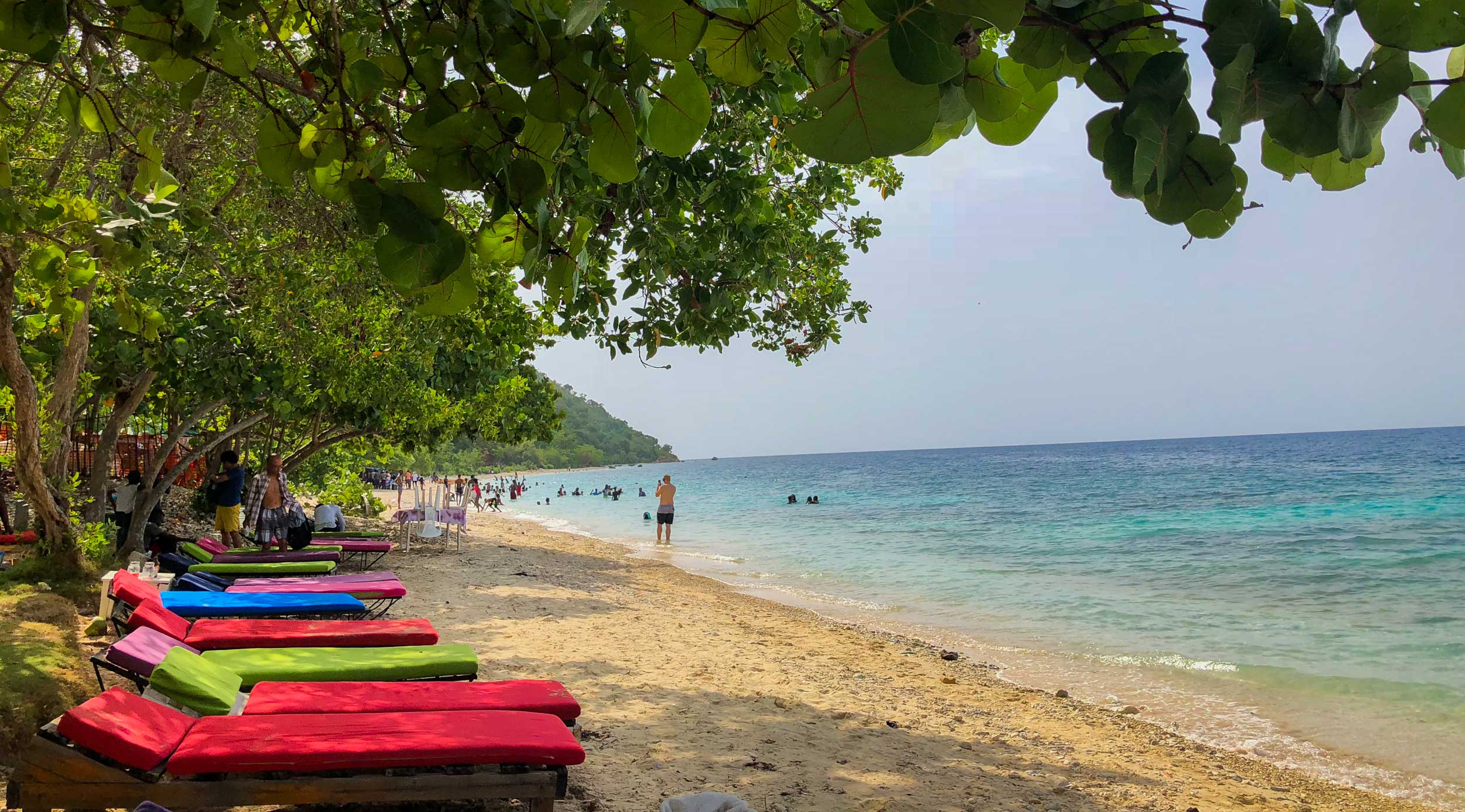
Lounge chairs beneath trees at Taino Beach, Grand-Goâve, Haiti
Taino Beach, Grand-Goâve
Photo: Anton Lau

02. Taïno Beach, Grand-Goâve

While most people think of the Arcadins Coast as the reference for beaches in Haiti, the South of the country is just as rich in gorgeous stretches of beach.

Just a two-hour drive west of Port-au-Prince, Taïno boasts some of the finest soft sand, some of the clearest waters, as well as some of the tastiest food on the island.

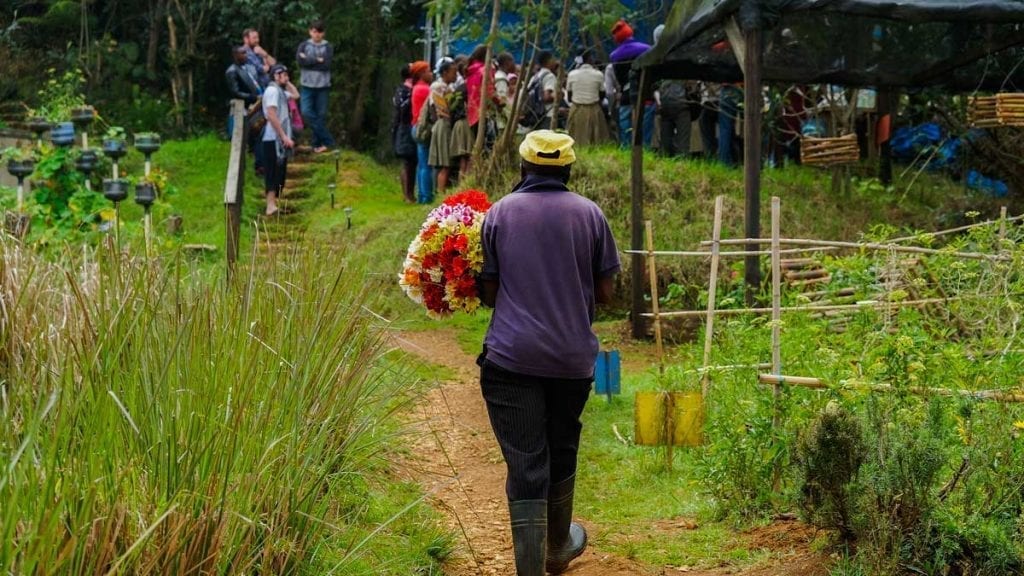
Man carries flowers along green path at a farm
Wynne Farm Ecological Reserve
Photo: Franck Fontain

03. Wynne Farm Ecological Reserve, Kenscoff

If you came to Haiti to escape winter, but your idea of indulgence is less beach and more great outdoors, Wynne Farm is the place to go, and not far from Port-au-Prince. If you’re a nature enthusiast, nutrition student, or visiting Haiti on a group adventure, Wynne Farm is a great place for a day trip.

From guided ground tours to workshops and horseback riding, there are plenty of activities to experience at Wynne Farm.

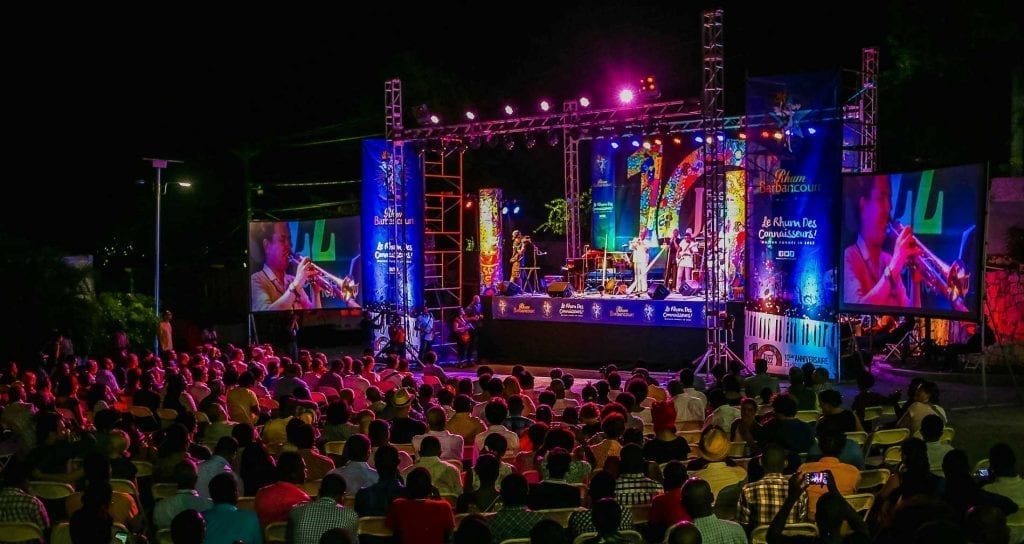
jazz concert on big stage in front of large sitting crowd
PAPJazz festival in Port-au-Prince
Photo: Josué Azor

04. Jazz Festival, Port-au-Prince

PAPJAZZ happens every January across a cluster of venues in Haiti’s capital. Each year brings individuals and bands from Haiti and across the world, including Guadalupe, Guyana, the U.S., Canada, Chile, Germany, France and even as far away as Sweden.

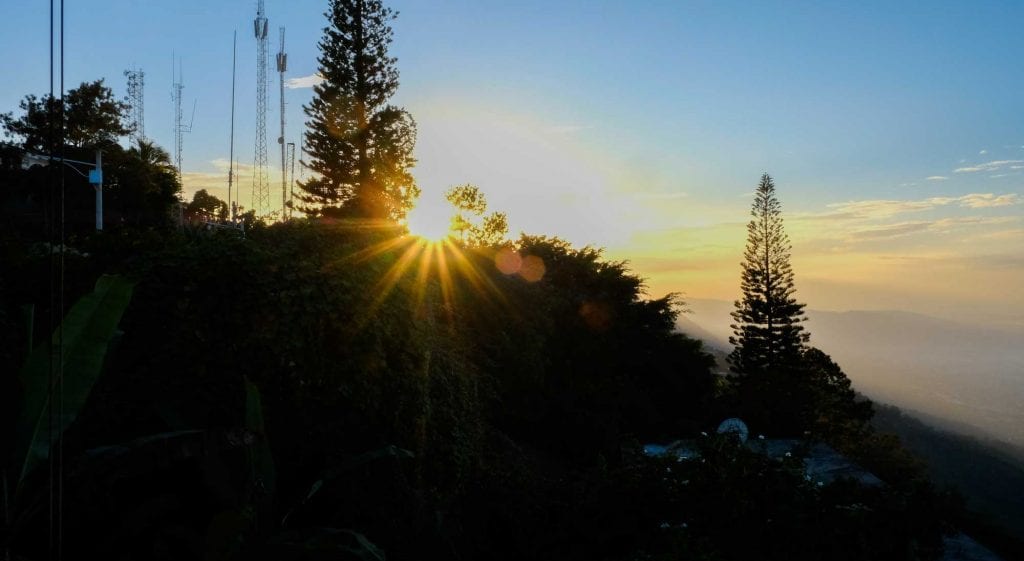
Sunset over Boutilliers, Haiti
View from Boutilliers
Photo: Franck Fontain

05. Boutilier, Port-au-Prince

Time for a fresh perspective! A mountain neighborhood a few minutes outside of Pétion-VilleBoutilier is home to one of the best views of Port-au-Prince in the country. With plenty of artwork to purchase and a great place – l’Observatoire – to grab a bite to eat, Boutilier is one of the closest places to take a quick break and deep breath outside of the city.

If you’re looking for somewhere to celebrate New Year’s Eve over a rum cocktail or a glass of bubbly, this is it.

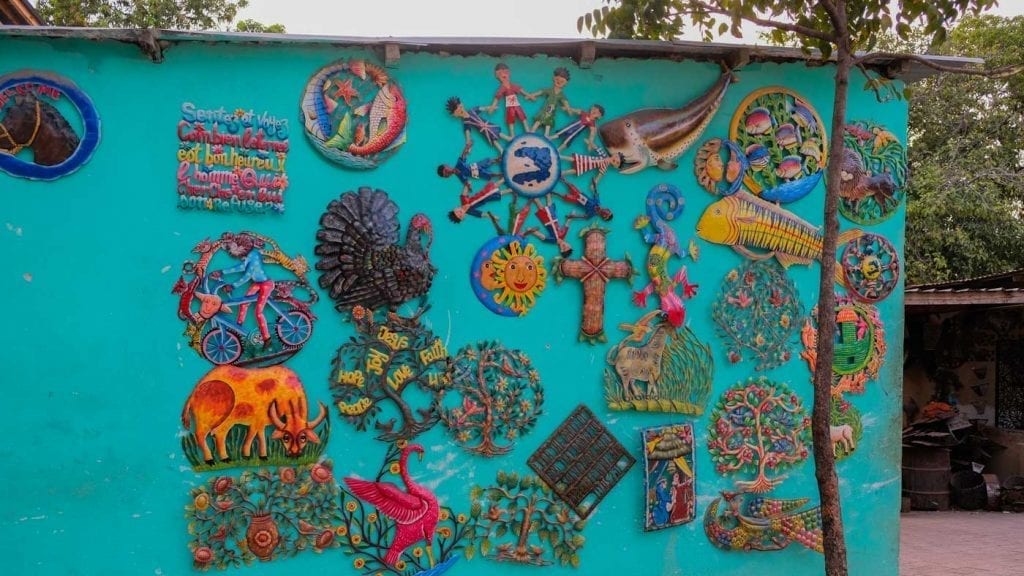
Colorful metal artwork on blue wall in Village Noailles, Haiti
Souvenirs at Village Noailles
Photo: Franck Fontain

06. Village Artistique de Noailles, Croix-des-Bouquets

Want to immerse yourself in Haitian art? There is no better destination than the artistic village of Noailles. It is the birthplace of iron art in Haiti, and the most popular place to get your hands on any form of Haitian art.

The artisans are friendly, some of them know a few words of English, and there are endless styles of artworks to choose from, merchant to merchant.

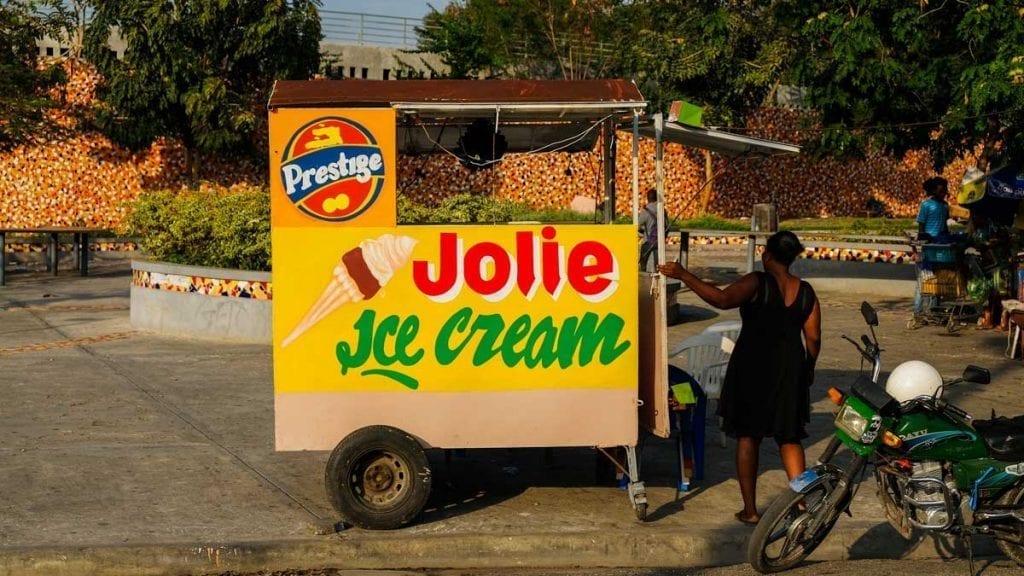
Ice cream and beer truck on Champ de Mars, Port-au-Prince
Ice cream truck on Champ de Mars
Photo: Franck Fontain

07. Champ-de-Mars, Port-au-Prince

A series of public squares divided by large boulevards, Champ de Mars is a cluster of markets, businesses and theaters. During the holidays, there are special performances at the Occide Jeanty kiosk, and a customary Christmas tree is put up and adorned with lights close to the Museum of the National Pantheon.

A great place to walk around on afternoons and evenings, and put your finger on the pulse of Haitian city life.

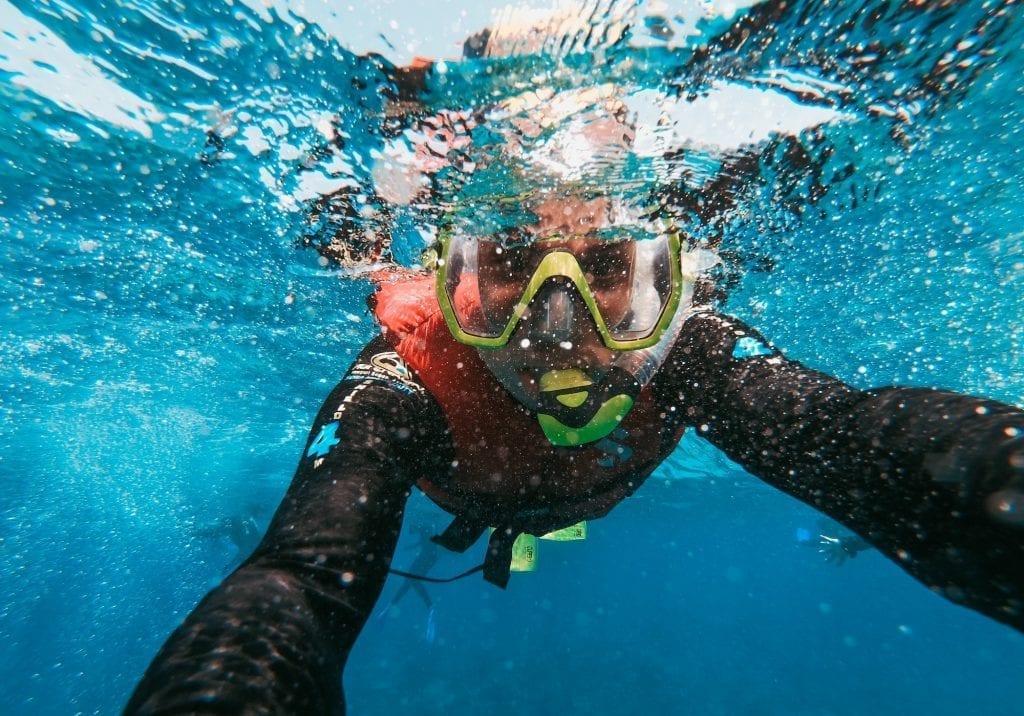
Photo of a person snorkelling
Snorkelling
Photo: Franck Fontain

08. Snorkelling in Montrouis, Arcadins Coast

Experienced snorkelers will find a wealth of seascapes to explore right around Haiti, but even beginners can go snorkelling in Montrouis, thanks to a gentle introduction on offer at the Moulin sur Mer resort.

Marina Blue Haiti runs a diving and excursion center within Moulin sur Mer, with activities ranging from day tours of the islands off the Arcadins coast to PADI night diving. Montrouis is a great place to find guidance and safety the first time you dive into snorkeling. Another advantage of snorkeling with a Marina Blue tour is that they can take and guide you to their very own coral reef house, with both shallow and deep reefs.

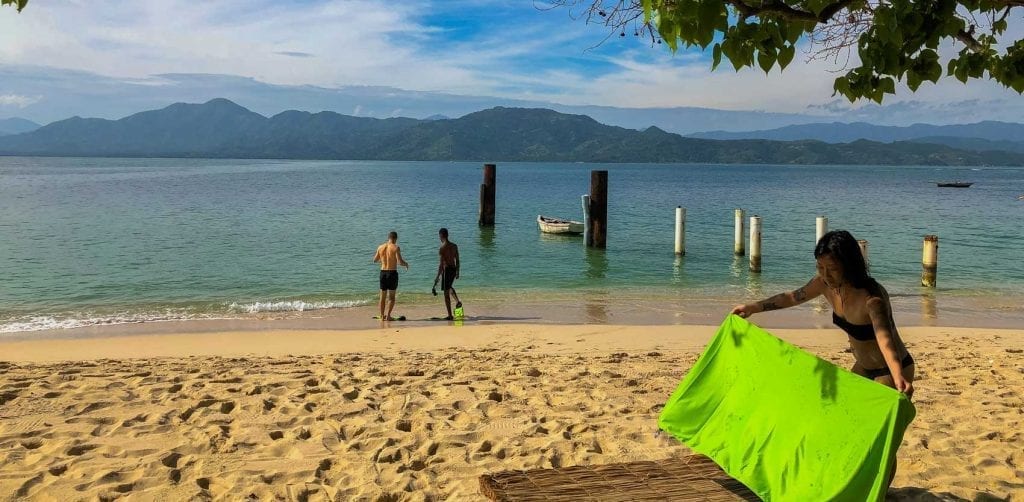
Woman throwing a towel down to relax on the beach on Amiga Island, Ile-a-rat
Île-à-Rat, Cap-Haïtien
Photo: Anton Lau

09. Île-à-Rat

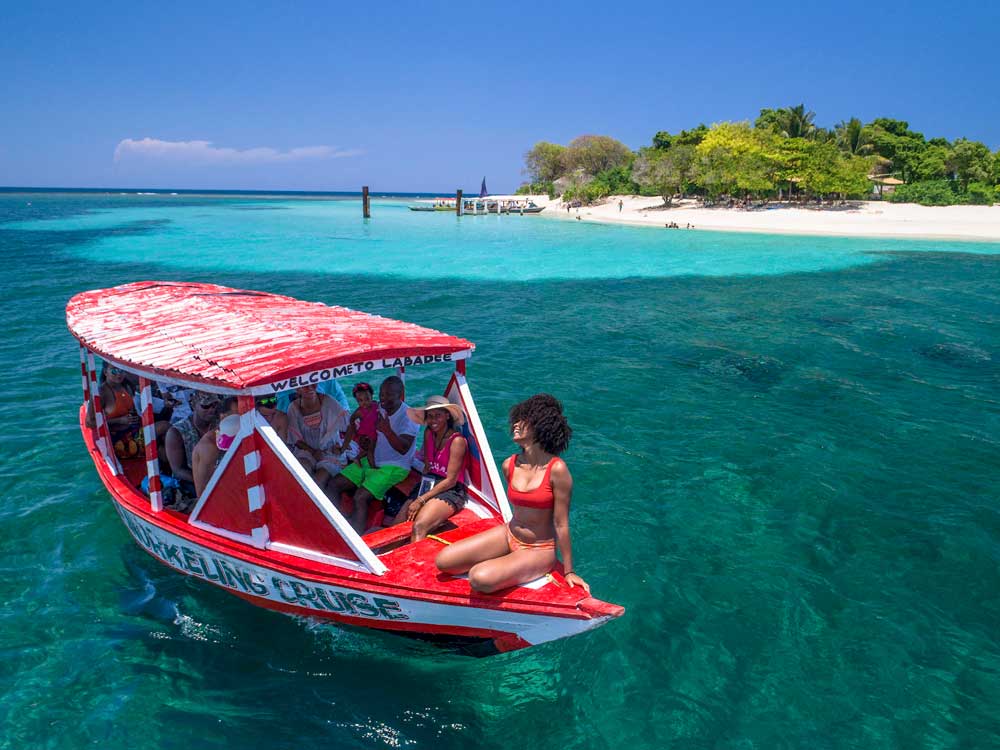
Île-à-Rat is a tiny island off the beaches west of Cap-Haïtien. This little paradise is a microcosm of what makes Haiti one of the greatest little countries in the Caribbean, with fine white sand beaches, shady palm trees, warm turquoise waters, incredible fresh seafood – and fewer crowds. The swimming is superb, and snorkelers can find half-buried colonial artillery and anchors.

For USD $40 a boat taxi from Labadee will take you to Île-à-Rat, and for an extra USD $15 they’ll cook you up a fresh lunch of lobster, octopus, crab or fish, all caught locally. Make sure you take some ice-cold bottles of rum and Prestige with you for the trip!

Île-à-Rat is just the beginning. Keep exploring Haiti’s hidden islands in this guide.


Written by Kelly Paulemon.

Published November 2019


Read story

8 Cheap and Free Things to Do in Haiti

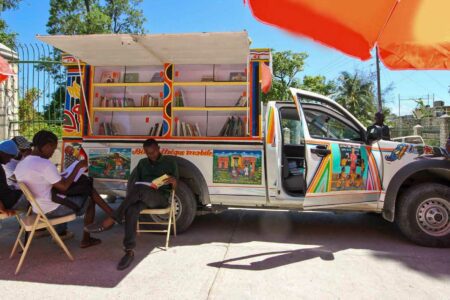
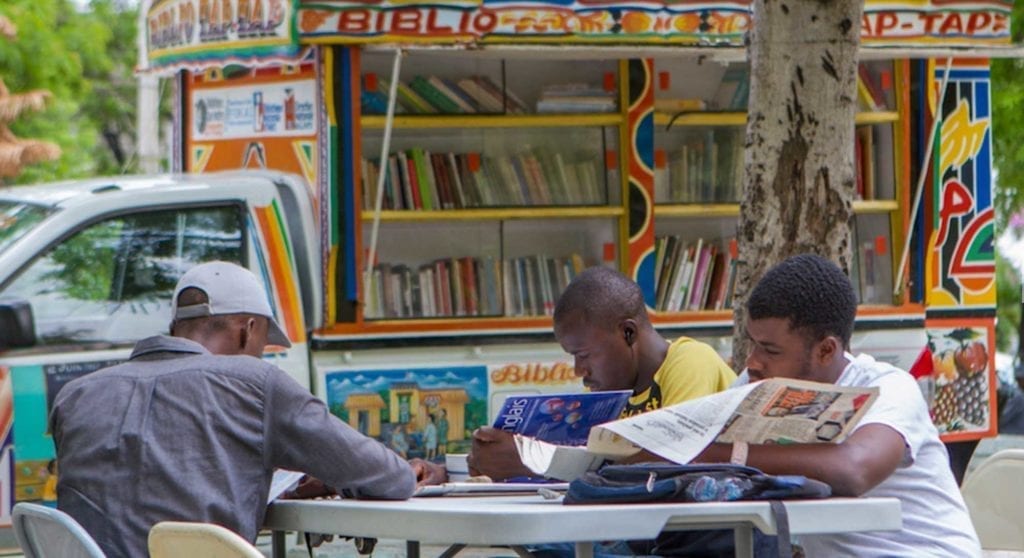
people sitting on chairs reading next to a library bus
BiblioTapTap, Port-au-Prince
Photo: FOKAL

Caribbean on a Budget: 8 Cheap and Free Things to Do in Haiti

Copy LinkEmailFacebookShare

Situated in the heart of the Caribbean between Jamaica and the Dominican Republic, Haiti has over a thousand miles of coastline with dozens of destination-worthy beaches. While some of them charge entry fees to cover maintenance costs, most are free to wander onto for a day of sun-bathing and swimming.

Beyond gorgeous beaches, Haiti offers a wealth of wildlife, nature, arts and culture for backpackers on a budget. Here’s our guide to free things to do in Haiti, all accessible to fresh-off-the-plane first-time visitors!

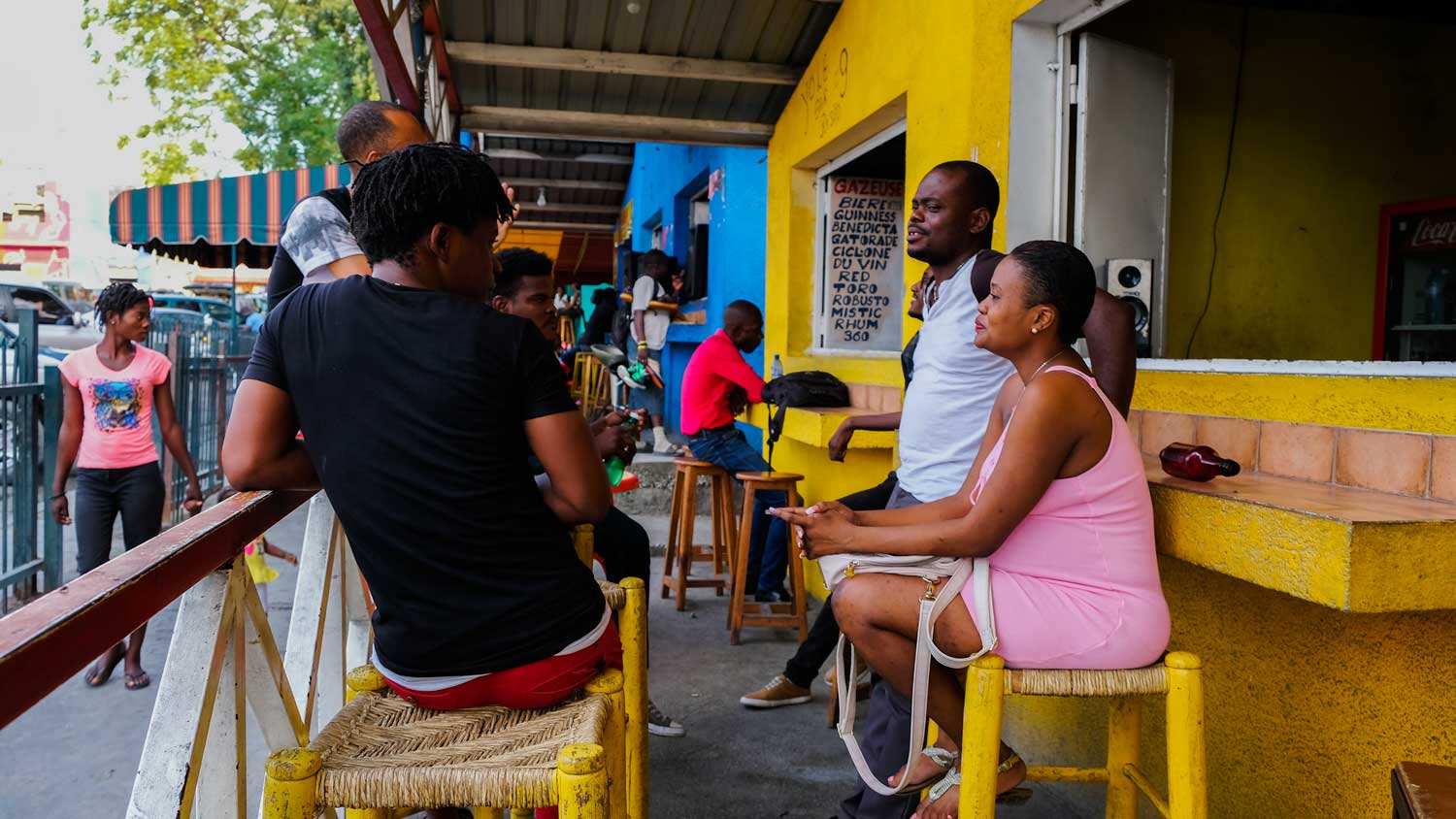
People relaxing, Champ de Mars, Port-au-Prince, Haiti
People relaxing, Champ de Mars
Photo: Franck Fontain

01. Hang out at Champ-de-Mars

The daily life of downtown Port-au-Prince happens in the streets, and Champ-de-Mars is the centre of that life – the beating heart of Haiti’s capital city. Enjoy a morning stroll, get some budget-friendly street food, browse artisan stalls, kick back with an ice-cold Prestige and drink in the activity all around you.

Afternoons here buzz with conversation and music playing from sound systems around the park. On weekdays, white-collar Haitians funnel into Champ de Mars on their lunch breaks from local banks, hotels, government offices and the university.

For free, you can see several statues of Haiti’s founding fathers including Alexander Pétion, Henri Christophe, Jean-Jacques Dessalines, and Toussaint Louverture. The highlight is Marron Inconnu, the iconic statue of the unknown slave blowing a conch-shell trumpet.

Sculpted by Haitian sculptor Albert Mangonès, the statue represents a runaway slave on one knee, arching back to blow into the conch-shell trumpet. In his free hand, he holds a machete; around his ankle is a broken chain. In Haitian history, the sound of blowing into a conch was used to announce a slave’s – or a group of slaves’ – freedom. The statue represents Haiti’s independence from the French, and the world’s first successful black revolution.

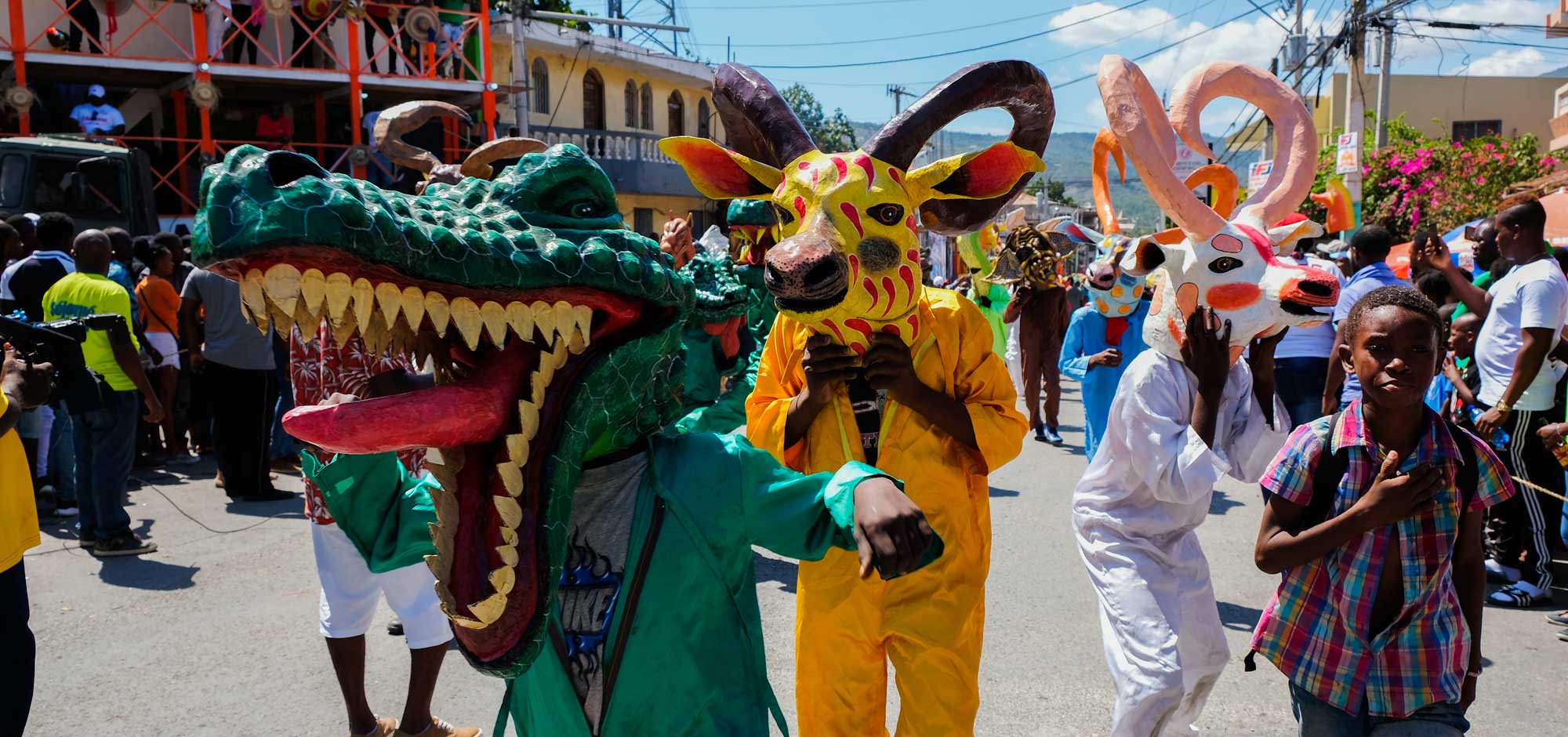
Colorful paper mâché animal masks worn by participants in the carnival at Jacmel, Haiti
Paper mâché at Carnaval in Jacmel
Photo: Franck Fontain

02. Get into the Carnival spirit

If you happen to be in Haiti during Carnival season (the months of January or February until March, depending on when Mardi-Gras lands), pre-carnival Sunday activities are a great way to end your weekend.

Whether you are staying in downtown Port-au-Prince, Cap-HaïtienJérémie, or Jacmel you can check out free-roaming rara bands, folks in costume, and festive music throughout the city. Think New-Orleans-during-Mardi-Gras-ambiance!

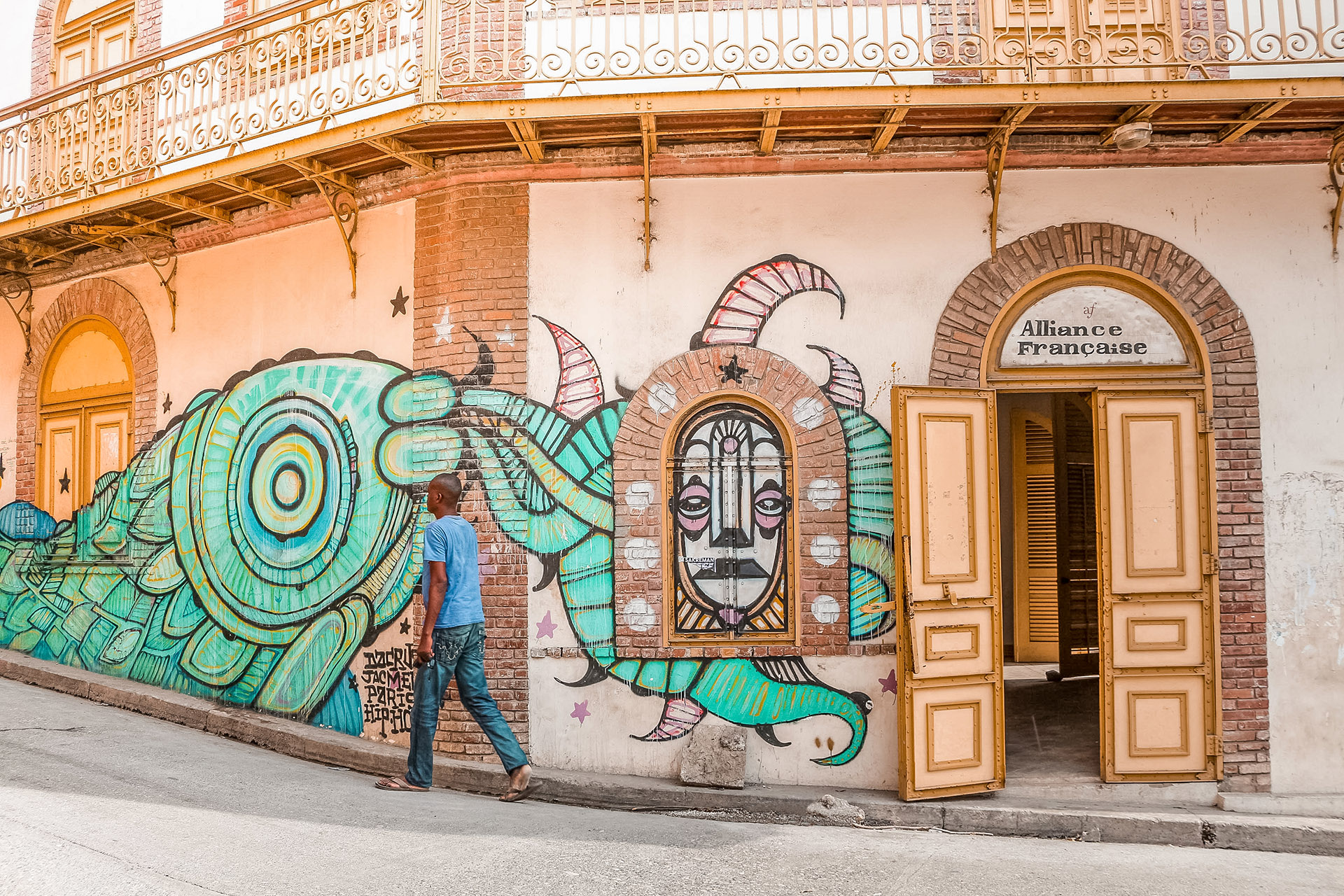
Street art on the outside of the Alliance Francaise hotel and restaurant in Jacmel, Haiti
Alliance Francaise in Jacmel, Haiti
Photo: Amanacer / Emily Bauman

03. Join a free event at Alliance Française in Jacmel or Cap-Haïtien

The city of Jacmel is chock-full of things to do and see, and the centre of it all is Alliance Française in the heart of the city. A cultural center with a branch in Cap-Haïtien as well, Alliance Française hosts musical events, as well as various talks.

Check out the upcoming events near you to find free events and courses where you can dance the night away, brush up on your French, or even try your hand at some Kreyòl!

04. See a play at Festival Quatre Chemins

During the month of November (with small overlaps in October and December), Port-au-Prince is swept up by the Festival Quatre Chemins. A month-long series of conferences and plays, Festival Quatre Chemins is where actors and playwrights come together from around Haiti and across the world to inject fresh life into Haiti’s performing arts scene. Most of the events are free!

jazz concert on big stage in front of large sitting crowd
PAPJazz festival in Port-au-Prince
Photo: Josué Azor

05. Listen to jazz for free at PAPJazz

Between the months of January and February, Haiti’s capital city is completely overtaken by music in the form of the Port-au-Prince International Jazz festival! More commonly known as PAPJazz, the festival features jazz acts from several countries around the world, as well as Haitian artists blooming in the field. Bars and restaurants throughout the capital turn into venues, and usually either expect you to buy a meal or drinks, or charge a small entry fee. Travellers on a budget should know about the shows held at Quisqueya University — entry there is free!

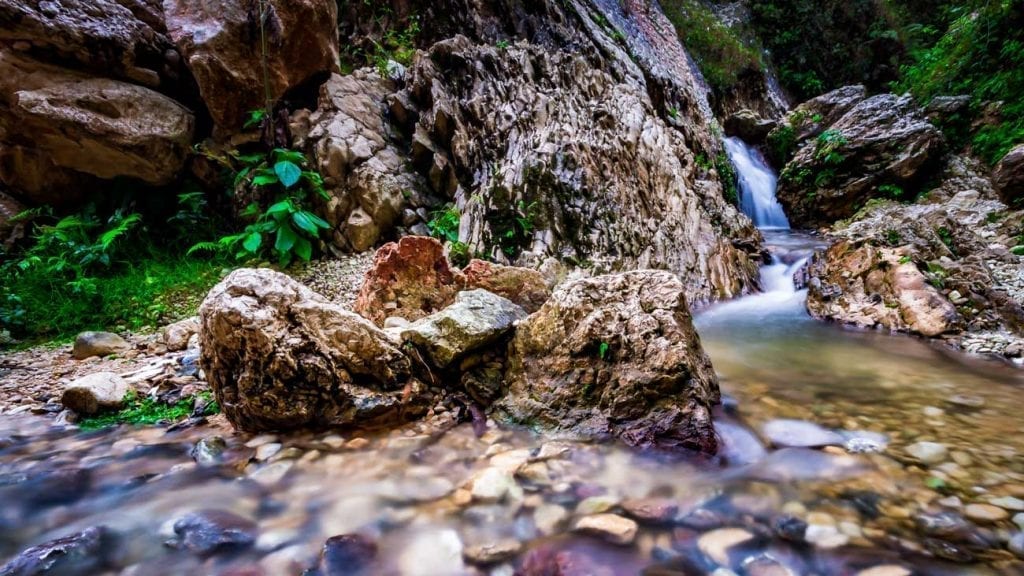
Waterfall plunges into a stony pool at Kaskad Boukan
Waterfall, Kaskad Boukan
Photo: Verdy Verna

06. Go hiking in Fermathe (don’t miss Cascade Boukan)

Perhaps the best nature hike from Port-au-Prince is to Cascade Boukan, a waterfall in the hills of Fermathe. Get ready to work your lower body muscles as you climb up a summit and then descend to Boukan Valley via a narrow and sometimes steep pass, with the sound of the falls rushing louder as you go.

It’s a decent hike to get there and while not especially difficult, we strongly recommend hiking with someone who knows the way. If you need to hire a guide to take your group, a reasonable price is around 250-500 HTG – less than USD $6.

07. Visit the gallery at Alliance Française, in Jacmel

When not hosting a concert or conference, Alliance Française keeps its doors open to show off some of the most beautiful art in Jacmel. Alliance Française’s popular restaurant is on the top floor, and there is no entrance fee to the gallery which leads up to the restaurant – visitors are welcome to come and browse. The paintings in the gallery change from time to time, so regular visitors will be rewarded by new works.

people sitting on chairs reading next to a library bus
BiblioTapTap, Port-au-Prince
Photo: FOKAL

08. Relax with a book at BiblioTapTap

Backpacking light around the Caribbean with no room for books? Pa gen pwòblèm! – no problem! An initiative launched by the National Book Directorate, BiblioTapTap is a free mobile library that drives through Port-au-Prince and stops at public squares.

If you are staying in Port-au-Prince, you can catch it at Champ-de-Mars, Place Saint-Pierre, or in Delmas 4. It’s as easy as saying hello, having a bit of conversation, and enjoying a book of your choosing at the BiblioTapTap table in the shade.


Written by Kelly Paulemon.

Published June 2019


Read story

Raymond les Bains

haitians relaxing and dining at table with parasols by beach
Raymond les Bains, Cayes-Jacmel
Photo: Franck Fontain

Raymond les Bains

Copy LinkEmailFacebookShare

Just a few hours’ south of Port-au-Prince, the colorful city of Jacmel is best known for its beautiful, expansive beaches. Raymond les Bains is a local favorite, and an attraction not to be missed if you’re in Jacmel. You’ll find a mile-long stretch of soft white sand, framed by palm trees and mountains in the distance.

Like most of the beaches lining Haiti’s stunning southern coast, Raymond les Bains has a nice, gradual slope into the water and soft, smooth sand. On bright, sunny days (Jacmel sees 230 a year) Raymond les Bains is a textbook example of a Caribbean paradise.

Raymond les Bains is also a popular night time attraction. There is a lot more music, more to drink, and the atmosphere is much more fit for dancing and meeting new people! If you are lucky, you might even catch a full moon reflected on the Caribbean Sea.

Don’t miss: the freshly-grilled fish

For seafood lovers, the highlight of Raymond les Bains might be the food. Grilled fish is a local specialty and the menu is teeming with options.

To order, visitors can take a seat at any table on the beach. Expect to be approached by merchants selling all sorts – gum, drinks, snacks, jewellery – but keep an eye for the waiter or waitress at the restaurant. Our top tip is to ask to see the fish before you settle on your order; different price points get you different fish; and even at a specific price point, you still get to pick from a variety of fish.

You can ask if there is a choice of accompaniment for the fish; most places offer the standard fried plantains or fried potatoes. Depending on the season, you might even find fried breadfruit – a Caribbean delicacy not to be missed. This fried tropical staple provides a crisp, savory contrast to mouth-watering freshly-grilled fish, elevating what sounds like a simple, everyday dish to a memorable island experience.

Getting there

8 miles east of downtown Jacmel, Raymond les Bains is en route to Cayes-Jacmel and Marigot.

Look out for the “Bienvenue à Raymond les Bains” signage on the right side of the road. From there, the road dips and narrows down a sandy path flanked by small houses on the left, and the sound of slow waves crashing on the beach on the right. Continue on until you reach the gate – and gatekeepers.

Because it is a public beach cleaned and maintained by the locals, Raymond les Bains is gated, and does require a small fee to enter. Expect to pay at least 100 HTG per car. Once that is taken care of, you will be asked to enter and park your car off to the side.


Written by Kelly Paulemon.

Published May 2019


Read story
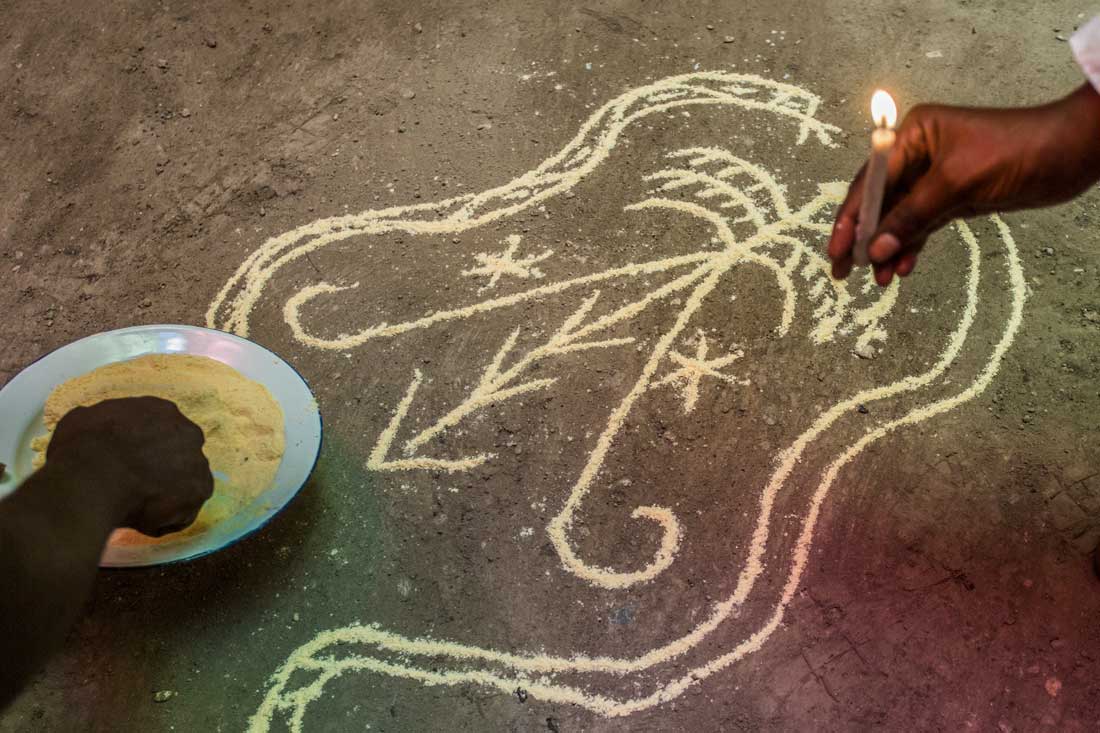
cosmogram being traces on floor with hand holding a candle

Uncover the Haitian Craft of Paper Mâché

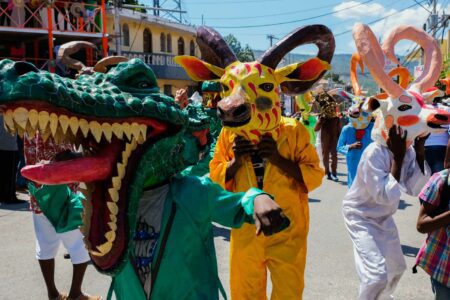
Colorful paper mâché animal masks worn by participants in the carnival at Jacmel, Haiti
Paper mâché at Carnaval in Jacmel
Photo: Franck Fontain

Uncover the Haitian Craft of Paper Mâché

Copy LinkEmailFacebookShare

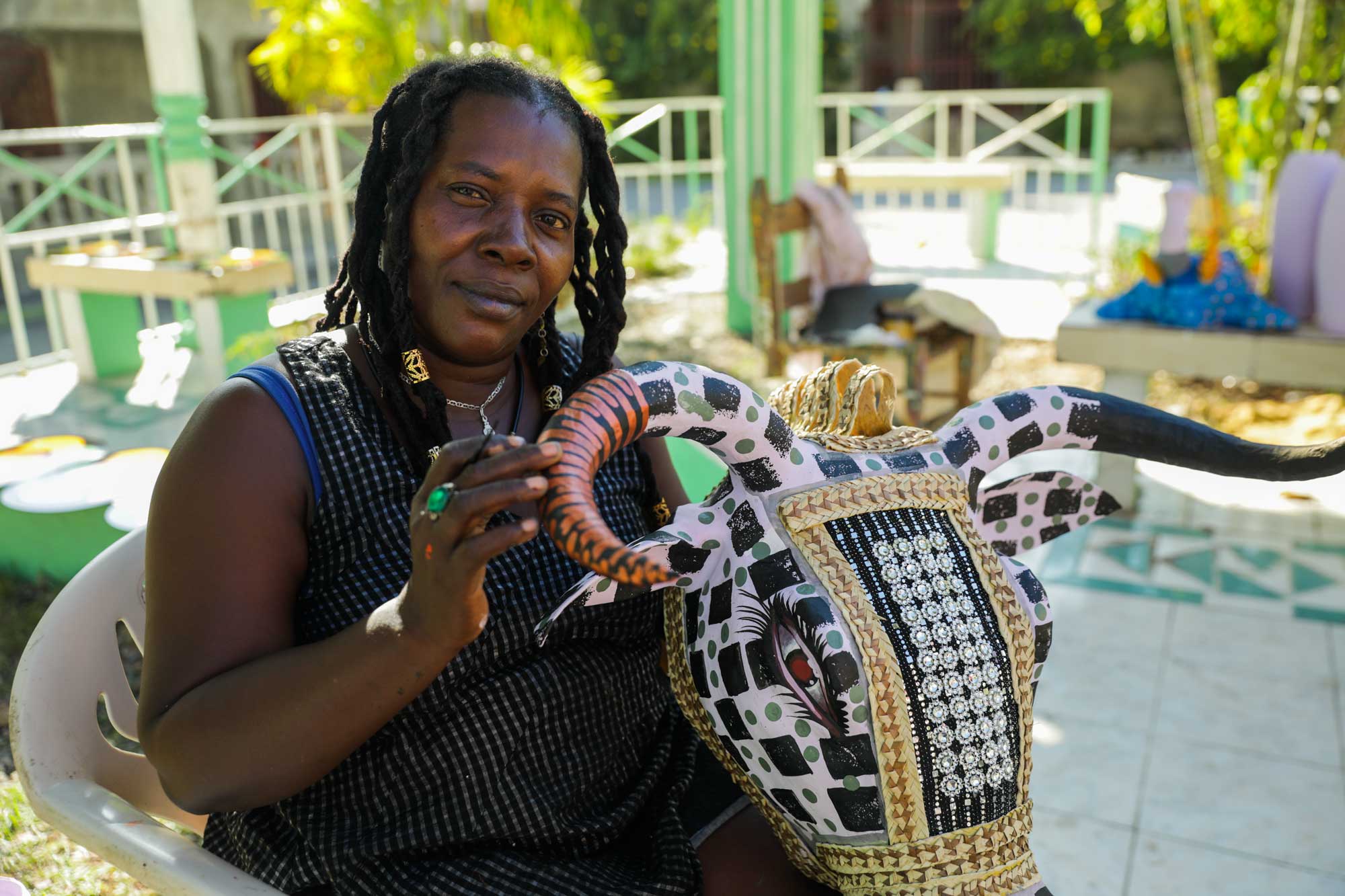
It is two o’clock in the afternoon, in the chief town of Haiti’s southeastern department – Jacmel. On a small square at the end of the Rue Sainte Anne, a woman with locks down to her shoulders holds a paper mache bull’s head in her left hand and a brush in her right. This is Charlotte, one of the most popular artists of the city.

The paper mâché technique, she explains, is very old. It comes from Asia. ‘With the carnival tradition inherited from Europeans, we have found the perfect pretext to improve this ancestral art, to make it a representation of the Haitian culture already rich in color.’

A few steps from where we are stands a fresco of glass of all colors. We can read the words “Fanm se poto mitan”. The artist to whom we owe this work? Charlotte. In her studio, two plaques of honor and merit salute her work. The walls and shelves are adorned with mâché roosters, oxen, cows, and objects of everyday life: a jewelry box next to a trivet, in front of a painting.

‘Haitian culture,’ Charlotte continues, ‘that’s what we artists put into it. It is not static and it is this dynamism from which it draws all its charm.’

Paper mâché artist Charlotte shows off an intricate cow mask in Jacmel, Haiti
Paper mâché artist Charlotte in Jacmel
Photo: Mikkel Ulriksen

“Work begins a whole year before the carnival”

The art of paper mâché is to mold shapes into paper hardened beforehand with a heated starch preparation. This technique, taught at the National School of Arts, is known throughout Haiti, but it has found its greatest success here in Jacmel.

The carnival held every year in the city (around Easter) attests to the success of this practice.Transmitted from generation to generation, the technique remains the same even though artists are free to experiment with size, shape and color. Masks, decoration of all kinds, aquatic fauna, political personalities, fictional characters – everything goes. In 1993, to illustrate a debate on deforestation, Soliosso Simonis disguised himself by transforming into a mango tree made of paper mâché. Around here, you could find a life-size zebra, painted bright red, right next to a representation of Fidel Castro.

Rivaling Haiti’s national carnival, the Jacmel Carnaval draws bigger crowds every year, partly because of the paper mâché art on display. Work begins a whole year before the carnival, designing the masks that will be on show on the front of the stands, on parade floats, and not least of all in the parade itself.

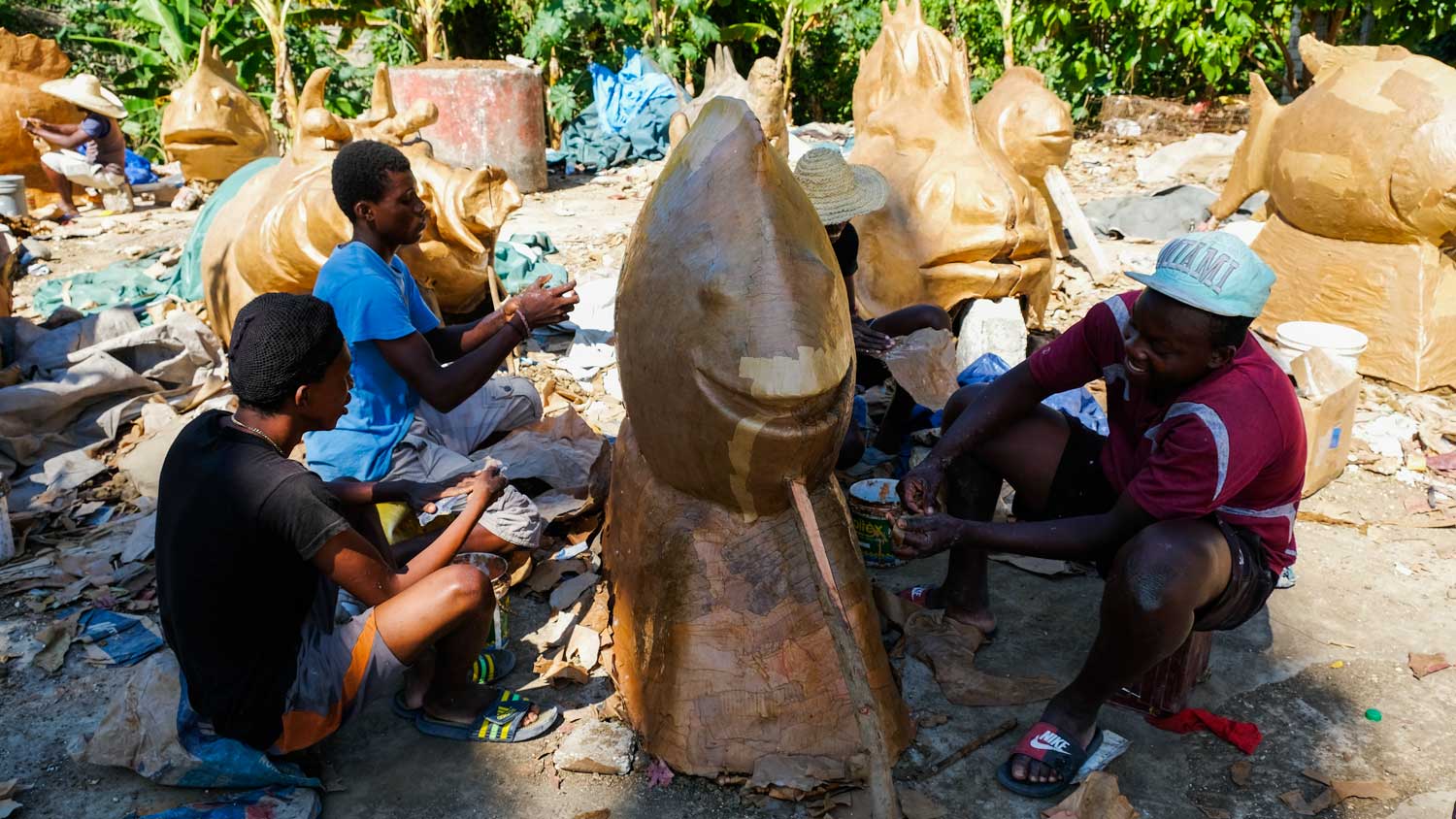
Artists in Jacmel, Haiti, working on paper mâché costumes
Artists in Jacmel working on paper mâché
Photo: Franck Fontain

For many people in Jacmel, paper mâché is a way to make a living – a real economic engine for the city and its surroundings. Children are immersed in the practice from a young age, and some go on to take up apprenticeships in local artisanal workshops. Downtown, several houses have been converted into shops, galleries, and / or open workshops where visitors can see the craft up close.

Paper mâché is more than just an artistic practice. Like painting, dance, and sculpture, it has become a vehicle for the expression of Haitian culture.


Written by Melissa Beralus.

Published March 2019


Read story