TRAVEL UPDATE: Visit Haiti from Home

Things to do

8 of the most Instagrammable cafes in Port-au-Prince

haitian restaurant with many guests dining
Magdoos, Petion-Ville, Port-au-Prince
Photo: Franck Fontain

The most Instagrammable cafes in Port-au-Prince

Copy LinkEmailFacebookShare

01. Angel Touch Café

Located above Pizza Garden in Pétion-Ville, Angel Touch Café is an oasis of calm in the center of downtown Pétion-Ville. Everything from the colorful waiting area to the large, airy patio restaurant resonates with Caribbean style. The restaurant itself, painted in pastels with plenty of hanging plants, is a charming place to enjoy your coffee while soaking up the atmosphere of Pétion-Ville.

02. Rébo Expresso

For a quick, hearty bite to eat, stop by Rébo Expresso, also in Pétion-Ville. Those signature Caribbean bright, contrasting colors are here too, and the smell of freshly ground coffee permeates the air. With bright orange walls and blue cups and saucers, Rébo Expresso is the place to go for a morning coffee where the decor wakes you up as much as the caffeine.

03. Banbile Café

A rustic wooden interior and playful exterior make up Banbile Café, in Pétion-Ville. The red color scheme ties the entire place together, from seat cushions to accents by the counter. Coffee options abound on their menu – in addition to all the typical European coffee styles, you’ll find iced lattes, caramel frappes and frozen funky monkey. On Sundays, Banbile is a great place to enjoy the quintessential Haitian dish soup joumou.

04. Mountain Maid (Kay Walas)

If you make it up to the hills of Fermathe, we strongly recommend you visit Mountain Maid, better known as Kay Walas to the locals. The Mountain Maid café offers a wide balcony open to the lush surrounds of the mountains east of Port-au-Prince, and an extensive gift shop with high quality pieces made by local craftsmen and craftswomen. Early in the morning, the fog over the farmland makes the destination especially photogenic.

05. Marie Béliard

Known for its delicious pastries and baked goods, Marie Béliard is one of the most popular bakeries in Port-au-Prince. Between cheeky, rustic wooden signs and pastel colors, this patisserie is a joyful example of French influence in the city – it’s a real piece of Paris in the middle of the Caribbean. We recommend the delicious almond croissant and cinnamon bun.

If you’re in town to celebrate a special occasion, this is the place to order a specialty cake.

06. Café Cho, Marriott Hotel

If you’re in the area of Turgeau, you can stop by the Marriott Hotel to grab a bite at Café Cho. With high white walls and raw woodgrain accents, Cho offers a sleek, minimalist setting that’s almost Nordic in nature, in strong contrast with the palm trees and sunny boulevards just outside the Marriott’s gates.

Step into the air conditioning to try American-style sandwiches and pastries with local Haitian coffee. We recommend a strong Haitian coffee with a chocolate brownie.

07. Yanvalou

Well-known for its Thursday night events, Yanvalou doubles as a quaint and colorful café in the daytime. Featuring a large-scale graffiti of Nina Simone — which you’ll definitely want some snaps of — Yanvalou is the perfect place to enjoy a midday bite if you’re in the area of Pacot.

08. Wide Awake Café, Kinam Hotel

For health-conscious travellers, Wide Awake Café is the place to go! Located in Kinam Hotel at Pétion-Ville, Wide Awake is designed to embody a tropical modern interiors. The menu boasts a large selection of breakfast and lunch options, most of which are vegan-friendly.


Written by Kelly Paulemon.

Published September 2019


Read story
old colonial houses on city street in jacmel

Visit a museum dedicated to Vodou

large museum building decorated with snake paintings
The Bureau of Ethnology, Port-au-Prince
Photo: Anton Lau

Visit a museum dedicated to Vodou

Copy LinkEmailFacebookShare

A visit to the Bureau of Ethnology, a museum dedicated to Vodou in Haiti, is one of the top things to do in Port-au-Prince.

Near Champ de Mars at the corner of Rue Magny and Rue Oswald Durand, this museum allows you to get acquainted with Vodou and its place in Haitian society.

This is the best place to begin an exploration of “lwa” and the many rhythms and shades of Vodou. Inside, you’ll find Vodou artifacts, artwork and anecdotes of anthropological research on Vodou (also spelled Vodoun and Vaudou) traditions. Most of the exhibits are described in French.

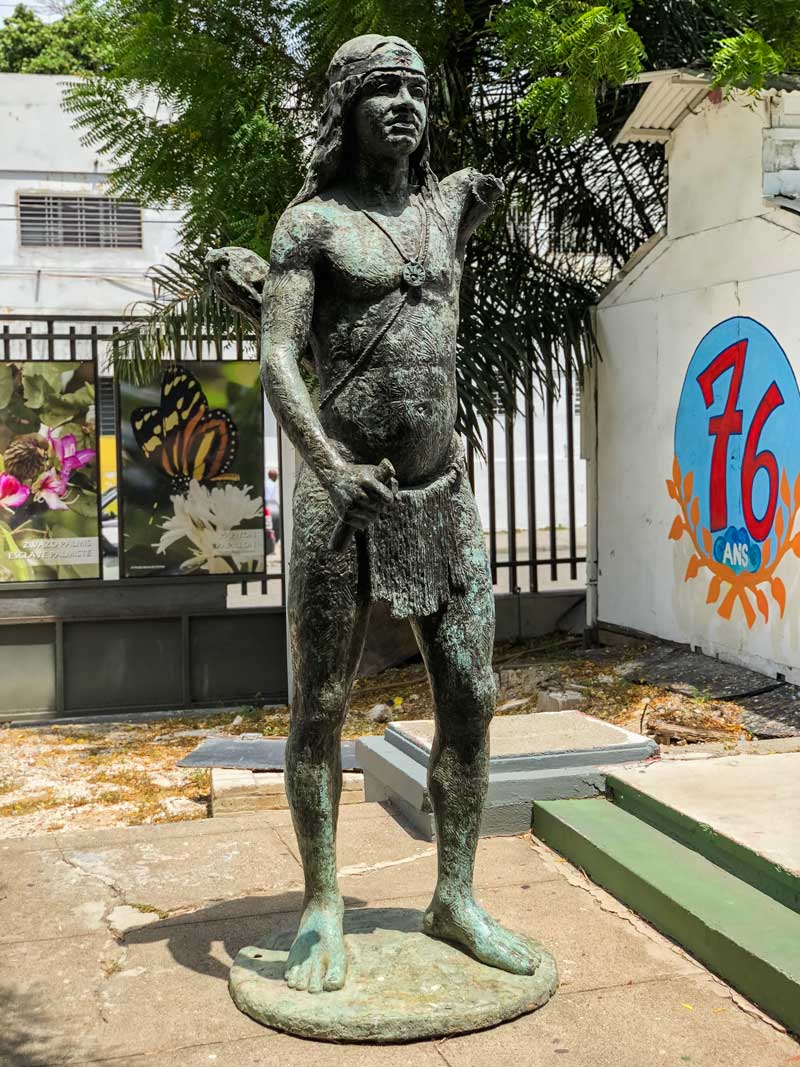
bronze statue of taino indian in museum courtyard
Taíno statue at The Bureau of Ethnology, Port-au-Prince
Photo: Anton Lau

About the collection

The exterior facades of the National Ethnology Office house a permanent photo exhibition on several aspects of the life and activities of Haitian society: scenes of the Haitian national carnival, Vodou rituals, Vodou-infused folk dance and more. 

The interior offers an equally captivating photo exhibition of scenes of social and cultural customs specific to the Haitian nation, including national costumes and their histories. Haitian artists are also represented here, accompanied by interpretive material (mostly written in French). Key spiritual concepts, from the “lakou mansson” of Léogâne (Haitian Creole: Leyogàn) to the “lakou Badjo, Soukri, Souvenance” of Gonaïves, are depicted together with explanations of their importance in Haitian society.

Founded in 1941 by Haitian novelist Jacques Roumain and run today by Erol Josué, the museum has as its mission the preservation and classification of all anthropological artefacts found on the Haitian side of the island of Hispaniola, including protecting and organising excursions to important archaeological sites. It’s possible for visitors to join some of these – just ask when you get to the museum.

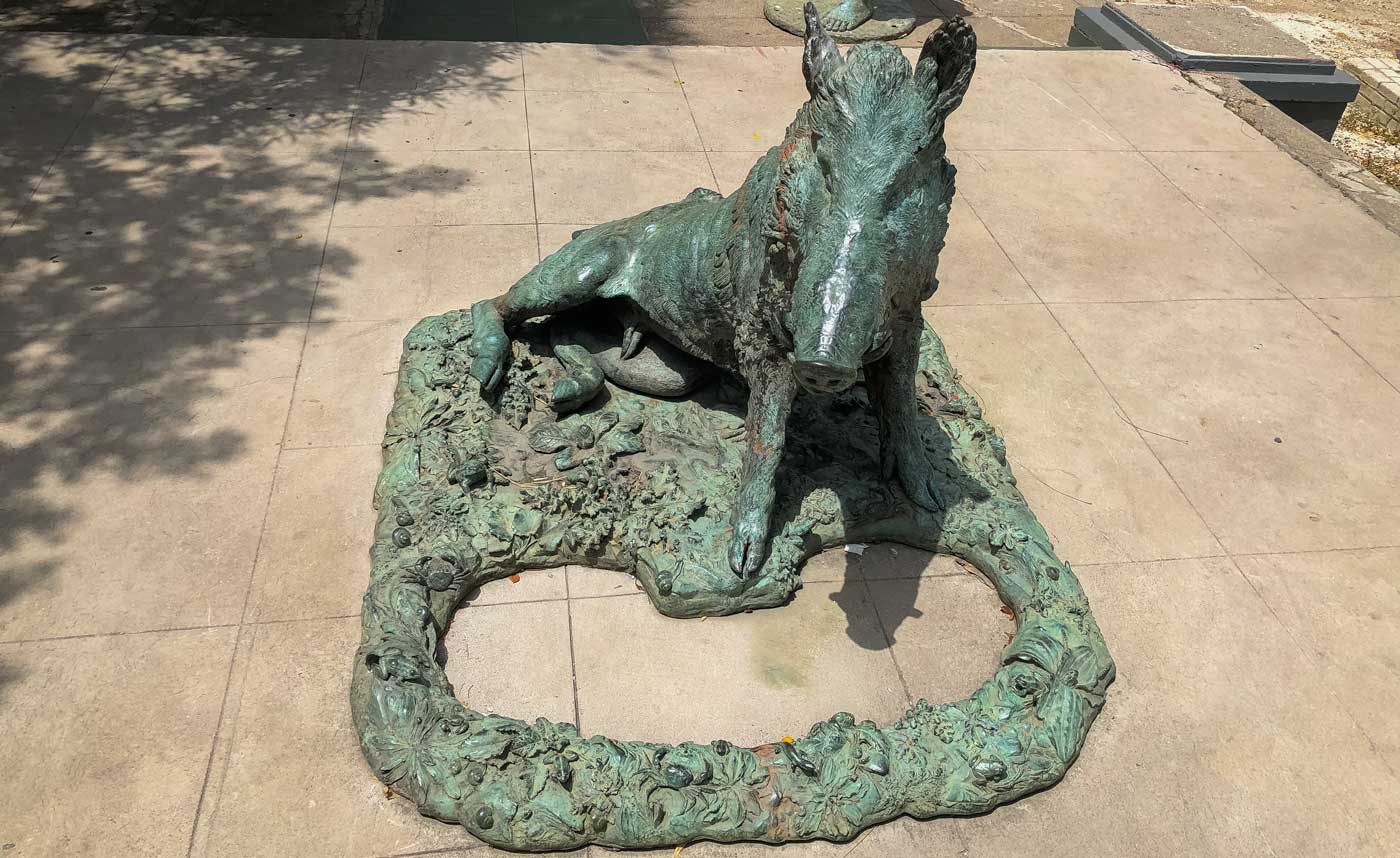
bronze statue of wild boar
Statue at The Bureau of Ethnology, Port-au-Prince
Photo: Anton Lau

Getting there

Signposted as the Bureau National d’Ethnologie, The Bureau of Ethnology is on the corner of Rue Magny and Rue Oswald Durand, close to Champ de Mars in the heart of downtown Port-au-Prince.


Written by Jean Fils.

Published September 2019


Read story
old colonial houses on city street in jacmel

Rum is big in Haiti. Here’s what to drink.

A woman makes rum cocktails while in a pool in Jacmel, Haiti
Poolside rum in Jacmel, Haiti
Photo: Amanacer / Emily Bauman

Rum is big in Haiti – Here’s what to drink

Copy LinkEmailFacebookShare

While Barbadians are said to have invented modern rum…

…we think it’s the Haitians who perfected it. 

The precursors of rum date back to antiquity. Fermented drinks made from sugarcane juice are believed to have been developed first in ancient China or India before spreading from there.

The first modern rum was distilled in the sugarcane plantations of the Caribbean in the seventeenth century. Plantation slaves discovered that molasses, a by-product of the process of refining sugar from sugarcane, fermented into alcohol. While rum is said to have been invented in Barbados in the early 1600s, the first sugar mills in the Caribbean were established on Hispaniola in 1516, so the concept would have been able to quickly spread throughout what is now known as Haiti.

Here are five tipples to try while vacationing in Haiti.

01. Barbancourt

The classic. Haiti’s most popular rum has been distilled right here on the island for over 150 years, and earned a place in the hearts of Haitians that other brands can only dream of.

From high-end bars and fine-dining restaurants to neighborhood liquor stores, you’ll find Barbancourt everywhere. Barbancourt branding, as well as the drink itself, is splashed around at key cultural events in the capital and at patron saint festivals in the provinces.

Depending on the bar, you can sip up to four varieties of Barbancourt: a young, fresh white rum; the three-star 4yo; the five-star 8yo and the sought-after 15yo estate reserve. Rum connoisseurs rate the 8yo as best value-for-money.

Fancy a between-meals tipple on your private balcony or in your pool? Barbancourt is available at supermarkets, as well as specialty liquor stores such as La Bouteille.

02. Bakara

The second most popular rum in Haiti, Bakara is the drink of choice among Haiti’s younger crowd, not least due to its lower price point compared to Barbancourt. Backpackers on a budget: take note!

As well as being more wallet-friendly, Bakara’s range is more modern – and on the fruity side of things! The brand leans into Haiti’s natural bounty of tropical crops, with evocative Caribbean flavors such as grenadya (passionfruit), kanèl (cinnamon), and lanni (star Anise).

Bakara’s unflavoured standard range spans an 8yo, 12yo and an estate reserve.

It is worth noting that while Bakara is an Haitian brand, the distillery is over in the Domincan Republic, on the eastern half of the island of Hispaniola – though there are plans to start up production in Haiti itself.

03. Vieux Labbé

Produced and bottled in Haiti, Vieux Labbé has carved out a respectable niche for itself. The Vieux Labbé rums share part of their history with the Barbancourt name, but today we know them as standalone brands.

Vieux Labbé has under its wing: a young white rum; a three-star 3yo; a five-star 7yo; a signature blend and a complex 10yo.

04. Boukman

Boukman has made a name for itself in the United States as the first artisanal rhum agricole of its kind, boasting an exotic bouquet of West Indies spices.

What’s Rhum agricole? Unlike the majority of rums in the world, rhum agricole is distilled from fresh sugar cane juice rather than molasses. Starting its life as sugar grown in the cane fields outside Croix-des-Bouquets in Port-au-Prince and in Cap-Haïtien, Boukman boasts a whopping eleven different spices, barks and peels!

The best way to enjoy Boukman rum? Straight – with some ice and an orange twist, at most. If you don’t mind losing some of the complexity of the rum, Boukan is also a delicious way to spice up cocktails!

group of haitian men among a alcohol vendor
Kleren vendor in Jérémie
Photo: Franck Fontain

05. Kleren

No visit to Haiti is complete without a sip of fiery kleren. Also spelled “clairin” by French- and English-speakers, kleren is a quintessentially Caribbean drink and Haiti is its heartland. While there are some 50 kleren distilleries dotted around the rest of the Caribbean, there are over 600 in Haiti alone.

Kleren is a type of rum, not a brand – in fact, it has never been commercially bottled. Instead, it’s made using traditional techniques at artisan distilleries, most of them tiny shacks sprinkled throughout the countryside, producing just enough for the local village.

Like Boukan, kleren is a rhum agricole: processed from sugar cane juice, not molasses, creating a strong, smooth, unmistakable taste – sharp, powerful, to the point.

Kleren is enjoyed in its pure, unaltered state, but you can find flavored varieties as well. When a root or leaf is added to kleren to soak and infuse, the finished product is called tranpe (Haitian Kreyol for “dipped” or “soaked”).

Kleren is a vital element of Haitian culture and you’ll see it for sale by the roadside in gallon bottles. To try kleren for yourself, though, we recommend you visit a neighborhood liquor store – they tend to offer a range to choose from, and smaller bottles.

bottles with pre-mixed haitian cocktails
Ready-to-drink cocktails from MyaBèl
Photo: MyaBèl

06. Bonus: MyaBèl

In 2012 MyaBèl, an emerging Haitian brand, launched its own ready-to-drink cocktails.

There are currently three cocktails on offer in gorgeous packaging: Tomazo, which is rum, coconut and almond-based; Boukan Bou, which features rum, wild mint and star anise; and La Rat, which is vodka-based rather than rum-based and flavoured with grapefruit and Haitian blackberry.


Written by Kelly Paulemon.

Published August 2019


Read story
old colonial houses on city street in jacmel

The Museum of the Haitian National Pantheon

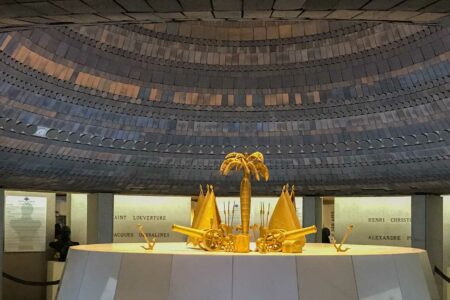
interior of haitian MUPANAH museum with golden sculptures
MUPANAH – Museum of The Haitian National Pantheon
Photo: Anton Lau

The Museum of the Haitian National Pantheon

Copy LinkEmailFacebookShare

About the museum

Much of Haitian heritage is preserved orally. Songs, stories and structured debates rehearse and refine the histories and experiences down the centuries. As a visitor, you can only scratch the surface of this unseen medium of memory. If you’re in Champ-de-Mars, and you’re lucky, you might witness the debate circles that are part of the island nation’s oral tradition.

Material cultural memories, however, are a little easier for the curious traveller to find. If you’re in downtown Champ-de-Mars, you can find it in the Museum of the Haitian National Pantheon, or MUPANAH. Built partially underground, this museum displays artefacts illustrating Haiti’s history with an emphasis on its revolutionary years and its political and cultural forefathers.

Thanks to being partly underground, the museum survived the massive earthquake of 2010 almost unscathed. First opened in 1983, MUPANAH was designed to safeguard and display the lives and accomplishments of the country’s important forefathers: Alexandre Pétion, Henry Christophe, Toussaint Louverture, and Jean-Jacques Dessalines. This is where a lot of Haiti’s physical colonial history is kept intact.

What you’ll see

For a small fee, visitors get access to a wealth of history on Haiti and its past. Self-designated as the guardian of Haitian history, the museum is split into two show rooms: a permanent exhibit, and a temporary exhibit.

The permanent exhibit showcases artefacts from the pre-Columbian period to the contemporary period. It emphasizes the revolutionary period, during which an army of self-freed slaves and free people of color fought off the colonial system to abolish slavery.

A tour guide take visitors through Haitian history, starting off with the Taíno people who first inhabited the island. Visitors are walked through the voyages of the first colonizers to set foot on the island: the Spaniards.

Learn how Spanish colonizers used the Taíno people of the island as a resource, and how it came about that they began to traffic African slaves to Hispaniola as well.

See real examples of the actual shackles that were used to keep slaves under control, alongside gruesome instruments of torture used the slave masters. While this may be shocking for some visitors, the museum and its advisory board believe this is an important part of Haitian history that should be kept alive for the sake of our collective memory.

See the anchor of the Santa Maria ship – on which Christopher Colombus arrived in Haiti – standing at a daunting thirteen feet tall. This cold hunk of metal is a chilling reminder of the trigger that began the centuries of upheaval now embedded in the Haiti’s history and national identity.

Read documents signed by, and belonging to, prominent presidents – such as noted dictator François Duvalier – the museum also features the silver handgun which Henri Christophe used to commit suicide. On a more uplifting note, you’ll get to see the bell that was rung to announce that the country’s population were claiming their independence.

Temporary exhibits

The temporary exhibit displays artworks from various Haitian artists, and rotates on a regular basis. The art is often chosen based on a particular theme, including current events, music, social and economic issues, or historical events such as French colonisation.

Relax in gorgeous gardens

Outside of the museum are the MUPANAH Gardens. Open from Monday to Saturday, the Gardens are set in a lovely white greenhouse-like space with large open windows throughout. Light, airy, and expansive, the Gardens are a much needed antidote to Haiti’s often heavy history, and are a worthy destination in their own right for anyone looking for fresh air and tranquility in Port-au-Prince.

The Gardens feature a sculpture garden and sitting area set in the middle of typical Haitian greenery, and house the museum’s restaurant and gift shop. Overlooking the lush green spaces surrounding the museum, you can dig into some of the city’s best French cuisine. Sitting at a table in the Gardens for lunch is an upscale outdoor dining experience – a vivid contrast to the sizzling street food scene of downtown Port-au-Prince.

The Gardens also serve as a popular location for cultural events all year round, including the International Jazz Festival of Port-au-Prince. Special events, meals, or cocktails are announced at the venue itself, but also via social media.

Getting there

The museum is open seven days a week, including holidays. Tours are offered in French, Creole, and in English.

The Museum of the Haitian National Pantheon is located in Champs de Mars, downtown Port-au-Prince.


Written by Kelly Paulemon.

Published July 2019


Read story

Festi Graffiti – Haiti’s International Festival of Urban Arts

haitian street artist painting a graffiti mural
Graffiti artist working on a mural in Port-au-Prince
Photo: Franck Fontain

Festi Graffiti 2022

Copy LinkEmailFacebookShare

Home to dozens of galleries and artist-led-initiatives, the suburbs of Turgeau and Pétion-Ville are usually the hub of the annual Festi Graffiti – The International Festival of Urban Arts.

This year however, the street art festival takes place in Cap-Haïtien.

Ramble through the sun-bleached streets in Haiti’s second city and soak up the freshest work by emerging Haitian street artists and visiting artists, from figurative murals to photography installations revealing Haiti’s urban dance battle scene.

This year’s installment of Festi Graffiti is happening between August 16 and 22, 2022. Hosting street artists from Mexico, Jamaica, and United States. This year’s theme is “natural disasters – living with them.”

Look out for these artists

Established international street artists on the bill for this year include Mexican mural artist Eva Bracamontes (check out her Instagram here) and American street artist OU (check out his Instagram here).

Local Haitian artists include Snoopy (@snoopytag), OliGa (@oligarts), and RAYZA (@rayzatheking), plus an ever-changing lineup of emerging street artists who show up each year to show off their skills. Expect to see plenty of evocative murals as well old-school difficult-to-decipher tags.

Don’t miss

Downtown Cap-Haïtien, don’t miss your chance to taste delicious local dishes at some of the city’s best restaurants.

A host of activities are available during festival dates, from guided tours to hands-on workshops. Be sure not to miss anything by following Festi Graffiti on Instagram and Facebook.


Written by Jean Fils.

Published June 2019

Updated August 2022


Read story

8 Cheap and Free Things to Do in Haiti

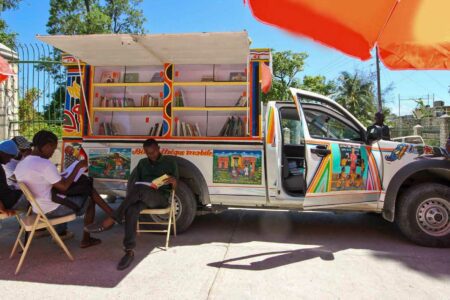
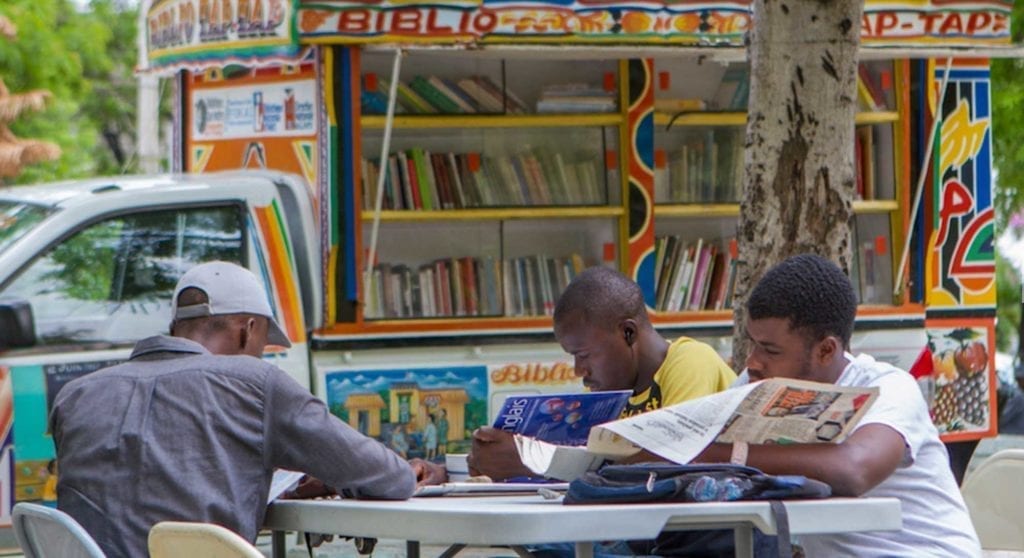
people sitting on chairs reading next to a library bus
BiblioTapTap, Port-au-Prince
Photo: FOKAL

Caribbean on a Budget: 8 Cheap and Free Things to Do in Haiti

Copy LinkEmailFacebookShare

Situated in the heart of the Caribbean between Jamaica and the Dominican Republic, Haiti has over a thousand miles of coastline with dozens of destination-worthy beaches. While some of them charge entry fees to cover maintenance costs, most are free to wander onto for a day of sun-bathing and swimming.

Beyond gorgeous beaches, Haiti offers a wealth of wildlife, nature, arts and culture for backpackers on a budget. Here’s our guide to free things to do in Haiti, all accessible to fresh-off-the-plane first-time visitors!

People relaxing, Champ de Mars, Port-au-Prince, Haiti
People relaxing, Champ de Mars
Photo: Franck Fontain

01. Hang out at Champ-de-Mars

The daily life of downtown Port-au-Prince happens in the streets, and Champ-de-Mars is the centre of that life – the beating heart of Haiti’s capital city. Enjoy a morning stroll, get some budget-friendly street food, browse artisan stalls, kick back with an ice-cold Prestige and drink in the activity all around you.

Afternoons here buzz with conversation and music playing from sound systems around the park. On weekdays, white-collar Haitians funnel into Champ de Mars on their lunch breaks from local banks, hotels, government offices and the university.

For free, you can see several statues of Haiti’s founding fathers including Alexander Pétion, Henri Christophe, Jean-Jacques Dessalines, and Toussaint Louverture. The highlight is Marron Inconnu, the iconic statue of the unknown slave blowing a conch-shell trumpet.

Sculpted by Haitian sculptor Albert Mangonès, the statue represents a runaway slave on one knee, arching back to blow into the conch-shell trumpet. In his free hand, he holds a machete; around his ankle is a broken chain. In Haitian history, the sound of blowing into a conch was used to announce a slave’s – or a group of slaves’ – freedom. The statue represents Haiti’s independence from the French, and the world’s first successful black revolution.

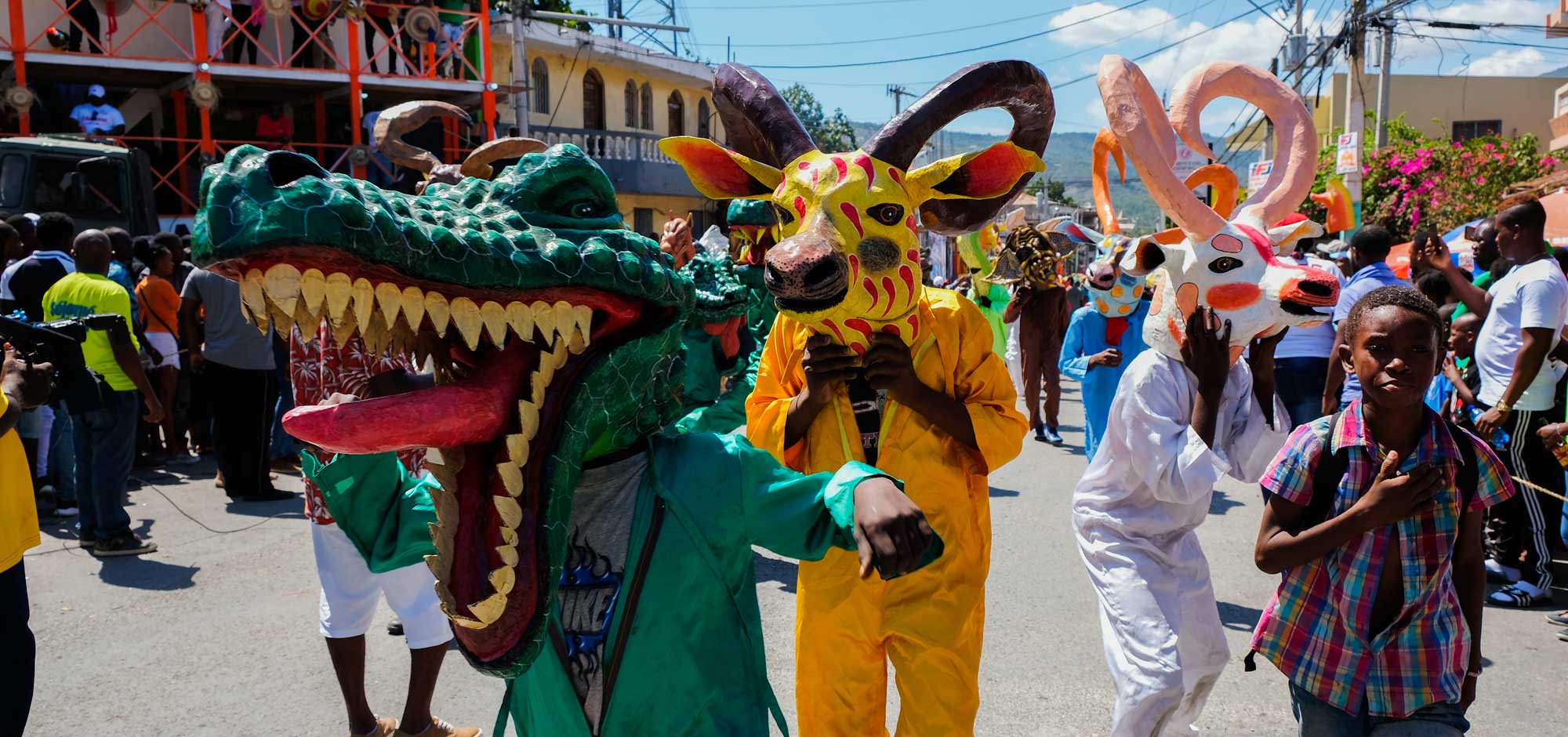
Colorful paper mâché animal masks worn by participants in the carnival at Jacmel, Haiti
Paper mâché at Carnaval in Jacmel
Photo: Franck Fontain

02. Get into the Carnival spirit

If you happen to be in Haiti during Carnival season (the months of January or February until March, depending on when Mardi-Gras lands), pre-carnival Sunday activities are a great way to end your weekend.

Whether you are staying in downtown Port-au-Prince, Cap-HaïtienJérémie, or Jacmel you can check out free-roaming rara bands, folks in costume, and festive music throughout the city. Think New-Orleans-during-Mardi-Gras-ambiance!

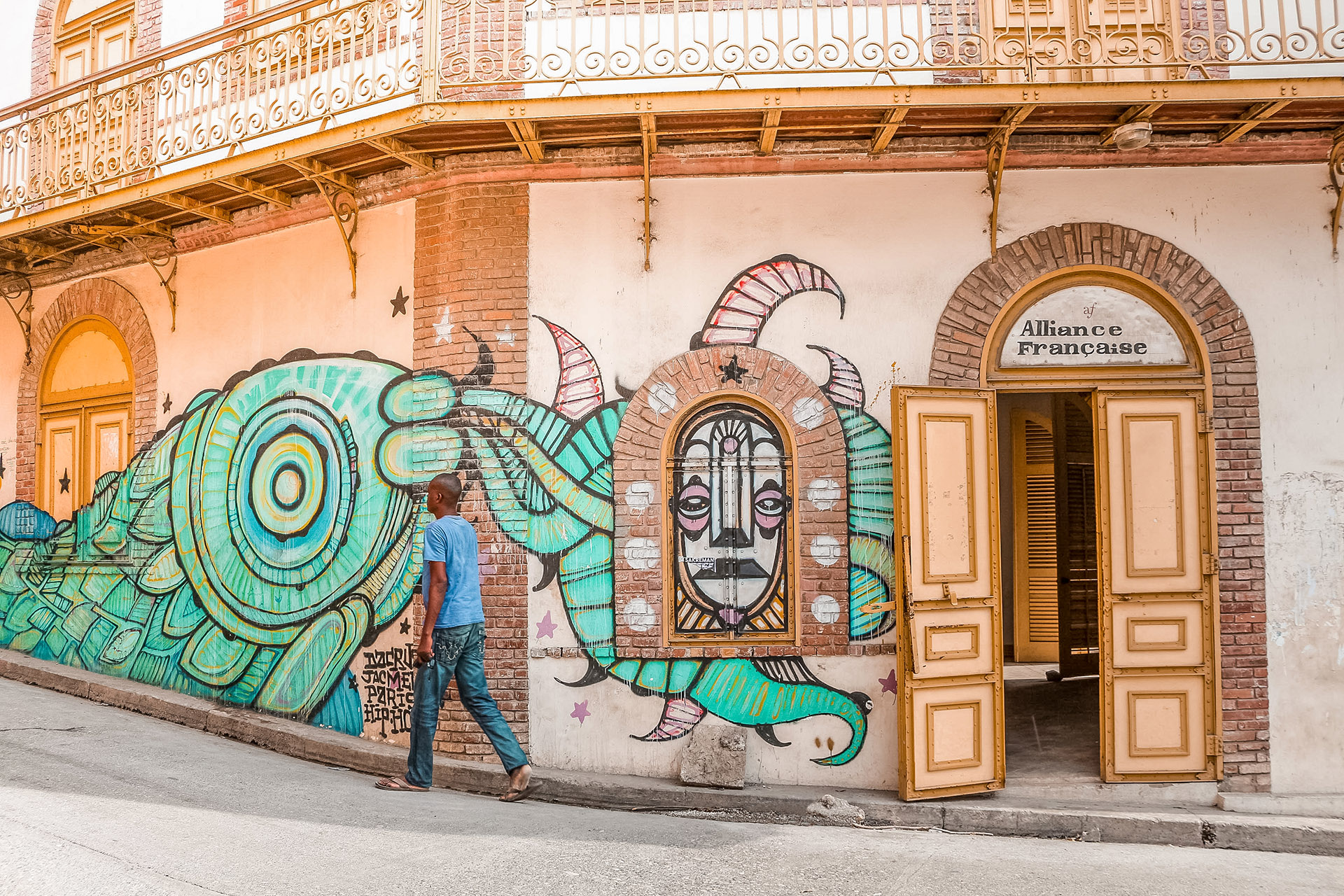
Street art on the outside of the Alliance Francaise hotel and restaurant in Jacmel, Haiti
Alliance Francaise in Jacmel, Haiti
Photo: Amanacer / Emily Bauman

03. Join a free event at Alliance Française in Jacmel or Cap-Haïtien

The city of Jacmel is chock-full of things to do and see, and the centre of it all is Alliance Française in the heart of the city. A cultural center with a branch in Cap-Haïtien as well, Alliance Française hosts musical events, as well as various talks.

Check out the upcoming events near you to find free events and courses where you can dance the night away, brush up on your French, or even try your hand at some Kreyòl!

04. See a play at Festival Quatre Chemins

During the month of November (with small overlaps in October and December), Port-au-Prince is swept up by the Festival Quatre Chemins. A month-long series of conferences and plays, Festival Quatre Chemins is where actors and playwrights come together from around Haiti and across the world to inject fresh life into Haiti’s performing arts scene. Most of the events are free!

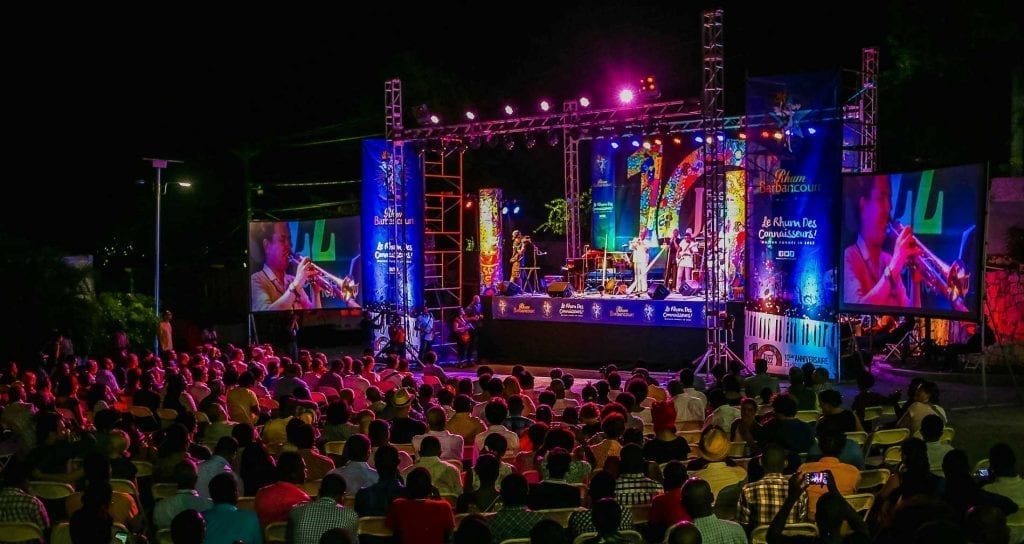
jazz concert on big stage in front of large sitting crowd
PAPJazz festival in Port-au-Prince
Photo: Josué Azor

05. Listen to jazz for free at PAPJazz

Between the months of January and February, Haiti’s capital city is completely overtaken by music in the form of the Port-au-Prince International Jazz festival! More commonly known as PAPJazz, the festival features jazz acts from several countries around the world, as well as Haitian artists blooming in the field. Bars and restaurants throughout the capital turn into venues, and usually either expect you to buy a meal or drinks, or charge a small entry fee. Travellers on a budget should know about the shows held at Quisqueya University — entry there is free!

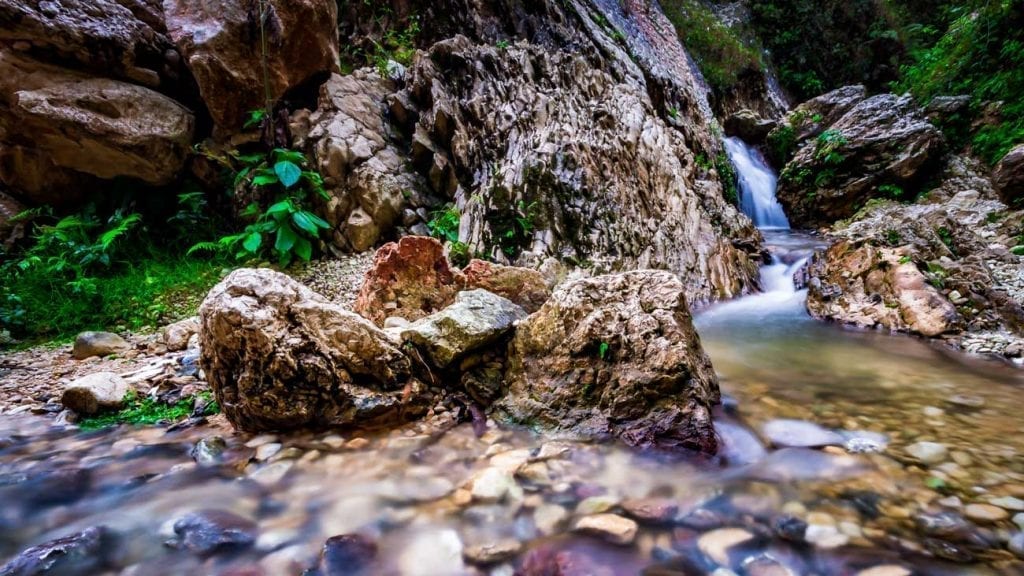
Waterfall plunges into a stony pool at Kaskad Boukan
Waterfall, Kaskad Boukan
Photo: Verdy Verna

06. Go hiking in Fermathe (don’t miss Cascade Boukan)

Perhaps the best nature hike from Port-au-Prince is to Cascade Boukan, a waterfall in the hills of Fermathe. Get ready to work your lower body muscles as you climb up a summit and then descend to Boukan Valley via a narrow and sometimes steep pass, with the sound of the falls rushing louder as you go.

It’s a decent hike to get there and while not especially difficult, we strongly recommend hiking with someone who knows the way. If you need to hire a guide to take your group, a reasonable price is around 250-500 HTG – less than USD $6.

07. Visit the gallery at Alliance Française, in Jacmel

When not hosting a concert or conference, Alliance Française keeps its doors open to show off some of the most beautiful art in Jacmel. Alliance Française’s popular restaurant is on the top floor, and there is no entrance fee to the gallery which leads up to the restaurant – visitors are welcome to come and browse. The paintings in the gallery change from time to time, so regular visitors will be rewarded by new works.

people sitting on chairs reading next to a library bus
BiblioTapTap, Port-au-Prince
Photo: FOKAL

08. Relax with a book at BiblioTapTap

Backpacking light around the Caribbean with no room for books? Pa gen pwòblèm! – no problem! An initiative launched by the National Book Directorate, BiblioTapTap is a free mobile library that drives through Port-au-Prince and stops at public squares.

If you are staying in Port-au-Prince, you can catch it at Champ-de-Mars, Place Saint-Pierre, or in Delmas 4. It’s as easy as saying hello, having a bit of conversation, and enjoying a book of your choosing at the BiblioTapTap table in the shade.


Written by Kelly Paulemon.

Published June 2019


Read story